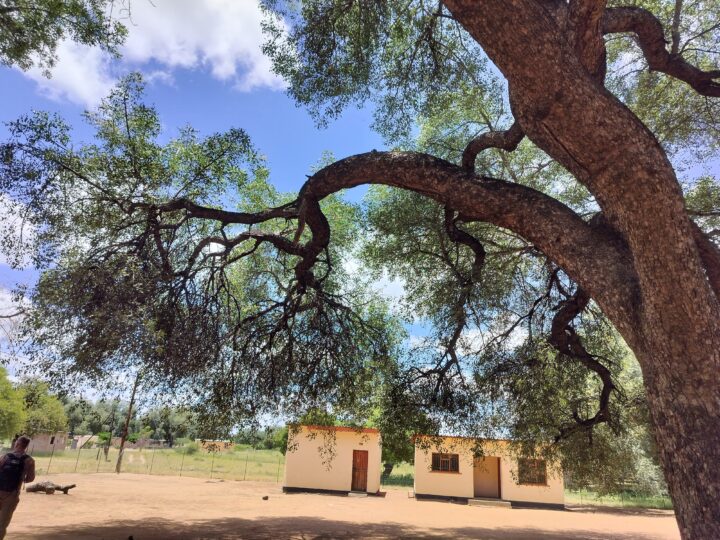
First larger-scale marula mapping completed in Botswana
The project of mapping marula trees in Botswana came to its successful end in late 2025. By request from the Ministry of Local Government and Traditional Affairs (LDTA), Botswana University of Agriculture and Natural Resources undertook this task during 2024-2025 in Tswapong (eastern), north eastern and Nata Gweta areas. The report has now been handed over to the Ministry.
The objectives of the project included mapping the natural resources of Sclerocarya birrea in the above mentioned districts, assessing the population structure in northern Botswana, studying seedling regeneration and population dynamics across landscapes, evaluating the socio-economic value of the tree, and identifying other income-generating veldt products used or with potential in target districts.
Reconnaissance fieldwork provided key insights into forest vegetation and socio-economic conditions across three regions, supporting the planned marula assessment. Farmers in all villages showed strong interest in marula as a sustainable livelihood option. The findings confirm that both the resource base and socio-economic potential justify further study. Marula is widely distributed, though fruiting varies with factors like tree age, land use, and vegetation type. Fruiting is more successful in mixed vegetation and homestead areas than in mopane woodlands. Harvesting is challenging due to the short ripening window and uneven fruit drop, risking spoilage. However, local knowledge enables research outside the fruiting season. Access to some areas was difficult, delaying data collection. Cultural and language differences highlight the need for pre-tested methods and clear informed consent to ensure accurate and respectful engagement.