3/2026 Self-written histories of the Ovawambo converts
Self-written histories of the Ovawambo Christian converts in the Finnish Collections
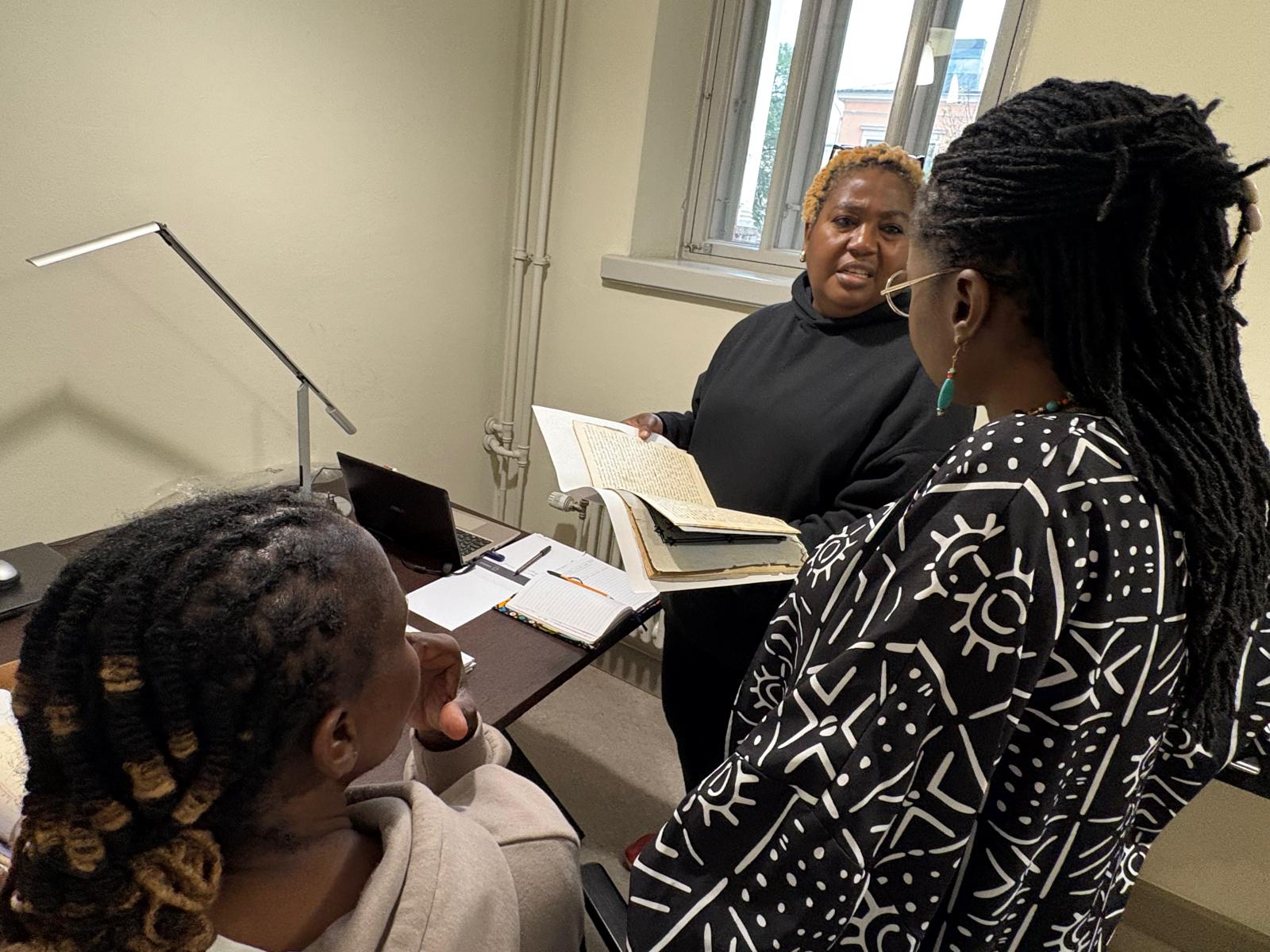 Last year in September 2025, my fellow researchers and I spent several days immersed in the treasures of the Finnish National Archives (Kansallisarkisto) and National Library (Kansalliskirjasto), conducting research. This was one of the most rewarding experiences of being part of the FinNamKnow project. The library reading room was prepared and the files were pre-ordered for us to review at the archives even though that specific Monday the archives were closed to the public. Our host and collaborator, Prof Leila Koivunen had already informed us that there were some materials in Oshindonga in the archives of the Missionary Society.
Nothing quite prepared us for the actual materials as these were fragile handwritten records that were written as early as the 1910s. The staff were incredibly helpful and allowed us to keep the files out for the duration of our stay. What struck me most while poring over self-written biographical records and correspondence, was the sense of privilege in touching primary sources that few people will ever see. I felt a direct connection to the past. These are self-written autobiographies, life stories, diaries, letters and parish-related writings produced by the first generations of Ovawambo converts, often in local languages like Oshindonga or Oshikwanyama. These documents are rare primary sources from indigenous perspectives. They are testimonies of the significant conversions augmented in the 1910s amid droughts, famines, and colonial pressures, which undermined Owambo traditional beliefs. As many sources have shown, early converts included youth seeking education and literacy, and those drawn to mission stations for protection and resources. Many became evangelists, teachers, or pastors. Therefore, these autobiographical notes were produced by early Owambo Christians, frequently authorized or prompted by missionaries such as Emil Liljeblad, but written or dictated by the individuals themselves. These documents hold exceptional value for me personally for several reasons.
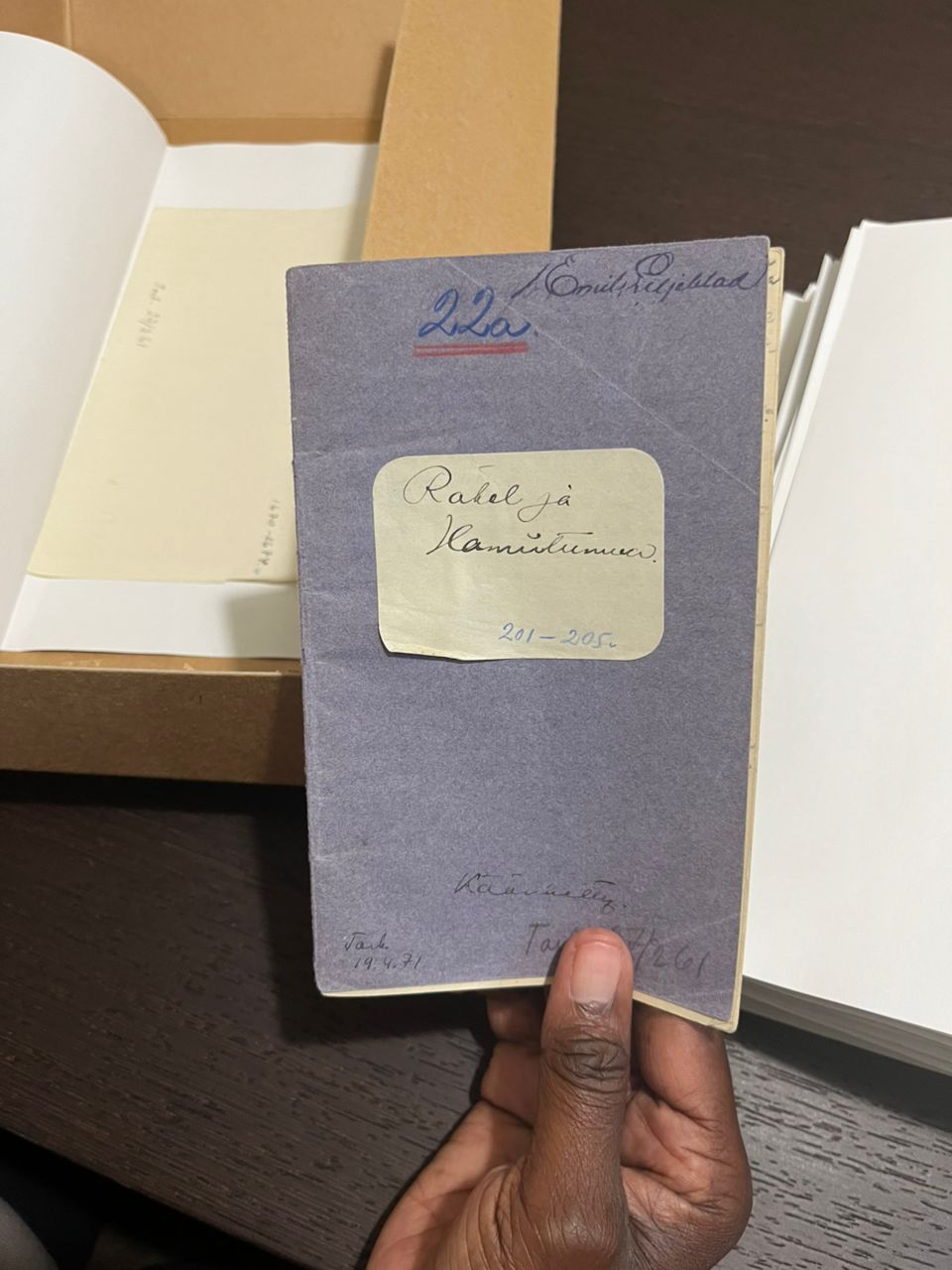 Firstly, they provide indigenous voices and agency as missionary reports often portray Christian converts as passive recipients. However, these self-written biographies reveal Aawambo initiative and motivations for conversion such as spiritual conviction, social mobility, escape from polygamy or initiation rites, or refuge during crises, personal struggles with cultural conflicts, and active roles in evangelizing their communities. This is very interesting to me as I would like to compile a collection of these individuals’ life stories by analyzing their day-to-day strategies and describing how they influenced the various historical phases of Finnish Mission enterprise in Owambo.
Secondly, these records provide insights into cultural and social transformation in Owambo as they document how Christianity intersected with Owambo traditions such as views on ancestors, rain rituals, gender roles, marriage, etc. These are evident in some of the self-narrated stories that I read. These accounts describe generational shifts, the impact of migrant labor, colonial disruptions, and the gradual “Africanization” of the church.
Thirdly, these are early forms of indigenous literacy and writing as they are among the first written texts by Aawambo people, often in vernacular languages promoted by missions. They mark the introduction of literacy and provide early examples of indigenous Christian literature in Namibia.
Fourthly, these records have exceptional historical and archival value as they serve as primary evidence for reconstructing pre-colonial and early colonial Owambo society. They are authored by prominent clergymen that I grew up hearing about such as Efraim Angula, Sakeus Ihuhua, Vilho Kaulinge and many others.
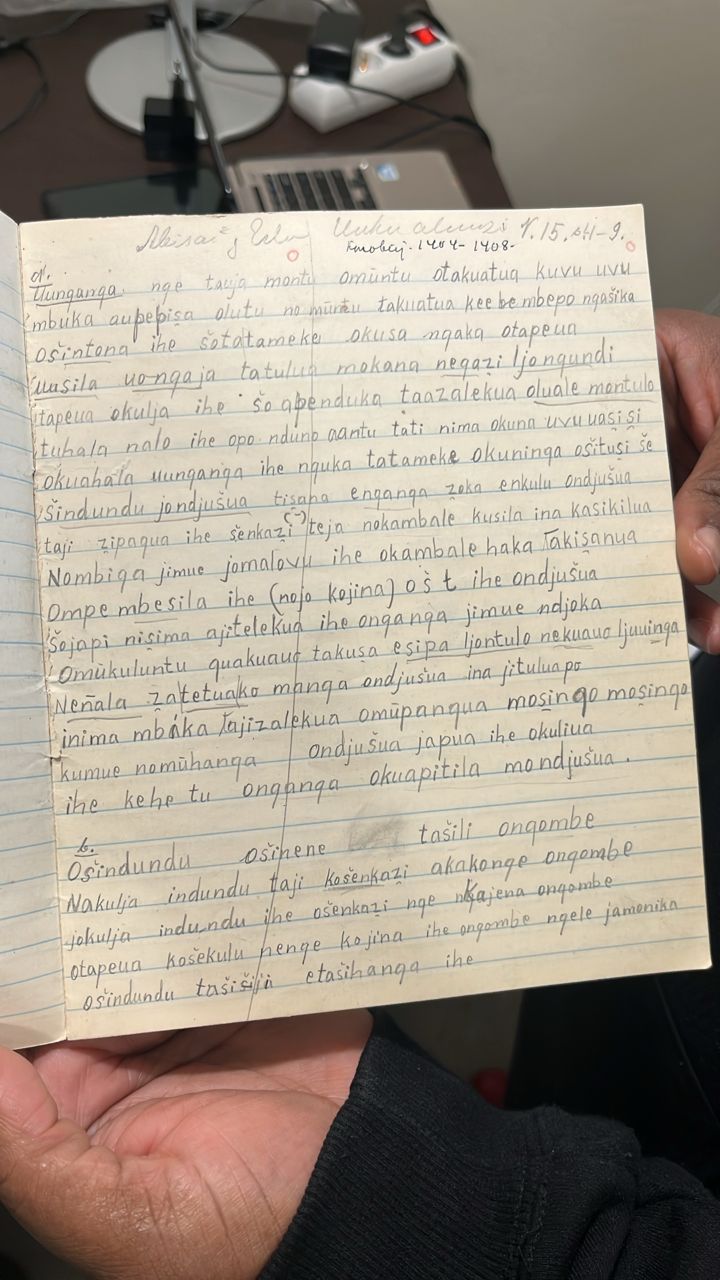 Lastly, I believe these records hold broader scholarly and cultural relevance as researchers like myself will use them to study conversion dynamics, gender (early converts also included many women), education, and resistance or adaptation. Overall, these records mainly counter Eurocentric mission narratives and inform modern Namibian identity, where many people identify as Christians.
In essence, these archival materials are irreplaceable for understanding the human side of Christianization in Owambo, not as filtered through outsiders, but through the converts’ own words. They certainly bridge oral tradition and written history, enriching both academic study and cultural heritage preservation. The Liljeblad materials (at the National Library) have been microfilmed and copies of these are at the National Archives of Namibia, but I would appreciate having these original handwritten notes digitized for future research and accessible in Namibia so that we do not have to travel so far to access this valuable resource. Of course, the digitization is one option but there is nothing like the tactile experience, and I will forever be grateful for having had that privilege!
Napandulwe Shiweda