

Speakers

The Department of Psychology, Columbia University, USA
Nim Tottenham is Professor of Psychology at Columbia University and Director of the Developmental Affective Neuroscience Laboratory. Her research examines how the brain systems that support emotional behavior develop across childhood and adolescence, with particular emphasis on how early social experiences, especially caregiving, shape their development.
Dr. Tottenham is a member of the American Academy of Arts and Sciences and a Fellow of the Association for Psychological Science and the Society of Experimental Psychologists. Her honors include the National Academy of Sciences Troland Research Award, the NIMH BRAINS Award, and the Flux Congress Linda Spear Award. Her contributions to mentorship have been recognized with the ISDP Rovee-Collier Mentor Award.
Murdoch Children’s Research Institute (MCRI) and the Royal Children’s Hospital, Melbourne, Australia
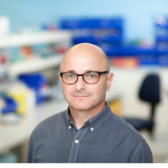
David Burgner trained in the UK and Australia and is currently a paediatric infectious diseases clinician scientist at Murdoch Children’s Research Institute (MCRI) and the Royal Children’s Hospital, Melbourne, Australia. He leads the Inflammatory Origins research group which investigates how infection, inflammation and traditional risk factors contribute to cardiovascular and metabolic disease across the life course, how they contribute to health inequalities, and how mechanisms underpinning epidemiological findings can be translated into more effective and targeted prevention.

Department of Child and Adolescent Psychiatry, Erasmus MC, Netherlands
Hanan El Marroun is an epidemiologist and neuroscientist, with research focusing on sensitive periods of brain development (prenatal, the first 1000 days of life and adolescence).
In population-based studies, Professor El Marroun examines the short- and long-term consequences of maternal, fetal and child health on brain developmental features, including behaviour and cognition, as well as brain morphology and connectivity. One of her specific focus areas is substance use (e.g. tobacco, nicotine and alcohol) in pregnancy and adolescence.
Next to her research, she also disseminates this knowledge and general research skills to bachelor and master students. Beyond her research and teaching, she is a vocal advocate for gender equality and diversity in academia, and her public outreach efforts show her dedication in making science accessible for a broad audience.

Public Health Institute, Liverpool John Moores University, UK
Professor Mark Bellis OBE is Director of the Public Health Institute and Professor of Public Health and Behavioural Sciences at Liverpool John Moores University. He has established and led two World Health Organization (WHO) Collaborating Centres, focusing on Violence Prevention and on Investment for Health and Well-being. His research spans adverse childhood experiences (ACEs), life-course health, violence prevention, health economics, the commercial determinants of health, and public health history, integrating original research, evidence synthesis, and the translation of findings into policy and practice.
A registered Consultant in Public Health with the UK National Health Service (NHS), Professor Bellis was awarded an OBE in 2009 for services to healthcare. He has authored more than 250 peer-reviewed papers and over 300 reports and books, and continues to lead national and international collaborations addressing some of the most pressing and emerging challenges in public health.

Yale Child Study Center and the Department of Obstetrics, Gynecology, and Reproductive Sciences, Yale School of Medicine, USA
Dr O’Donnell’s research integrates genomic and epigenomic data with measures of the social environment to better understand maternal and child health and aging.
He obtained his BSc in Psychology in 2005 from the University of Westminster in London, followed by a MSc in Neuroscience from the Institute of Psychiatry, Kings College London. Dr. O’Donnell then pursued his doctoral studies at Imperial College London where he obtained his PhD in Clinical Medicine in 2011. He completed a Post-Doctoral Fellowship (2011-2016) in Social Epigenetics at the McGill University before joining the Department of Psychiatry at McGill as an Assistant Professor in 2016. Dr. O’Donnell was recruited to Yale University in 2020.
In 2019 Dr O’Donnell was awarded a Brain and Behavior Research Foundation (NARSAD) Young Investigator award and named a Jacobs Foundation Young Scholar. In 2022, O’Donnell was named a Scialog Fellow by the Research Corporation for the Advancement of Science. Dr. O’Donnell is a CIFAR Fellow in Child and Brain Development Program. Dr. O’Donnell has published over 90 peer-reviewed articles and has received funding from both the Canadian Institutes of Health, and the National Institutes of Health. Dr. O’Donnell currently serves on the Advisory Council of Postpartum Support International, a leading perinatal mental health training and advocacy organization.

Lusófona University, Portugal
Raquel Costa is a Clinical Psychologist, tenured Associate Professor at Lusófona University, Portugal, and Executive Director of the Human-Environment Interaction Lab (HEI-Lab). She holds a PhD in Clinical Psychology and hass 15 years of research experience in developmental psychopathology, perinatal mental health, and the early determinants of psychiatric disorders.
She is particularly interested in understanding how environmental and psychophysiological mechanisms interact from the earliest stages of life to shape developmental trajectories and vulnerability to mental health problems. She has a particular interest in the emergence of infant regulatory abilities, caregiver–infant co-regulation, and the role of early relational experiences in the development of self-regulation and subsequent psychopathology.
In 2023, she was awarded an individual research contract by the Portuguese Foundation for Science and Technology (FCT) to investigate brain synchrony and the biobehavioral pathways of caregiver–child co-regulation associated with early developmental and mental health difficulties. Her work seeks to identify modifiable mechanisms of developmental vulnerability and resilience that can inform early identification and preventive interventions.

Centre for Population Health Research, University of Turku and Turku University Hospital, Finland
Linnea Karlsson, MD, PhD, is child and adolescent psychiatrist whose research has focused on the influences of prenatal and early life environments on child (mental) health and socio-emotional development. She is the co-founder and PI of FinnBrain Birth Cohort Study and co-leader of the Center for Population Health Research at the University of Turku and Turku University Hospital. As a professor in population health research she also teaches public health and health promotion in the Faculty of Medicine, University of Turku. She has a position at the Department of Child Psychiatry in Turku University Hospital and has long clinical experience in child and and adolescent psychiatry.
Linnea Karlsson has also been actively collaborating with third sector organizations and was the President of Mannerheim League for Child Welfare 2015–2017.

Department of Psychology, University of Turku, Finland
Riikka Korja is the principal investigator of the Child Development and Parenting sub-study within the FinnBrain project and the University of Turku consortium group leader in the Centre of Excellence in Learning Dynamics and Intervention Research (InterLearn).
Her research aims to comprehensively investigate protective and vulnerability factors in child development, as well as the underlying mechanisms through which these factors influence developmental outcomes. The Child Development and Parenting sub-study of the FinnBrain project examines children’s psychological development from infancy to adolescence, focusing on the environmental factors and biological processes that shape developmental trajectories. Within the InterLearn Centre of Excellence, her research focuses on understanding the cognitive and socio-emotional developmental pathways associated with learning difficulties and related mental health problems. She has published approximately 130 articles in international scientific journals.
In addition to her academic work, Korja is a clinical psychotherapist and supervisor. Her clinical work focuses on the perinatal period, and she provides consultation and supervision to several clinical units working with pregnant women and families with young children. She also actively contributes to societal discussions on child and family well-being through various media.

University of Turku and Turku University Hospital, Finland
Hasse Karlsson, MA, MD, PhD is emeritus professor of Integrative Neuroscience and Psychiatry at University of Turku, Finland and previous Chief Physician at the Department of Psychiatry, Turku University Hospital. He was the chairman of Neurocenter Finland years 2022-2024.
He is the co-founder of the FinnBrain Birth Cohort Study, which recruited approximately 4000 families during the first pregnancy trimester in order to study longitudinally biological, psychological and social determinants of child health. Currently the children are teenagers.
He has published over 300 articles in international peer reviewed journals.