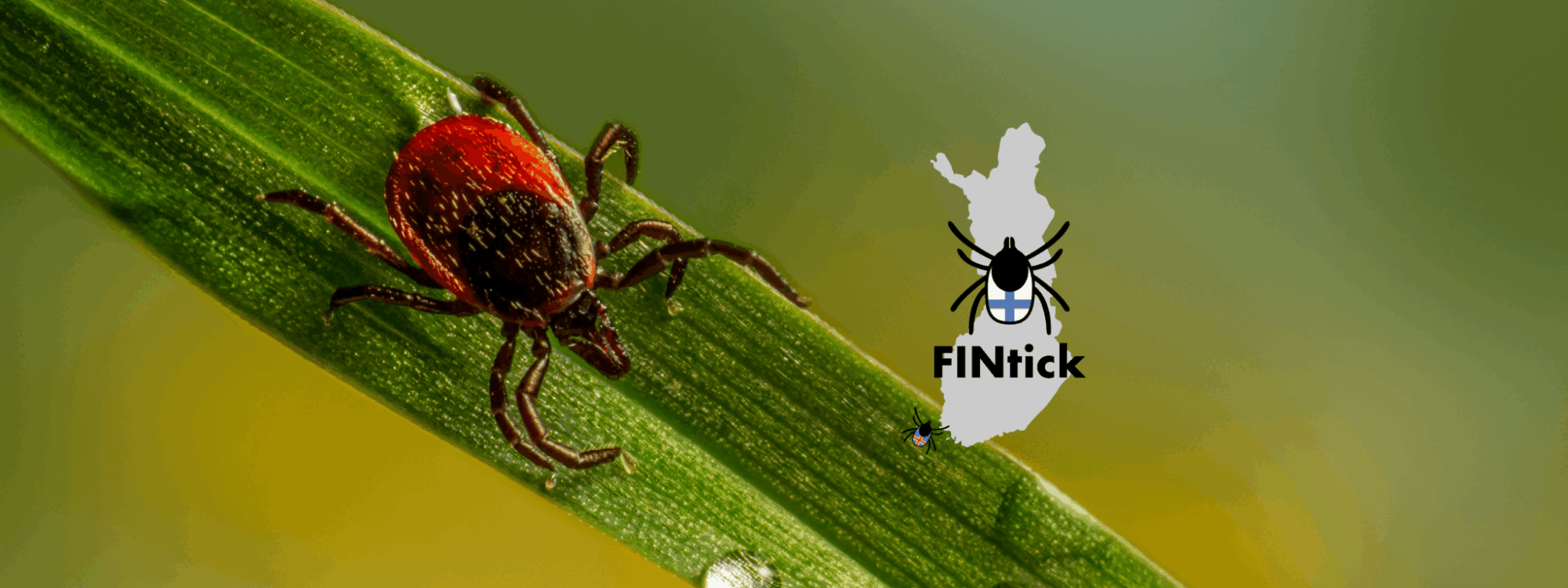
FINtick-study
Ticks and the number of infections they transmit are increasing. Ticks are known to spread Lyme borreliosis, which is caused by bacteria, as well as tick-borne encephalitis (TBE), which is caused by a virus. In addition, several other potential pathogens have been found in Finnish ticks, such as the bacteria Neoehrlichia mikurensis, Borrelia miyamotoi, Anaplasma phagocytophilum, Spiroplasma ixodetis and Rickettsia helvetica, as well as protozoa of the genus Babesia. The incidence and clinical characteristics of the diseases caused by these pathogens have not been studied in Finland.
The aim of the FINtick study is to determine how much Finns suffer from other tick-borne infectious diseases in addition to Lyme borreliosis and tick-borne encephalitis. We are collecting information on the incidence, symptoms, clinical findings, and immune responses related to tick-borne diseases. We also aim to clarify which factors (for example, age and underlying illnesses) affect susceptibility to infection and the severity of disease. At the same time, the study aims to develop new laboratory diagnostics and improve existing ones for tick-borne diseases.
Study participants will be recruited in Southwest Finland, the Helsinki metropolitan area, and Åland. A total of 500 participants will be recruited over the coming years. The inclusion criterion is a clinical picture that has raised suspicion of a tick-borne infection. Participants will be followed for 6 months using existing and newly developed laboratory tests as well as symptom questionnaires. The study will not affect patient care; participants will be treated according to standard practices.
The study is carried out by Varha, the University of Turku, HUS, and Åland Health and Medical Care, in collaboration with the corresponding Swedish study (SWEtick).
September 23, 2025
Jukka Hytönen
Professor of Bacteriology
University of Turku