

Speakers 2026
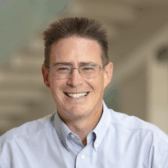
Rob Knight is the founding Director of the Center for Microbiome Innovation and Professor of Pediatrics, Bioengineering, Computer Science & Engineering and Halıcıoğlu Data Science Institute at UC San Diego. He is the Wolfe Family Endowed Chair in Microbiome Research at Rady Children’s. He was elected to the National Academy of Engineering in 2024. He is a Fellow of the American Association for the Advancement of Science and of the American Academy of Microbiology. He was honored with the 2019 NIH Director’s Pioneer Award for his microbiome research and received the 2017 Massry Prize, often considered a predictor of the Nobel. He is the author of “Follow Your Gut: The Enormous Impact of Tiny Microbes” (Simon & Schuster, 2015), coauthor of “Dirt is Good: The Advantage of Germs for Your Child’s Developing Immune System (St. Martin’s Press, 2017), and written over 800 scientific articles. He spoke at TED in 2014 which is viewed over 2.3 million times. His lab has produced many of the software tools and laboratory techniques that enabled high-throughput microbiome science, including the QIIME pipeline (cited over 50,000 times as of this writing) and UniFrac (cited over 12,000 times including its web interface). He is co-founder of the Earth Microbiome Project, the American Gut Project, and the company Biota, Inc., which uses DNA from microbes in the subsurface to guide oilfield decisions. His work has linked microbes to a range of health conditions including obesity and inflammatory bowel disease, has enhanced our understanding of microbes in environments ranging from the oceans to the tundra, and made high-throughput sequencing techniques accessible to thousands of researchers around the world.
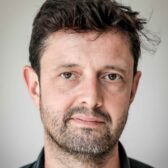
Prof. Jeroen Raes (m) is professor at KU Leuven since 2013 and VIB group leader since 2009. His group currently consists of 27 scientists, with expertise in bioinformatics, systems biology, clinical research and microbiology. He has a substantial track record in microbiome research and has been pioneering the analysis and integration of meta-omics datasets (metagenomics, metatranscriptomics, metaproteomics, meta-metabolomics) with environmental, clinical, host omics and dietary data. He was involved in the FP7 MetaHIT and NIH Human Microbiome Project (the latter as only European partner), which laid the foundations for the human microbiome field as it is today. Finally, his lab is performing a wide range of disease-related projects in a.o. IDB, diabetes, cancer, IBS and antibiotics resistance on national (FWO/IWT) funding and develops novel approaches and tools for microbiome research. Jeroen Raes coordinates the Flemish Gut Flora project, a large scale microbiome- focused population cohort in Belgium.
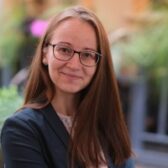
Ilze Elbere, PhD in molecular biology, postdoc at Translational Omics group (Latvian Biomedical Research and Study Centre). She has more than 10 years of experience in human microbiome studies, starting from study design and wet-lab protocol optimisation, up to data analysis and integration with other omics data. Her research focuses on the gut microbiome as a tool for precision medicine in the context of metabolic health and antidiabetic treatments, and current studies also involve gut microbiome modulation approaches and digital twin-based modelling.
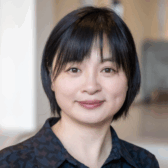
Dr. Jingyuan Fu is a professor of systems medicine in the University Medical Centre Groningen, the Netherlands and an elected member of the Royal Netherlands Academy of Arts and Sciences (KNAW) and the Royal Holland Society of Sciences and Humanities (KHMW). She obtained a BSc in Biochemistry, a MSc in Biotechnology and Bioinformatics (cum laude), and a PhD in systems genetics (cum laude). Via this route she developed her research interest on host-microbe interactions in complex traits and diseases using integrative genomics approaches and aims to acquire a greater knowledge of how the human genome and the gut microbiome interact with each other and affect human health, in order to create better methods for disease prediction, prevention, and treatment. To accomplish this, her study combines with large-scale genetic and microbial association studies in big groups of individuals with functional studies using advanced bacterial culturing and organ-on-chip technologies. She holds numerous prestigious personal grants (NWO-VENI VIDI VICI, and ERC-CoG) and several (inter)national consortia grants. She is a laureate of AMMODO Science Award in 2023. and is recognized as an “Highly Cited Researcher” by Web of Science.
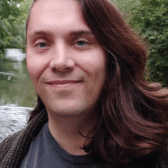
Tom Hitch is a bioinformatician focused on understanding the functional landscape of the human gut. Through understanding the functionality of this diverse community he aims to determine methods to modulate the human gut to improve host health.

Harri Lähdesmäki is Associate Professor in Department of Computer Science at Aalto University, where he leads the Computational Systems Biology research group. He works on probabilistic machine learning with applications in biomedicine and molecular biology.