
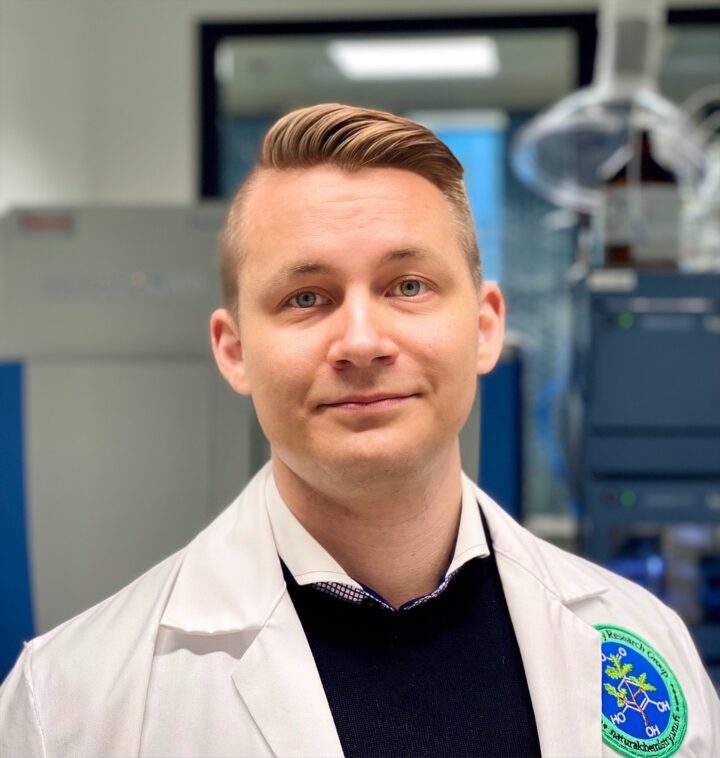
Ilari Kuukkanen | PhD
I am a Postdoctoral Researcher at the Institute of Biomedicine, University of Turku, working at the interface of analytical chemistry, mass spectrometry-based metabolomics, infectious disease research, and biomedical diagnostics. My research focuses particularly on Lyme borreliosis and Lyme neuroborreliosis, with an emphasis on understanding disease-associated metabolic alterations through advanced metabolomics approaches.
My academic and scientific background is rooted in chemistry, with an early specialization in mass spectrometry and analytical chemistry prior to my doctoral studies. Building on this foundation, my PhD research at the Department of Chemistry, University of Turku focused on the application of mass spectrometry-based metabolomics to investigate the biochemical processes associated with Lyme borreliosis and its neurological manifestations. My doctoral work was conducted under the supervision of Jukka Hytönen and Maarit Karonen.
In my current postdoctoral research, I continue to integrate mass spectrometry, metabolomics, biomedical research, biomarker discovery, and host–pathogen interaction studies. My work aims to provide deeper molecular insight into tick-borne diseases and to support the development of improved diagnostic strategies for Lyme borreliosis and Lyme neuroborreliosis.
Key Research Interests
Mass Spectrometry-Based Metabolomics
I have specialized in mass spectrometry since before my PhD and have applied this expertise to metabolomics-driven biomedical research. My work uses advanced mass spectrometric approaches to profile metabolites, investigate biochemical pathways, and detect disease-associated molecular signatures.
Metabolomics of Lyme Borreliosis and Neuroborreliosis
I apply high-resolution mass spectrometry-based metabolomics to analyze metabolic alterations associated with Lyme borreliosis and Lyme neuroborreliosis. This approach enables a comprehensive understanding of biochemical changes linked to infection, neurological involvement, disease progression, and host response.
Biomarker Discovery and Diagnostic Development
A central aim of my research is to identify novel metabolic biomarkers that could improve the accuracy, sensitivity, and timeliness of diagnostics for Lyme borreliosis and neuroborreliosis. By investigating disease-associated metabolomic signatures, my work contributes to the development of more objective and biologically informative diagnostic tools.
Biomedical Characterization of Tick-Borne Disease Processes
At the Institute of Biomedicine, my research connects analytical chemistry with biomedical questions related to tick-borne infections. I am particularly interested in how metabolic alterations reflect host–pathogen interactions, immune responses, and neurological manifestations of infection.
Advancement of Analytical and Metabolomics Methodologies
I am interested in developing and applying robust metabolomics workflows that enhance sensitivity, reproducibility, specificity, and biological interpretability. This includes optimization of sample preparation, mass spectrometric analysis, data processing, metabolite annotation, and statistical analysis in infectious disease research.
Research Vision
My research reflects a long-standing commitment to bridging chemistry, mass spectrometry, biomedicine, and clinical diagnostics. By applying sophisticated analytical chemistry tools to biomedical questions, I aim to advance our understanding of Lyme borreliosis, Lyme neuroborreliosis, and other tick-borne diseases at the molecular level.
Through interdisciplinary collaboration and rigorous metabolomics-based research, my long-term goal is to contribute to the discovery of clinically meaningful biomarkers, improved diagnostic approaches, and a more detailed understanding of the biochemical mechanisms underlying tick-borne infections.