Finding My Northern Light: My PhD Life in Finland
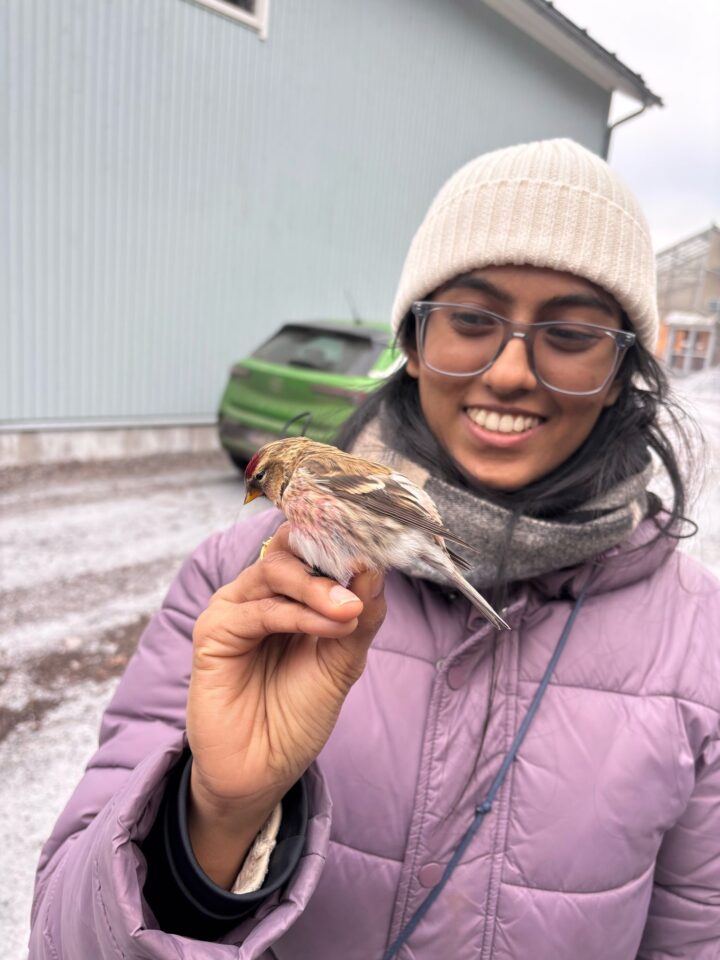
If the little me knew that future me would chase birds, measure them, and ring them as a part of my life, I would have laughed, loudly. But life has a way of redirecting you toward the places you’re supposed to be, especially when you finally get brave enough to leave the familiar behind.
Stepping Away from Corporate Life
I always wanted to learn more, do more science, pursue a career in STEM. So, after three months after finishing my bachelor’s degree in zoology, I started my master’s degree. This time, I wanted to learn more about the sea creatures. So, I chose marine biology. There, I learned that this beautiful Earth is far more humongous than the land we see- from majestic creatures like whales, sharks, dolphins to tiny plankton. It taught me that every time I breathe, I should be thankful to the oceans, specifically phytoplankton, if you catch my drift.
Right after my master’s degree I found my way into the corporate world, in an environmental consultancy company working as a data administrator. The structure was stable, colleagues and boss were lovely, the working environment was commendable, the pay was predictable, and on paper, it made sense. But inside, something was missing, an existential crisis. I missed nature. I missed curiosity. I missed feeling connected to something real.
Then came a period as a field ornithologist in the same company: waking up before sunrise, surrounded by forest sounds, listening to calls, counting birds, and feeling utterly at home. The mud, the cold, the early mornings and dusk didn’t bother me. In fact, I loved them. Being in the field reawakened something in me. For the first time in months, I felt like myself, I found myself back where my heart had been all along: with the birds.
This realization, made me think what my next step should be. Should I be miserable but enjoy the steady income? Or should I step out of my comfort zone and find my way back to research? After searching for more than a year, after gazillion rejections, I was able to find the project for me: heavy metal pollution-related food chain changes and consequences to bird.
Leaving corporate life wasn’t a glamorous leap—it was a quiet, uncertain step. But it was the step that changed everything.
Arriving in Finland—and Realizing I Am Truly Happy in Research
When I eventually came to Finland for my PhD, it didn’t feel like a dramatic new chapter—it felt like a natural continuation of the journey back to who I really am. Compared to other countries and cultures that I have experienced, Finland gave me and still gives me space to think, to breathe, to grow. And that space helped me realize that I wasn’t meant to sit in a corporate office; I was meant to be here, following questions into the forest, the birds.
Here, in the quiet rhythm of slow mornings, forests, and long research days, I discovered something important: I am genuinely happy doing research. Of course, there are deadlines, constant pressure to ‘publish or perish’ but, being curious everyday about what I love is the most rewarding thing. The joy of uncovering ecological patterns, understanding how pollution affects birds, and connecting tiny biological details to big environmental questions!
My PhD project is basically about heavy metals, birds and insects. Industrial emissions, mainly from smelters where heavy metals are extracted, release these metals into the environment. Over time, they bioaccumulate in the food web, disrupting and even collapsing ecosystems, and threatening the survival of the organisms that depend on them. These pollutants reduce insect abundance, modify insect species composition, and change the nutritional composition of the insects themselves. Insectivorous birds rely heavily on insects for food, so these changes can affect the birds negatively.
Pollution-driven shifts in insect quality may have profound effects on bird health that go far beyond direct toxic exposure. Even at low or moderate pollution levels where no obvious toxic effects are detected, delicate alterations in the food chain may still disrupt bird diet, nutrition and development. These secondary effects of pollution are common and widespread in the wild, making nutritional studies crucial for understanding long-term ecological consequences.
However, there is a clear research gap in quantifying these dietary shifts and their impact on bird health and reproduction. My PhD thesis aims to explore this gap and provide answers to how pollution-induced changes in insect communities and their nutritional quality affect the health, development, and reproductive success of insectivorous birds. I’ll be focusing on nestlings of three familiar birds the great tit, blue tit, and pied flycatcher, and gather fecal and blood samples from birds while also collecting insects near a copper-nickel smelter in Harjavalta, Southwest Finland. Pollution from industry offers a unique perspective into how airborne heavy metals affect the food chain.
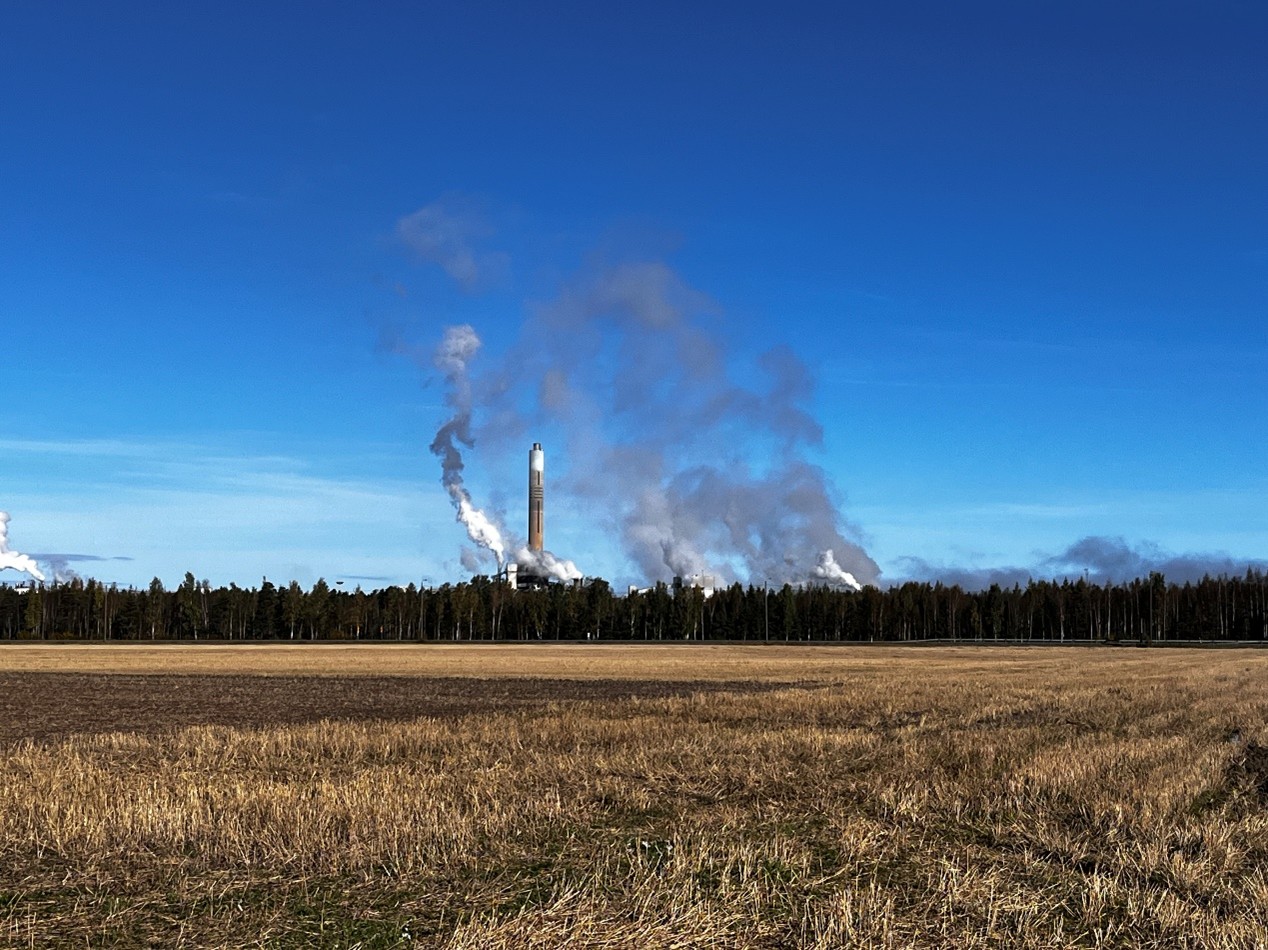 Harjavalta Copper Nickle smelter
Why Finland Is Close to My Heart?
My parents, friends back home often ask me why I love Finland so much. Is it the landscapes? The lifestyle? The silence? It’s all of that—but also something deeper. Finland feels honest and it’s a country that doesn’t rush you. This country invites you to walk slowly, listen carefully, and notice the world around you. There is beauty in the subtlety: the soft crunch of snow under boots, the glow of the sky that lasts only a few moments, the birds that somehow thrive in temperatures I once thought impossible. Gradually, this northern country carved a place in my heart.
I grew up in a country where overworking was praised most of the time and getting a proper break felt guilty. In the beginning, it was hard for me to get out of the office when my body needed rest: I thought that I should work more, publish quickly and there was always this restlessness. Slowly, I learnt, that it is absolutely okay to take a break whenever I feel things start to feel hefty, especially when analyses don’t work the way I want them to.
Adjusting to Finnish Weather—One Layer at a Time
Let’s be real: I did not arrive in Finland weather-ready. The first winter in Finland, my tropical body was in shock. True, that I survived through several winters in the Europe but Finland hits differently! My fingers forgot how to function. My nose felt personally attacked. And the darkness? It felt endless. But Finland teaches you resilience one layer at a time. The right socks make life better, cold air feels cleaner when you stop fearing it, the sun, when it appears, becomes a celebration, and snow, surprisingly, becomes comforting, like a soft blanket over the world. Somewhere along the way, I stopped fighting winter and started appreciating its strange beauty.
Despite the cold, I found a different kind of warmth here -one made of people, not climate. My colleagues, supervisors, and friends became the warmth I thought I left behind in the tropics. Whether it’s sharing stories in the office, laughing during long lab days, or simply knowing someone cares enough to ask how I’m doing during the darkest weeks—it matters. It means everything. In Finland, I learned that tropical warmth doesn’t always come from the sun. Sometimes it comes from connection, from the kindness of people who share this journey with you, from community that makes even -25°C feel bearable.
Living between two countries has shaped how I see the world and myself. Sri Lanka and Finland could not be more different in climate, culture, and pace of life, yet both have taught me essential lessons that coexist within me. Sri Lanka taught me warmth of people, of nature, of emotions. It taught me how deeply interconnected life is, how birds, forests, oceans, and people exist in a shared rhythm. My love for biodiversity, my fascination with wildlife, and my instinctive pull toward nature were all born there.
Finland, on the other hand, is teaching me structure, patience, and resilience. It is teaching me that silence can be powerful and productive. That thinking deeply requires space. That slowing down does not mean falling behind. Here, I am learning to trust the process whether in research, in life, or in personal growth. I learned that failure is not something to fear but something to sit with, analyze, and learn from. This mindset transformed not only how I do science, but also how I live.
Sri Lanka is the motherland I turn to when life feels heavy; Finland is the fatherland (isänmaa) that molds me to be resilient and to value a strong work-life balance.
Looking Back, Looking Forward
Leaving the corporate world was scary. But it was the best decision I ever made. It led me to birds, to research, to Finland, and to a version of myself I might never have discovered otherwise. My PhD life isn’t glamorous, but it is deeply fulfilling. I wake up each day knowing that I am doing work that matters- work that makes me feel alive, curious, grounded, and connected. And here, in this snowy northern corner of the world, I’ve found something priceless: A life that feels like my own.
Follow Sewwandi on LinkedIn!
 Co-funded by the European Union. Views and opinions expressed are however those of the author(s) only and do not necessarily reflect those of the European Union or European Research Executive Agency (REA). Neither the European Union nor REA can be held responsible for them.