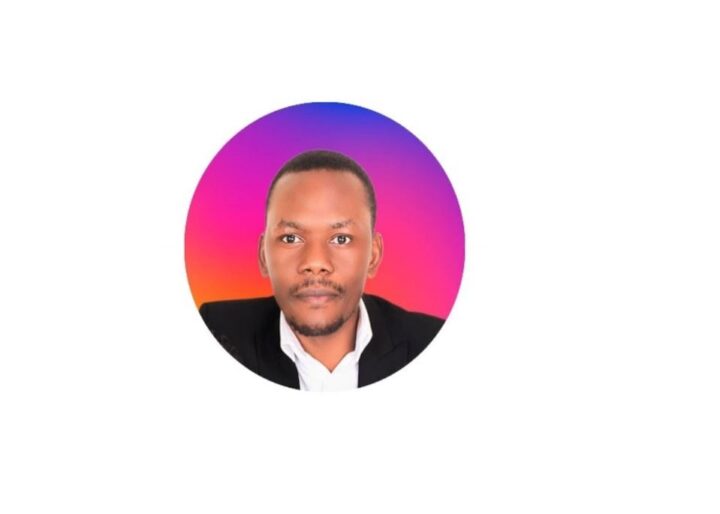
The Difficult Question: Who Am I? Exploring the Architecture Beneath the Work
It was Dr. Myles Munroe who pushed me to this inescapable question: “Every day, ask yourself, Who am I, and where am I going?”
For many scholars, identity settles within the boundaries of a discipline. One becomes a physicist, an agronomist, an engineer, or a theologian, and the intellectual journey follows a defined trajectory shaped by that domain. For others, this inquiry is a philosophical puzzle.
For me, it has been both. It has shaped the daily negotiation between my capacities, vision and the discipline that sustain them. I exist between worlds. On one side, I am a technologist, building systems. I am also a teacher, loading equations and resetting inspirations in those I meet. On the other side, I am a theologian. Yet within another rhythm, I am a leader, waiting for the day I can turn the whole of Africa upside down. That’s not all; I am also a builder, guiding the Utterlife Learning Initiative in Uganda, where faith, education, and technology converge to equip young people with practical tools for transformation.
Polymaths often struggle with the temptation to do everything simultaneously. Inspiration comes in torrents, and every idea seems urgent and a do-it-now. Without waiting anyone to point a finger at me, I told myself, You’re too scattered young man; where are you going?
The Architecture Beneath the Work
At this junction, my doctoral journey intensifies this integration. It gives a housing-structure to an inquiry that has long been present, bringing clarity and intuition. The project centers on the design of an integrated system that controls plant growth, optimize energy use and plant photosynthesis. The agricultural sector is undergoing a profound transformation as digital technologies reshape the convergence of energy efficiency, food production, and environmental control within a unified framework. Such a formula of sustainable farming solutions demands a highly controlled manipulation of environmental factors, light intensity, spectrum, and photoperiod, which are known to influence photosynthesis, and developmental signaling in plants.
On the surface, the work presents itself through technical components such as hardware design, sensor systems, edge computing, and cloud-based architectures. Beneath this surface lies a deeper configuration. The work operates as a multi-layer state architecture in which plant physiology, electronics, photonics, environmental physics, and data science interact within a shared operational space. These are not independent modules arranged in sequence. They exist in constant dialogue, shaping and reshaping one another in a closed-loop system. Sensors capture environmental conditions, translating physical states into data streams. Optimization algorithms translate these insights into actionable configurations. Actuators respond by adjusting light, climate, and nutrient conditions. The system cycles continuously, maintaining a dynamic equilibrium that evolves with each iteration.
While I am thinking about how the plants are breathing, another layer emerges alongside it. Data collection presents itself as a full pipeline, demanding its own structure, logic, and precision to transform raw measurements into useful variables. This involves preprocessing stages where cleaning, normalization, and feature extraction prepare the signals for analytical modeling. The challenge becomes one of orchestration. Environmental signals, plant responses, and energy systems must operate within a unified digital framework.
Research as Language of Self
The actual tasks are indeed shared between various members of the research team. It is not a one man do it all, however, the beauty is in how the architecture reflects a principle that extends beyond the system itself. The question of identity persists beneath the work. Integration of many tasks stops being an abstract and confusing concept. Multidisciplinary research begins to form a marriage and a language, a mingling of logics that do not dissolve into each other but remain distinct while operating in synchrony. The interaction is dynamic and alive. The process moves beyond the execution of tasks and enters the formation of identity. What once felt like a scattered identity begins to recognize its own possibilities in how the layers become a coherent system. The exploration is a gradual observation, reflection, and revelation. The self meets a language that brings accurate definition, one that strengthens thoughts as structures, perception as expressions, and sharpens the clarity of insight.

Image created using AdobePhotoshop
Some indeed find purpose in isolating craftsmanship and specialization, and they are right to do so. However, a compelling transformation of the present world will not emerge from specialists alone but from integrators, those who can bridge function and science, wisdom and technology. That arena will be a world where technology is redemptive in operation, education is intellectual, transformative, and creative. Specialists often provide the “how” through technical mastery, but integrators provide the “why,” ensuring that our rapid technological and scientific advancements remain anchored to human values and ethical purpose. Without that bridge, function risks becoming hollow, and technology risks becoming disconnected from the soul of the society it is meant to serve.
The work has become a mirror through which the self is able to evolve in parallel with the architecture it is forming.
Follow Joshua on LinkedIn or X!
 Co-funded by the European Union. Views and opinions expressed are however those of the author(s) only and do not necessarily reflect those of the European Union or European Research Executive Agency (REA). Neither the European Union nor REA can be held responsible for them.