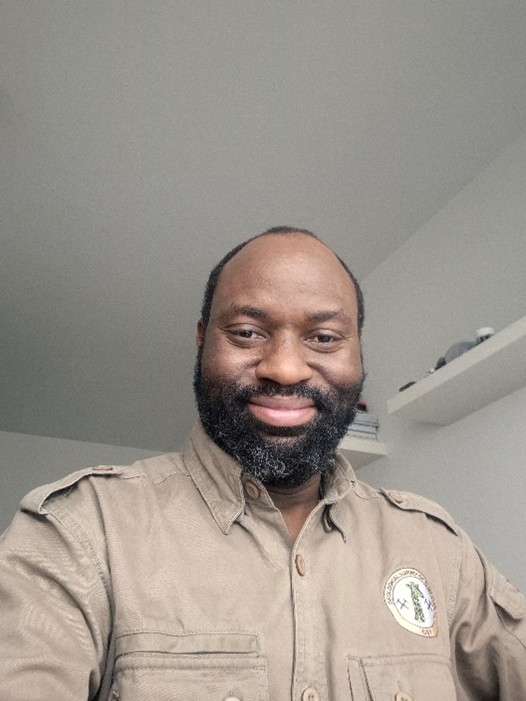
A Milestone from the Industry to Academia: A Blessing or A Tragedy!?
After more than 15 years in the mining and mineral exploration industry, I made a decision that many professionals spend years avoiding. Imagine someone who has spent over 15 years in the mining and mineral exploration sector, taking on various government roles, and then suddenly switches to an academic life. With that in mind, you will find me at this crossroads. Is this transition a blessing or a tragedy? This blog reflects on that change, its realities, struggles, and unexpected rewards.
“Turning challenges into milestones: My Career Journey Begins.”
From Curiosity to Career: Industry Experience and Academic Aspirations
I was born and raised in a small town in Tanzania, surrounded by the lively energy of small-scale gold mining activities, often called “gold rushes.” This rich environment sparked my curiosity about how minerals form and settle on Earth, motivating me to focus on science subjects in high school with the intention to study minerals in the future to help indigenous communities identify and eventually use them properly. This passion led me to earn a Bachelor of Science degree in Geology from the University of Dar es Salaam, Tanzania, in 2005. After completing my BSc in 2009, I joined the Geological Survey of Tanzania as a Field Geologist, advancing my career in mining and mineral exploration. In 2014, I made a bold move and enrolled at the University of Aberdeen in the UK for a Master’s Degree in Petroleum Geochemistry. I initially planned to shift from minerals to the oil and gas industry. However, the allure of minerals was too strong, and I ultimately returned to my roots, continuing to thrive in the field that first inspired me. After more than 15 years of progressing from a junior role to a more senior position in the industry, I transitioned into academia, driven by my journey and eager to share my experiences.
“Where It All Began: From Gold Rush Landscapes to Academic Pursuits”
Beginning a Doctoral Journey: Experiences from the UTU-GreDiT Programme
My academic journey began with an opportunity I could not ignore: a fully funded PhD position at the University of Turku in Finland. In January 2024, a friend shared a call for applications to the European Union–co-funded University of Turku Green Energy and Digital Transition Programme (UTU-GreDiT). The program offered about 25 interdisciplinary research topics spanning geology, biology, biodiversity, geography, urban planning, business, economics, entrepreneurship, and ecology. Driven by my passion for geology, I applied and was fortunate to be selected.
In late July 2024, I eagerly planned my journey to Finland, with my studies set to begin in early August. My initial experience in Turku tested my resilience as I struggled to secure housing. For nearly a month, I searched for a suitable place to live before finally finding an apartment in a private house in town. I am deeply grateful to my supervisor, who generously hosted me in his home during this transitional period and provided the essential support I needed most.
One significant hurdle I encountered was opening a bank account in Finland. Delays in registering digital population data and issuing Finnish IDs led to a series of lengthy appointments. During this time, I realized something interesting: having a Finnish ID in Finland is kind of like having life insurance. When you have it, you feel secure and confident, like you can take on the world. But without it, things can feel a bit confusing and aimless, making it tough to move forward. During the first two months without a bank account or salary, I faced considerable financial stress. However, I eventually found my footing and embraced my PhD program, enrolling in essential courses. I understood that a PhD revolves around research and publication, and I remained undeterred, strengthened by my prior experience publishing papers while working in the industry (https://orcid.org/0000-0002-6674-6046). This knowledge marked a pivotal milestone on my path to attaining a PhD.
Despite my prior publishing experience, I recognized the importance of understanding ethics in academic publishing. This realization motivated me to review the publication requirements for my program. Knowing that every successful paper starts with a well-crafted manuscript, I dedicated time to mastering the art of writing for publication. By grasping the complexities of the publishing process, I began to strategize ways to simplify it, aiming to minimize stress and fully embrace the journey ahead.
“Transitioning into Doctoral Research: A Personal Academic Narrative”
From Uncertainty to Purpose: Navigating My PhD Journey in Finland
My strong interest in understanding how minerals form and deposit on Earth has guided my journey into geosciences. My research is rooted in a lifelong question: How do minerals form and accumulate within the Earth? Finland offers a compelling context for this work. Its geological framework shares notable similarities with Tanzania’s, while also hosting diverse, mineral-rich environments. Currently, my research focuses on unraveling the sources, processes, energy drivers, and trapping mechanisms that contribute to the formation of battery and base-metal deposits, such as copper, gold, cobalt, and nickel, which are critical for the global transition to low-carbon energy systems. Scientists across the globe are dedicated to fostering environmentally friendly, low-carbon communities. World’s current conflicts challenge the green transition and supply of battery raw materials in Europe. Nordic countries such as Finland and Sweden might play more significant role at least in EU level.
This research aims to enhance our understanding of the processes involved in the formation of battery minerals and base metal deposits, with a particular focus on cobalt and nickel, given their extensive use in lithium-ion rechargeable batteries and energy storage systems. Recently, I attended the 37th Nordic Geological Winter Meeting (NGWM2026), held in Turku, Finland, from January 13 to 15, 2026, where I discussed and shared my research findings with a diverse community of experts from industry, academia, government, and the private sector across the Nordic countries. The study investigates the geological factors influencing the formation of these mineral deposits in Finland and Sweden, and examines the distributions of major and trace elements, as well as other mineral compositions.
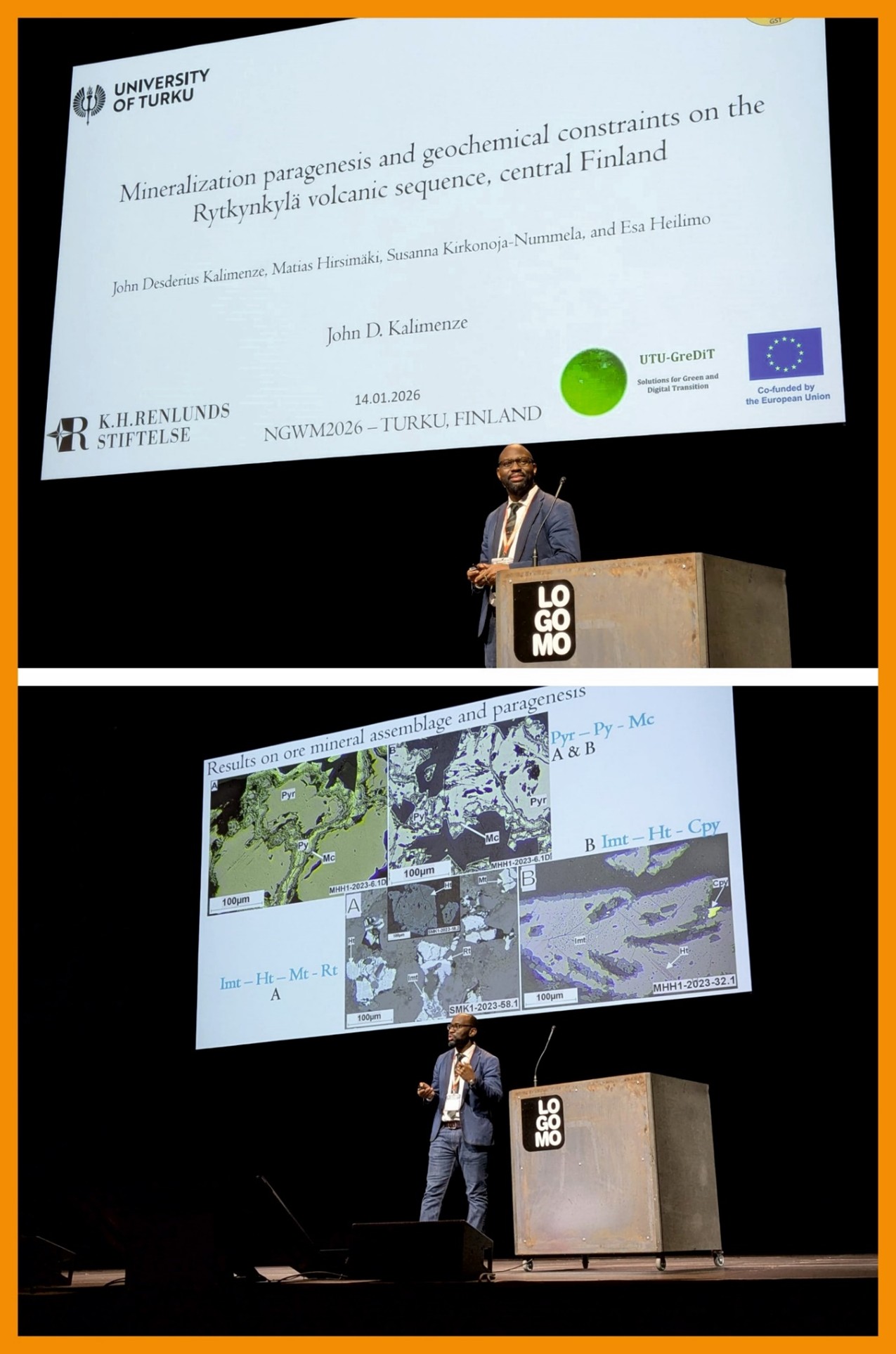
Sharing my research at the 37th Nordic Geological Winter Meeting (NGWM 2026) in Turku, Finland – an inspiring moment connecting industry experience with academic research.
Image credit: Prof. Esa Heilimo
Is This Transition a Blessing or a Tragedy?
Reflecting on my journey, I see it as a blessing rather than a tragedy. As I immerse myself in my PhD program, my long-held dream is coming to life, driven by a profound understanding of how minerals form and are deposited on Earth. It feels as if the threads of my aspirations are weaving a vibrant tapestry of knowledge, turning a distant dream into a remarkable reality. Each step I take is like writing my own history, transforming dreams into tangible achievements.
Key Lessons from My Transition
- Transitioning careers demands resilience more than certainty.
- Academic writing is a skill that must be educated, regardless of industry experience.
- Support systems such as mentors, supervisors, and peers are essential.
- Challenges related to relocation are significant; it’s important to plan beyond just academics.
- Your experiences are not in vain; they will become your greatest asset.
“Where Experience Meets Knowledge”
This journey has taught me that transitions are rarely easy, but they are often necessary. Moving from industry to academia is not about leaving one world behind; it is about connecting the two. It is about transforming experience into knowledge and knowledge into impact. For anyone standing at a similar crossroads, wondering whether to take that leap, the greatest risk is sometimes staying where you are. Think big and choose wisely.
“From Industry to Academia is a Journey of Purpose, and The Greatest Risk is Standing Still”
Research Subject: Ore Geology
Research Topic: Battery and base metals mineralization processes and comparison of Svecofennian metallogenic provinces.
Project: UTU GreDiT Doctoral Training Programme
Availability: Geotalo room number 509
Email: john.kalimenze@utu.fi
Follow John on LinkedIn!
 Co-funded by the European Union. Views and opinions expressed are however those of the author(s) only and do not necessarily reflect those of the European Union or European Research Executive Agency (REA). Neither the European Union nor REA can be held responsible for them.