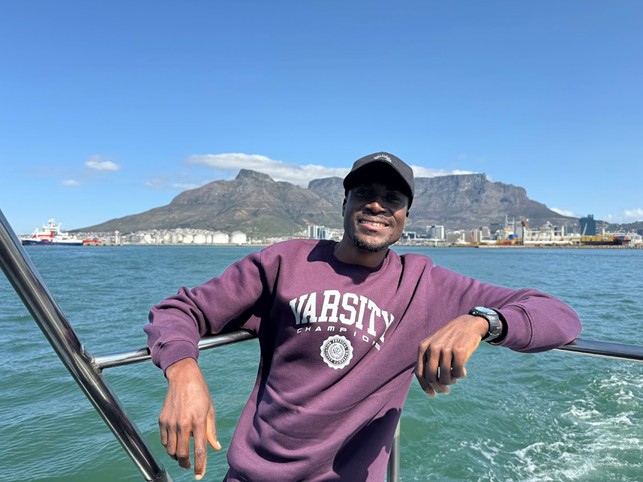
Goodbye, Gold Dust; Hello, Snowflakes—How my UTU-GreDiT Journey Began
” …Guess what Dad, I finally made it to the land of a thousand lakes and saunas…”
That was how I broke the news of my next big step to my dad over the phone. I could sense his mixed emotions of curiosity and quiet pride when he enquired about why this sudden turn of events. Perhaps his inquisition about the plot twist was justified; we had plans on working together on a series of projects when I return from Europe in a few years. Yes, return from Europe because this was not my first time setting foot on the continent, nor was it my very first PhD offer—it was actually my third in two years.
Two years prior, I was deep in doctoral work. Somewhere along the journey however, I started craving a project that felt closer to my heart; something that tied my research not only to my personal goals but also to my hope of giving back to my community in a real, tangible way. No, it is not that what I was working on earlier wasn’t worthwhile or competitive; it absolutely was. I only realized that I needed a space and direction that gave me the kind of focus and support to grow my ideas the way I had imagined. Therefore, when I came across the open call for the Solutions for Green and Digital Transitions” (UTU-GreDiT) project as shared by a contact on LinkedIn, I felt compelled to give it a try.
A Single Generous Act Could be the Turning Point
At the time of the open call, I felt I was not in the right place to go through another rigorous application and selection process that had no assurance of turning out favorable. After all, what is the need when I was already two years past an equally good PhD program? That was how I tried to justify why I should not bother about another potential episode of rejection and disappointment—at least, that was what I thought of it then. But wait, would my decision to apply or not make any difference if I did and got rejected? Absolutely not! Indeed, if there was one thing I have mastered over the past few years, it is the art of getting rejected. I don’t mean being rejected by crushes—although I have not done so well in that department either—but by employers and universities. Picture this: me, sitting late into the night in front of my computer sending off application after application to PhD programs in top universities across the globe. And each time, I will imagine the email arriving with a “Congratulations!” banner. Instead, what I usually got was a very well-rehearsed, (maybe polite) line that typically goes like “…upon further examination of your application, we regret to inform you, that…” and I know you can relate with how the rest of it will end.
While I was still grappling with this thought, another colleague shared this same call with me, emphasizing on how he thought my profile was a good fit for one of the projects. If I remembered right, he offered to review my resumé for free while I worked on the other files to support the application; a kind gesture that will turn out to mark a turning point in my personal and professional development. That was how I took a shot at this, hopefully waiting for that day when I could also make that flattering caption on LinkedIn; “I am thrilled/honored/delighted to announce that, I am an UTU-GreDiT fellow…this is a testament to my…”. Of course, that would be followed by a series of the “Here are my ten key takeaways…” posts when I finally present my research at international conferences.
I will rather not bore you with the fine details of how thorough the application, recruitment and selection processes went. I live to say that another day. But let me quickly caution that it was not just about good grades or shiny CVs; the admissions committee wanted to see the spark, the passion and the ability to articulate these within a limited time constrain. That is why when that email finally landed on the morning of the 3rd of May about my acceptance into the UTU-GreDiT program, I actually yelled! Yes, somehow miraculously, I was offered one of the positions! A lot of the time, I get people asking me about how I got in. Unfortunately, as I write this, I still can’t tell exactly how—whether it was on the strength of my research plan and profile, my persistence or if really, it was just the admissions committee feeling so sorry for me after so many years of trying. What matters most however is that, I am here; and I guess my project team is happy to have me join them.

2025 Summer Seminar in Stakeholder Theory in Finland, credit: Lavender Okore
Finding a Balance between the Gold and the Green was the Burning Question
Growing up in Ghana; a land abundantly endowed with vast acres of pristine, green tropical rainforests, we were always told incredible stories about why it is important not to cut down trees, litter the environment and pollute water bodies. In fact, I can recall very startling stories told of the misfortunes that befell people who did the contrary. We were also showed some forest conservations designated ‘sacred’ and ‘forbidden’; nature reservations where no one dares enter to pick wild fruits, firewood or hunt. For a little child like me, it was a normal part of the natural scenery to see stray creatures of the wild creep into our compounds after a heavy rainfall. Such encounters were so peaceful; no one thought of crudely endangering them, nor invading their natural homes. Really, I never envisaged such a time as this where unregulated artisanal gold mining will become so rampant that it poses almost a direct existential threat to both these creatures and human populations.
Don’t get me wrong. I am fully aware that, for many households, ending artisanal gold mining means terminating their lifelines and livelihoods—the practice directly employs over 1.2 million people and contributes a significant portion of Ghana’s annual gold output. However, seeing the once clean streams, rivers and lakes turn murky, water bodies losing fish, vibrant forests shrinking and biodiversity swiftly disappearing, I believe we could have a second look at this practice. This is what forms the basis for my research which explores the impact of artisanal gold mining on tropical biodiversity and how to integrate regenerative thinking into all forms of mining. Sounds heavy right? I know. But for me, this is personal; I am studying something that has the potential to shape my life, my environment, some of my country’s most marginalized people and maybe also redirect policy attention to the few remaining species from one of the earth’s most sensitive regions.
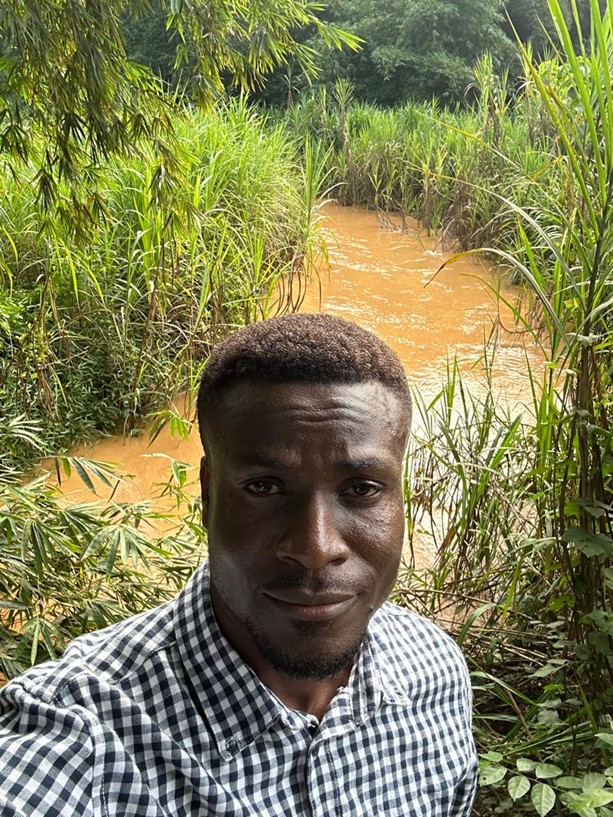
Picture taken during fieldwork at the bank of a stream affected by artisanal mining.
Why Finland?
I always joked to people back home that I came to Finland because I needed a break from the scorching tropical sun. Of a truth, I am not a lover of an extremely cold temperature either. But I admit winter in Finland is a bit different from what I became used to few years back. And so, I am still perfecting my walk on ice while trying hard not to look like a praying mantis that is learning to balance. And while I am still wrapping my head around ways to perfect a lot of things, at least I notice I am not alone; many people have yet to figure out how ‘Kofi’ sounds differently from ‘coffee’.
Yet still, every day here reminds me that life is much more than how people say your name; it seems more about how they make you feel. I cannot be less thankful for the surprisingly warm people I work with; those guys always look out for me in ways that make me feel at home. Aside the people, I am also very grateful for the good air quality and the quietness here. Undeniably, Finland is heavy on caring for the physical environment and nature; and that feels like the perfect place for me to carry out such important research. Love it or hate it, there are countless opportunities for you to talk about your research at any least opportunity. So, whether you are ready for it or not, be prepared to present your work—in class, at meetings, during conferences, on the bus or even during a walk in the park! And oh, you would love the helpful feedback that often comes to you during those moments. That is one of the things that get me incredibly optimistic about the adventure that lies ahead.
Where the Study Ends is When the Research Begins
Optimistic? Certainly! But not because the end goal is to get those fancy two-letters ‘Dr.’ prefixing my last name. Of course, I am happy to be on a journey that earns me a privileged academic qualification; one that less than 2% of the global population has—and I am also not oblivious of the potential doors that could open too. But I have never been under the impression that merely getting a PhD degree would make any significant difference if the skills acquired over the journey are not well put to use. As a mentor once told me, a PhD is like a driver’s license—while it indicates that one is qualified to drive, it does not necessarily guarantee a good driver. This is why the UTU-GreDiT program’s emphasis on equipping its fellows with relevant transferrable skills resonates with me. Finland is one of the most deliberate countries on the globe when it comes to formal education, and I am quite confident that the consciously built-in support provided by our friendly supervisory and research teams, follow-up committees and project coordinators will help maximize the talents of the fellows. So, here I am, the young man who once stared at muddy rivers, now confronted by frozen ones. With a broad smile, I ask that you send some good vibes my way—and maybe some warm hugs too. They will really make a difference; I cross my heart they will.
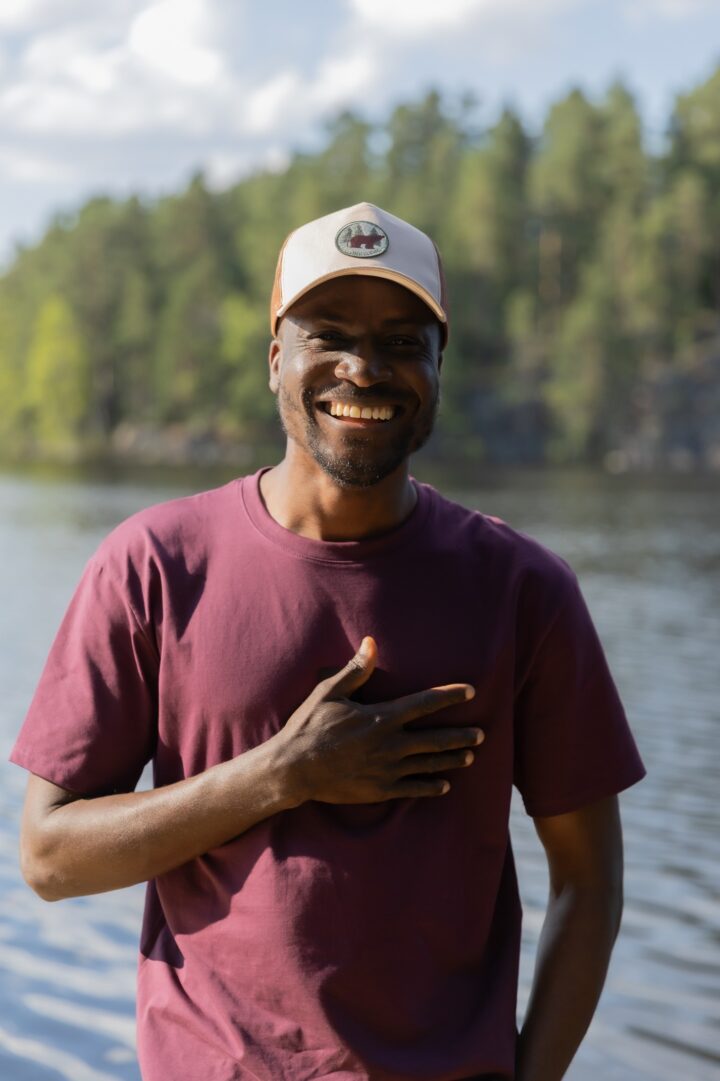
A lakefront view of what a typical lake looks like in Finland, credit: Vili Mehtälä
Emmanuel Kofi Dzage
emmanuel.e.dzage@utu.fi
Biodiversity Unit
University of Turku, Finland
Socials:
LinkedIn: www.linkedin.com/in/emmanuel-jeffrey-d-83b7ba107
Article main photo credit: Christian Igbeghe.
 Co-funded by the European Union. Views and opinions expressed are however those of the author(s) only and do not necessarily reflect those of the European Union or European Research Executive Agency (REA). Neither the European Union nor REA can be held responsible for them.