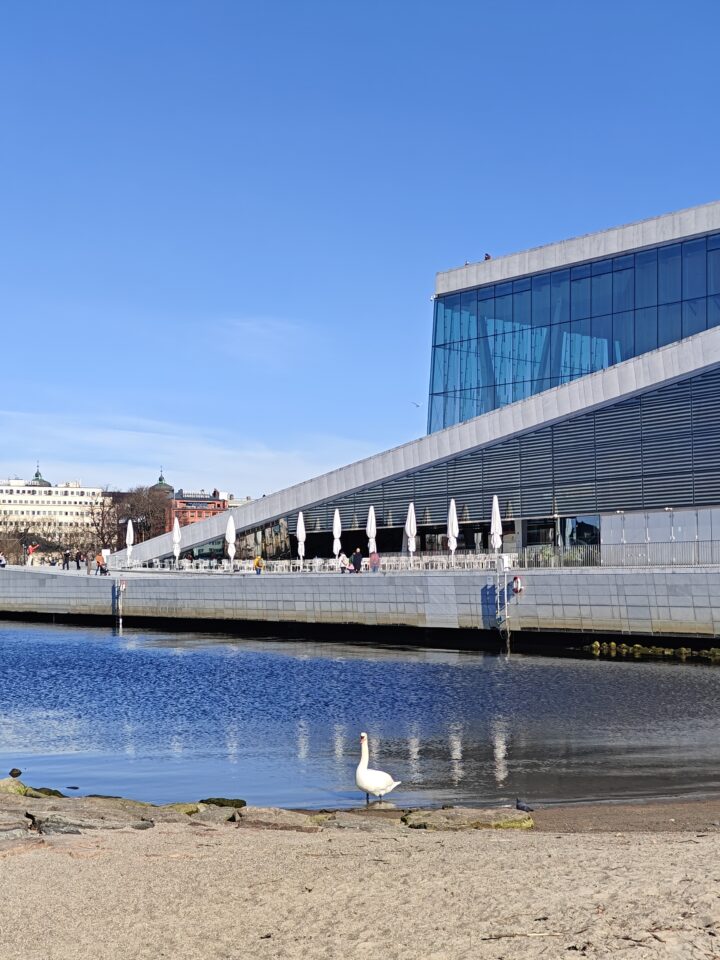
Workshop trip to Oslo
At the beginning of April, right after Easter, we headed to Norway’s capital, Oslo, for a research visit. Jenny, Kati, and Karita traveled there together from Finland. In Oslo, we met our project collaborators, Professor of Scandinavian Linguistics Marja Etelämäki and Professor of Clinical Psychology Erkki Heinonen, and together we carried out the workshop we had planned: From disintegration to coherence: How the self is constructed via video-facilitated schema therapy.
On the first day, we went straight from the airport to the University of Oslo. We had a meeting in a seminar room with a view of the Holmenkollen ski jump through the window. We already had a data session with Marja last autumn in Helsinki, and we had met Erkki in Kraków, but now for the first time we had both collaborators at the same table. We planned future research and watched excerpts from video data together. It was highly inspiring to hear insights from experts in linguistics and psychotherapy; studying interaction in interdisciplinary contexts is incredibly fascinating.
In the evening, we went for a walk with the Borderlines of Self group in the Royal Palace park and along the seaside. For dinner, we went to an Indian restaurant called Der Peppern Gror. The food was as good as the wine was expensive. In Norway, it’s always worth checking the price before making a purchase. On the first evening, we didn’t remember to do so.
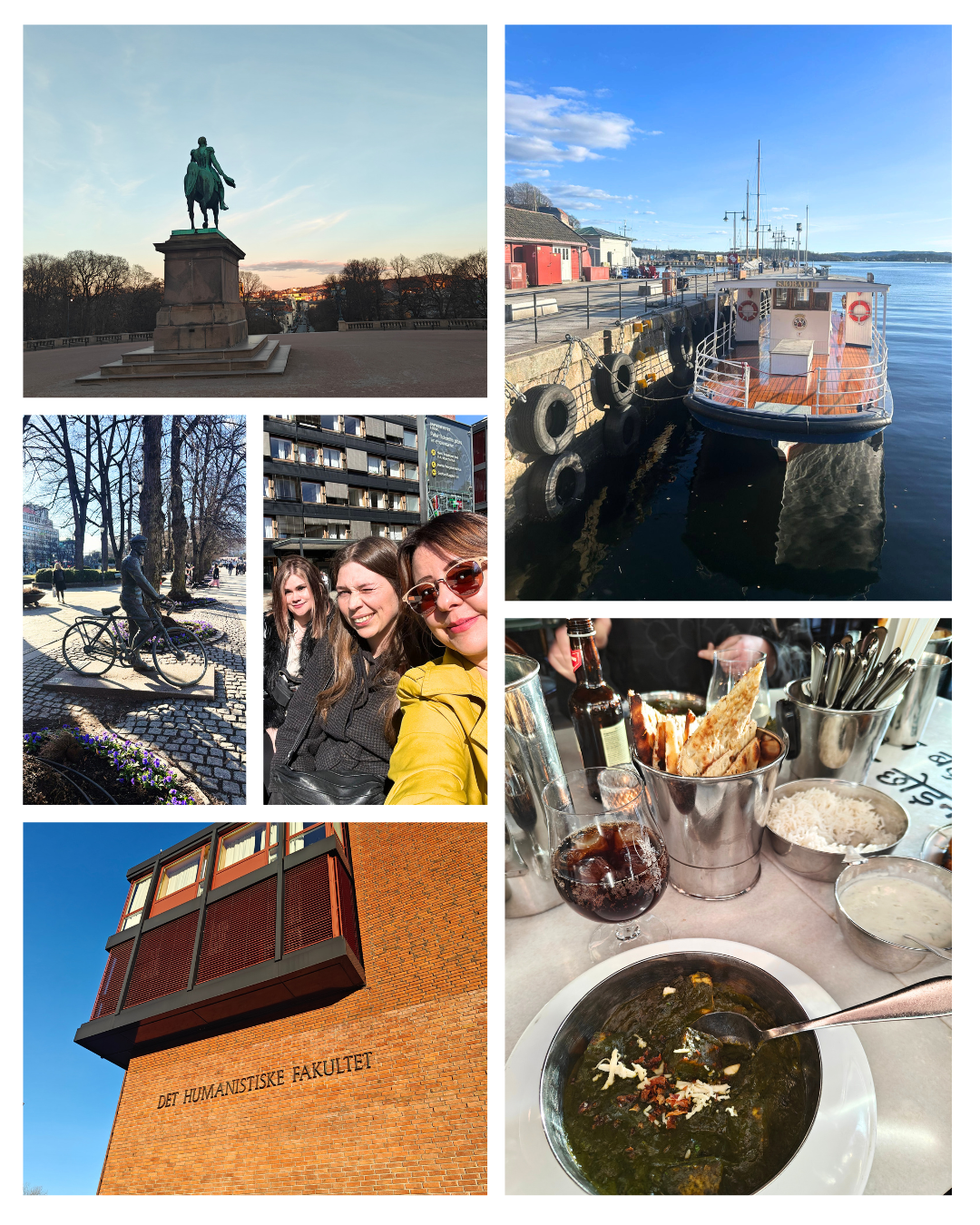
On the second day, we continued working on campus. We prepared the presentations for the following day and glossed the data excerpt for the data session. Glossing is a kind of grammatical translation in which each word is given a literal translation and inflectional elements are identified. It is laborious but helps (at least linguists) to understand how expressions in a foreign language are concretely constructed. Example:

Since the weather continued to favor us, after the workday we visited the world-famous Vigeland (Frogner) Park, where more than two hundred sculptures by Gustav Vigeland are on display. The sculptures form four ensembles: the bridge, the fountain, the monolith, and the wheel of life, each of them astonishing. As we visited in early spring, the park’s plants had not yet come to life, so the sculptures received our full attention. The park is probably even more impressive once the leaves and flowers have blossomed.
The park’s iconic monolith is carved from a single 17-meter block of granite and features 121 intertwined human figures. It apparently took three sculptors and 14 years to complete! Compared to that, doctoral dissertations and research projects feel like manageable and lightweight processes. On our way back to the hotel, we stopped at De La Casa Pasta Bar, which offered both ready-made pasta dishes and the option to build your own. Kati tried the restaurant’s chicken pasta, while Jenny opted for the latter, combining tagliatelle, pine nut pesto, and Parma ham.
On the third day, we finally got to carry out the workshop for researchers and students at the University of Oslo. First, we gave three hybrid presentations, with participants both in the room and attending remotely. Jenny talked about the Borderlines of Self project, Kati about her doctoral research plan, and Karita about our previous study analyzing individual therapy using the VideoFacilitation method. In the afternoon, we had a data session for the in-person audience. Although we were a relatively small group, the discussion was lively, and the participants’ observations were valuable for our research.
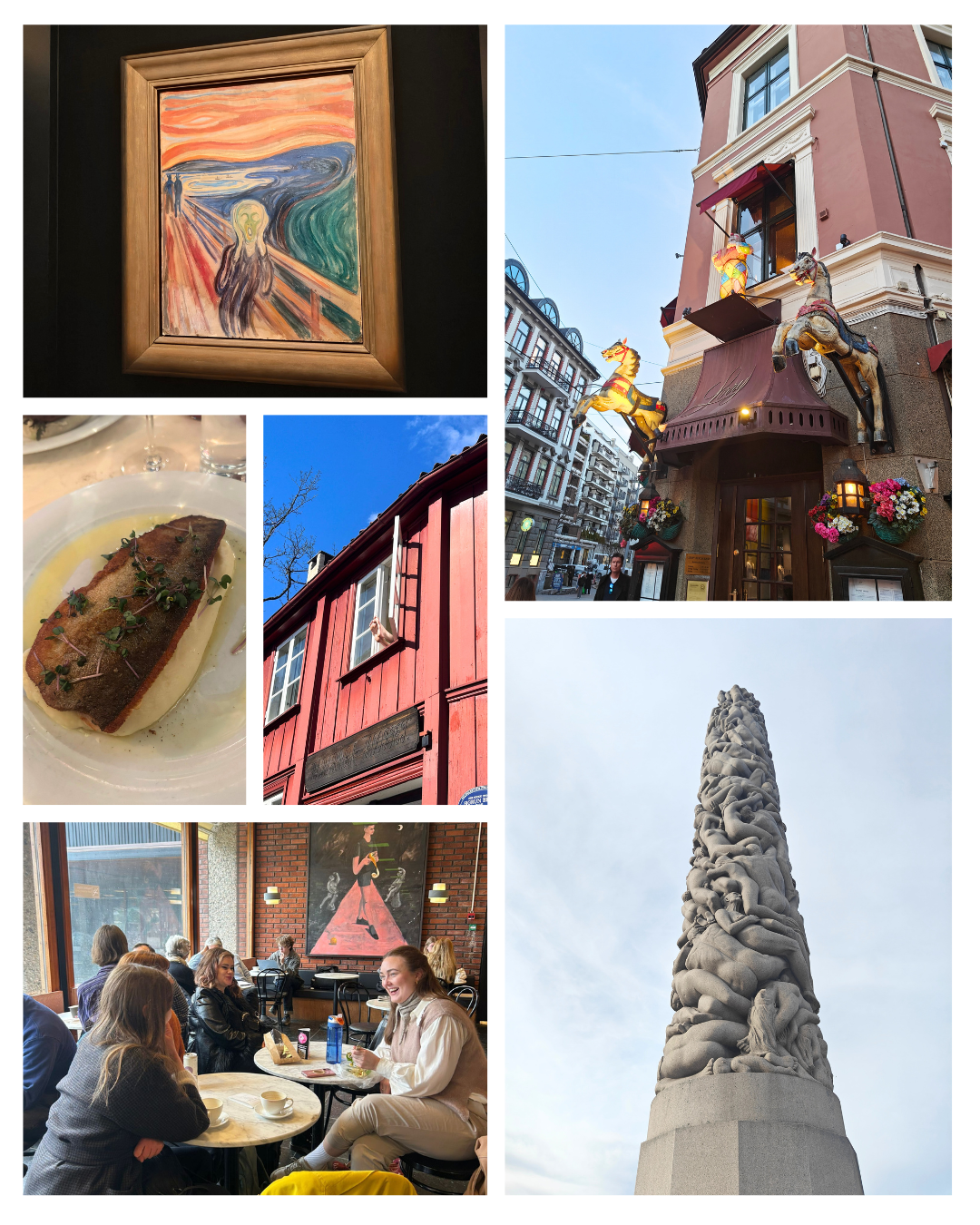
We continued our discussions over a shared dinner. This time we went to Lorry, which offers traditional Norwegian food along with a rich and eclectic artistic experience: the restaurant is filled to the ceiling with paintings, art books, and curious objects such as stuffed animals and porcelain harlequins. The fish dishes at the restaurant featured flavors of butter, cream, peas, and carrots.
On the final day, before our flight to Turku, we managed one more excursion. We walked on the roof of the Opera House, reflected on mental health at the Munch Museum, and stopped by the flea market and café area of Grünerløkka. Jenny found a vintage silk scarf as a souvenir and bought coffee beans as gifts. Kati purchased Freia chocolate as gifts to take back home. The sun was shining, and Oslo showed its best side. We would have happily stayed longer, but fortunately our research collaboration will bring us back in the coming years. Vi sees igjen, Oslo!
Jenny and Kati