
Team
Jenni Kuuliala, PI
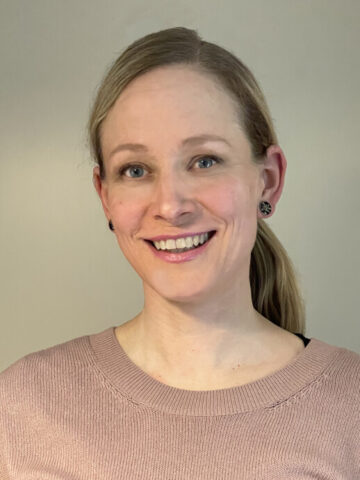
Jenni Kuuliala is a historian of late medieval and early modern disability, social history of medicine, sainthood, and lived religion, who currently works as a lecturer at the University of Turku. Previously, she has led two disability history projects and published widely on the topic, for both academic audience and general public. She considers doing public disability history as one of the best parts of her job as a researcher, and is an enthusiastic public speaker, having appeared in podcasts and radio programmes.
In her free time, Jenni enjoys practicing agility with her Border Collie, walking in the nature, and reading, particularly detective fiction and thrillers.
Sari Katajala-Peltomaa
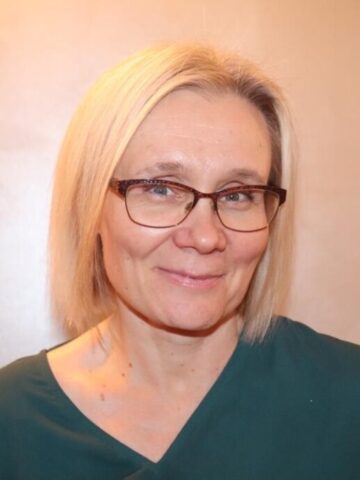
Sari Katajala-Peltomaa, Professor of Cultural History, University of Turku, is a renowned expert on medieval lived religion and mental illness, whose extensive list of publications have had a significant impact on the field. In addition to research merits, she has a successful track record in public impact: she is a frequent interviewee in national media, has given numerous public lectures, and been involved in building two exhibitions. As a former president of the Finnish Historical Society, she has wide expertise in collaboration with stakeholders.
Daniel Blackie
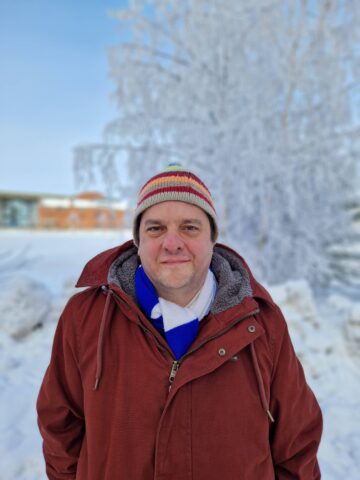
Daniel Blackie is a disability historian and author, with David Turner, of the open access book Disability in the Industrial Revolution. A firm believer that the world would be a better place if everyone knew a little more disability history, Daniel has contributed to lots of public history initiatives over the years, both in Finland and the UK. These include his work for the Kone Foundation-funded ‘Silent History of Disability’ (‘Vammaisuuden vaiettu historia’) project and his co-curation of a major exhibition at the National Museum of Wales, From Pithead to Sickbed and Beyond: the Buried History of Disability in Wales before the NHS.
Daniel has also written articles on ‘Doing Public Disability History’ and ‘Unleashing Public Disability History’ for the Public Disability History blog, and these are a good place to start for anyone interested in learning more about his approach and attitudes towards public history.
When he is not dreaming up ways to get folks hooked on disability history or doing research or writing on the topic, Daniel likes listening to jazz or losing himself in the wonders of nature.
You can follow Daniel on Blue Sky: @danielblackie.bsky.social
Senior Research Fellow
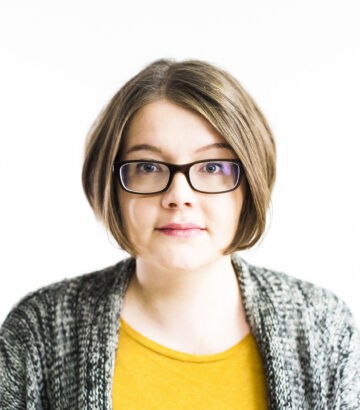
Riikka Miettinen is a historian and associate professor (title of docent) in social history at Tampere University. She is specialized in the history of early modern Sweden and Finland and, among other topics, has examined the lives, experiences and position of people with disabilities and people considered mad during the seventeenth and eighteenth centuries. She is currently also studying experiences of religious anxieties in early modern Sweden and Finland funded by the Society of Swedish Literature in Finland.
Photo: Jonne Renvall, Tampere University
Postdoctoral Researcher
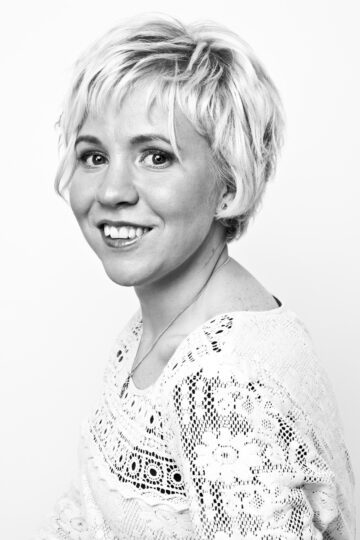
Godelinde Gertrude Perk is a literary scholar and postdoctoral researcher in medieval disability studies at the Faculty of Social Sciences, Tampere University, within the HEX Research Centre. Her research focuses on medieval women’s writings in north-western European vernaculars and on medieval spiritual and literary culture, with a particular interest in encounters between modern theory and medieval religious literature. Her most recent project (‘Cripping Sisterhood’) examined the interplay between community and disability in collections’ of nuns’ lives (sister-books) from the Low Countries and nuns’ letters from northern Germany, approaching medieval disability through the precepts of modern disability studies. Before moving to Tampere, she was a Marie Skłodowska-Curie Fellow at the University of Oxford with an EC-funded MSCA-IF project, ‘Women Making Memories: Liturgy and the Remembering Female Body in Medieval Holy Women’s Texts’. She has published extensively on Julian of Norwich (c. 1343–c. 1416), Margery Kempe (1373–after 1439), sister-books, memory, and the body.
Photo: Kim Buckard photography