
Research
The research at FINCA covers a large range in contemporary astronomy, from galaxies and cosmology, to astrophysical transients, supernovae and their host galaxies, compact binaries, stellar magnetic activity, interstellar medium and star formation, and Solar System and planetary studies.
Galaxies and Cosmology
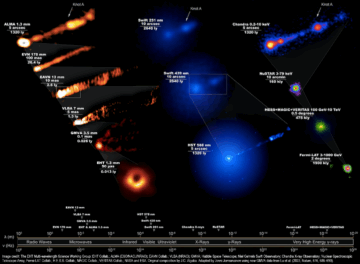
- the dynamics of galaxies in the local Universe mapped with integral-field observations and discrete tracers, such as planetary nebulae and globular clusters,
- integral-field observations of galaxies at the extremes, such as ultra-diffuse galaxies, ultra-compact massive galaxies, as well as luminous infrared galaxies, and
- the stellar populations of early-type galaxies and their progenitors.
Staff in this research area: Roberto De Propris, Johanna Hartke, Talvikki Hovatta, Elina Lindfors, Kari Nilsson, Petri Väisänen, Mauri Valtonen and several FINCA postdoctoral researchers and students.
Stellar Astrophysics
Current research topics at FINCA in Stellar Astrophysics research area include compact binary stars, accretion disks, stellar populations, globular clusters, astrophysical transients, supernovae and their host galaxies.
ESO/S. Mattila, S. Smartt, M. Crockett, J. Eldridge, J. Maund and J. Danziger
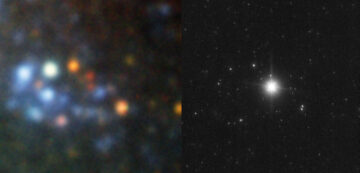
In close collaboration with the time domain group in the Department of Physics and Astronomy in the University of Turku, researchers from FINCA study the explosions of massive stars as supernovae (SNe). Through SNe it is possible to study the poorly-understood late stages of evolution in these stars, a difficult feat through other means. Particular areas of interest in this field, with plenty of overlap between them, include:
- superluminous SNe, rare and extremely powerful explosions from unknown progenitor stars, which require nonstandard energy sources such as “central engines” powered by a newborn magnetar or black hole, and possibly serve as analogs for early-generation stars in the distant universe;
- the interaction between SN ejecta and the circumstellar medium (CSM) around the progenitor star, illuminating the mass loss history and late evolutionary stages of the star;
- host galaxies and explosion sites of SNe, which can indirectly reveal properties of the progenitors such as initial mass and metallicity;
- peculiar “stripped-envelope” SNe from stars that have lost their hydrogen envelopes and sometimes require central engines or late-onset interaction with the CSM.
Staff in this research area: Roberto De Propris, Pasi Hakala, Tuomas Kangas, Hanindyo Kuncarayakti and several FINCA postdoctoral researchers and students.
Solar System and Planetary Studies
The Solar System studies in FINCA are performed in close collaboration with the Planetary-System Research group at the University of Helsinki. Small Solar System bodies are remnants of the early formation processes of the Solar System. The distribution of their physical properties across different populations and sizes is the key to understanding the formation and the evolution of the Solar System. The FINCA-part of the group’s research entails astrometric, photometric, spectroscopic and polarimetric observations of small Solar System bodies. Particular areas of research interest include:
- Rapid characterisation of very small asteroids during their close approaches to the Earth
- Population-level studies of Earth’s temporary satellites in particular, and near-Earth asteroids in general, as discovered by LSST
- The proportion between Lunar and main-belt origin of small asteroids in Earth’s immediate vicinity
- Observations of high-priority scientific and planetary defence targets
Staff in this research area: Grigori Fedorets
Methods and Instrumentation
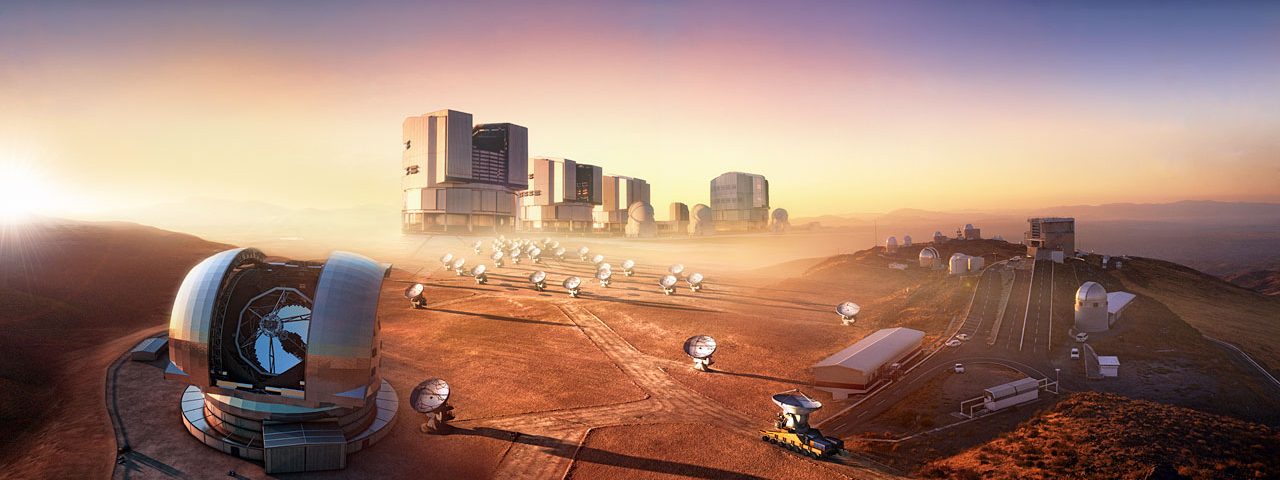
The research carried out at FINCA is observational astronomy and most often carried out using large ground based facilities for optical, infrared, and sub-millimetre/millimetre astronomy like the Very Large Telescope of the European Southern Observatory (ESO) and ALMA, as well as with the Nordic Optical Telescope (NOT). In addition, space-based and radio observations as well as ground-based gamma-ray observations, and computer simulations are used. The most commonly used methods are optical and infrared imaging, spectroscopy and polarimetry.
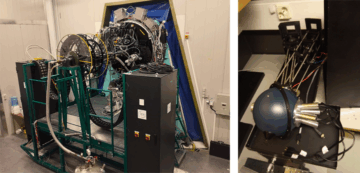
Researchers at FINCA are also involved in several ESO instrumentation projects, such as the SOXS spectrograph at La Silla Observatory, the first-generation MICADO instrument for ESO’s Extremely Large Telescope, as well as the MOSAIC multi-object spectrograph, which will also be an ELT instrument. Researchers at FINCA also have had a significant role in shaping the science programme of the Cherenkov Telescope Array Observatory (CTAO). CTAO will be the first open ground-based gamma-ray observatory, with sites in the northern (close to the NOT on La Palma) and southern (close to ESO’s Paranal Observatory) hemispheres.