
Research
Our research aims to understand the mechanisms that regulate human metabolism in health and disease (e.g., obesity and type 2 diabetes), with a central focus on adipose tissue biology. Adipose tissue is a highly dynamic organ that plays essential roles in energy homeostasis, metabolic health, and inter-organ communication. However, the cellular and molecular mechanisms that govern adipose tissue function, plasticity, and dysfunction in humans remain incompletely understood.
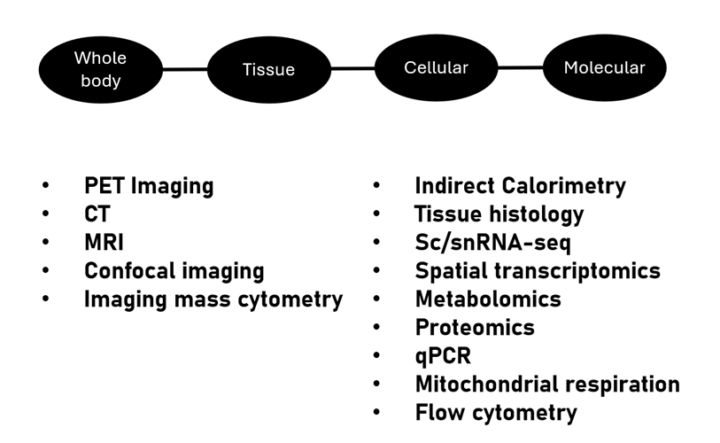
We investigate adipose tissue across multiple levels of biological organization, from whole-body metabolism and human physiology to tissue, cellular, and molecular mechanisms. Our research combines state-of-the-art metabolic phenotyping in humans-including PET-CT, MRI, and indirect calorimetry-with mechanistic studies using advanced molecular and cellular approaches. By integrating clinical studies with single-cell and spatial omics technologies, we characterize adipose tissue heterogeneity and identify the pathways that regulate its function in health and disease. These discoveries guide mechanistic investigations to define causal pathways and validate novel targets.
A major focus of our work is brown adipose tissue (BAT) and its potential to improve metabolic health through behavioural and pharmacological interventions. We also investigate the crosstalk between adipose tissue and other organs, particularly the immune system and skeletal muscle, with a growing emphasis on immune-adipocyte interactions. To complement our studies in humans, we are developing advanced three-dimensional human in vitro models that more faithfully recapitulate the native adipose tissue microenvironment. Ultimately, our goal is to uncover the fundamental mechanisms governing adipose tissue biology and translate these discoveries into new strategies for the prevention and treatment of obesity and cardiometabolic disease.
Techniques used
Ongoing research projects
Clinical trials
EXERBAT: Effects of exercise on the metabolism of human brown fat in obesity (focus into the molecular mechanisms and brown fat-skeletal muscle crosstalk). To start in January 2027.
Wet lab projects
Projects with human primary brown adipose 3D spheroids
- Characterization and validation of the first human primary brown adipose spheroid model
- Effects of inflammation) on the thermogenic function of human primary brown adipose spheroid model
- Effects of anti-obesity drugs on the thermogenic function of human primary brown adipose spheroid model
Human brown fat cell atlas
- Application of single cell omics to dissect human brown fat cell composition and transcriptome
Immune system-brown fat crosstalk in humans
- Eploring the crosstalk between organized lymphoid structures and human brown fat
Crosstalk between the skeletal muscle and BAT in humans (in vitro part of EXERBAT)