Postdoctoral researcher and Doctoral researcher positions open in Evolutionary Language Sciences
The Faculty of Humanities at the University of Turku invites applications for a fixed term position as postdoctoral researcher and a fixed term position as doctoral researcher. The positions are located at the Department of Finnish, Finno-Ugric and Scandinavian languages, within the School of Languages and Translation Studies. Employment for the postdoctoral researcher begins in September 2026 at the latest, and lasts 24 months. The doctoral researcher position has funding for 4 years starting latest in April 2026. A later start for the doctoral research position is possible only with a corresponding reduction of the period of funding.
These positions are situated within the Human Diversity research consortium, and are being recruited as part of the Center of Excellence Human Diversity Through Contacts, funded by the Research Council of Finland. The central questions of the consortium are about how human contacts, past environments and communication networks influence material and immaterial culture, languages, genes, disease burden and evolutionary fitness of people. Human Diversity brings together research teams across faculties who study human diversity from complementary perspectives, construct diverse digital datasets and develop technologies for documenting and analyzing such data.
Job description
The current positions are intended for researchers advancing the research program of BEDLAN within the Human Diversity consortium. We aim to complement the team with researchers interested in linguistic typology, geolinguistics, computational historical linguistics and/or computational dialectology. The topic of the studies could be
- better understanding the evolution of language and linguistic diversity, especially in the North Eurasia, or
- studying the emergence of Uralic family, e.g. by testing hypothesis related to Uralic homelands, or by studying the first spread Proto-Uralic leading to intermediate proto-languages, or studying the Uralic spread in relation to development of genetic, cultural and environmental landscapes, or
- investigating the drivers behind development of Finnish dialectal landscape and that of Finnic, potentially in relation to genetic, cultural, demographic and environmental landscapes
We offer both established methodological frameworks (based on adaptations from population genetics, phylogenetics, ecology and geography) and the subject expertise of the BEDLAN team and Human Diversity consortium, as well as access to the updated versions of datasets compiled into the Uralic Trove data infrastructure. Language data so far includes extensive data of Finnish dialects (complementary to CEDEDA, a database cultural, economic, demographic and ecological variation of historical Finland), a basic vocabulary data set UraLex and a Uralic typological database that is being extended towards North Eurasian and e.g. Eskimo-Aleut languages and that is complementary to global Grambank data. Available geographic data sources include GIS data of Finnish dialects, Uralic language speaker areas and global languages presented in Glottography and forthcoming extension to that; polygon data is interoperable with our published and unpublished environmental databases. Naturally, these data can be complemented with other data sources.
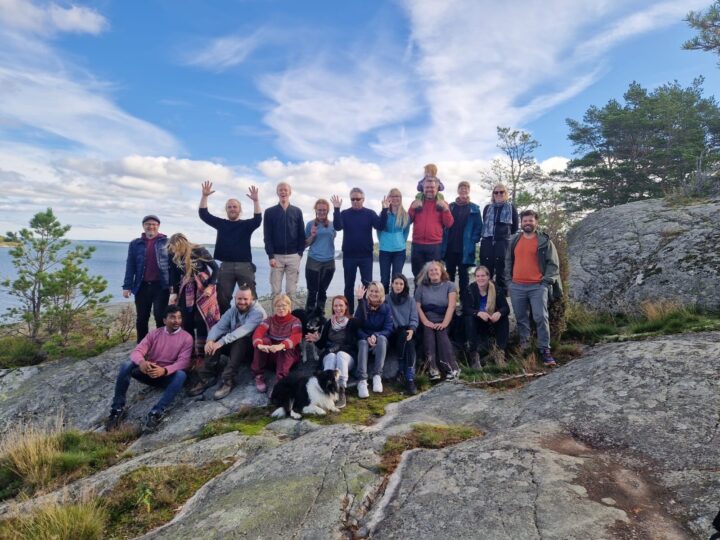
The work would be done in association with Associate professor Outi Vesakoski and her BEDLAN research program (Biological Evolution and Diversification of Languages), which supports the linguistic research in the Human Diversity consortium. The postdoctoral researcher and the doctoral researcher are expected to collaborate with these research programs. For the interdisciplinary study of the human past there is also genetic and cultural expertise available within the Human Diversity consortium. Both the tasks include some teaching (at maximum 5% of working time), including potential for thesis supervision.
Who we are looking for
The postdoctoral candidate should hold a completed doctorate degree in general linguistics, Finno-Ugristics, Fennistics or other linguistic field relevant to the research. The post doc can also have computational, archeological or biological background with specialisation to linguistics. Their applicant’s background should align with the following specific qualifications:
- Completed doctoral degree
- Expertise in linguistic typology or linguistic/language diversity or linguistic geography
- Methodological expertise in Bayesian modelling, geostatistics or frequentitive statistics
- Experience in management of big(gish) data and combining data sources
- Expertise in computational linguistics (e.g. fluency in R, Julia, SAS and/or Python)
- Experience in publishing research articles in international peer-reviewed scientific journals
- Experience and interest in writing collaborative articles
- Fluent oral and written communication skills in English
The doctoral researcher should hold a completed master degree in general linguistics, Finno-Ugristics, Fennistics or other linguistic fields relevant to the research. The title project researcher will be used until the selected candidate has developed the research plan in collaboration with the PI, and received a study right in the Doctoral Programme of University of Turku. Read more about doctoral studies and graduate schools at the UTU here. Their applicant’s background should align with the following specific qualifications:
- Completed MA degree
- Expertise or interest in computational linguistics (e.g. in R language, in geolinguistics and/or in Bayesian and/or frequentative statistics)
- Experience and interest in operating with biggish database
- Experience and/or interest in publishing collaborative research articles in international peer-reviewed journals (the thesis would consist of 3-4 articles)
- Fluent oral and written communication skills in English.
The following skills are an advantageous but not requirements: Experience in contact linguistics, areal linguistics, Uralic languages and/or Uralic contact languages and previous successful experience in multidisciplinary, collaborative working environment.
We seek a highly motivated, enthusiastic and hard-working candidate. The applicant must show good interpersonal skills and be willing to work in collaboration with the project PI and other members of the international and multidisciplinary Human Diversity team, as well as have the ability to work independently.
We value equality and diversity in our work community and encourage qualified applicants, regardless of background, to apply for our open positions.
Apply between 27 January 2026 and 19 March 2026 16:00 (Europe/Helsinki) here
Further information
Read more about the positions here
For further information about the position, please contact: Associate professor Outi Vesakoski, Outi.Vesakoski(at)utu.fi
With questions about the application process, please contact: HR-specialist, Maija Österlund, maija.osterlund(at)utu.fi