Keynote speakers
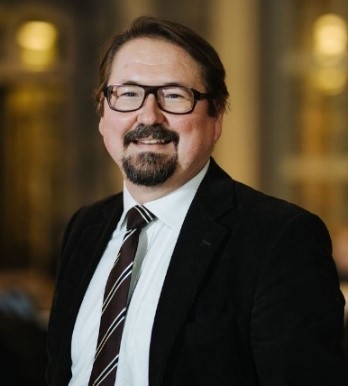 Patrik Ström is the Director of the European Institute of Japanese Studies (EIJS) and Center for Asian Studies (CAS) at Stockholm School of Economics. His research is focusing on the development of the advanced service industry and the transformation of economies that are becoming more service and knowledge based. This includes the transition towards the green economy. The primary regional focus has been Japan, South Korea, China and other emerging markets of East Asia as well as the Single Internal Market in the EU. Patrik has been involved in various policy related activities connected to the EU single market for services, such as the High-Level Group on Business Services, where he chaired the working group on internationalization. He has also written on the green transition for the European Parliament’s Committee on Internal Market and Consumer Protection (IMCO). In addition, he is part of the Multi-year Expert Meeting on Trade, Services and Development organized by UNCTAD, working on issues on international trade and investments in services as well as how services can contribute to the global energy transition as part of the green economy.
In the academia, Patrik Ström has published in major journals, such as Geoforum, Journal of International Business Policy, Geografiska Annaler Series B., The Service Industries Journal, Technovation, Critical Perspectives on International Business, and Tijdschrift voor Economische en Sociale Geografie. He is the editor of the European Institute of Japanese Studies, East Asian Economics & Business Studies Series published by Routledge. Patrik has also served as Guest Editor in journal Special Issues, such as “The Resilience of the Global Service Economy” in The Service Industries Journal, and in the Special Issue “Industry re-configurations and multi-level policy implications of the transition towards the green economy in Asia and Europe” in Asian Business & Management.
The topic of Patrik Ström’s Keynote speech is: “Services in a Fragmenting World Economy: Geoeconomic Shifts, Policy Transformation, and Economic Resilience”.
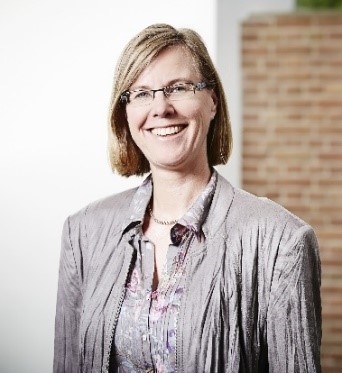 Martina Fuchs is the Head of the Institute of Economic and Social Geography at the Faculty of Management, Economics and Social Sciences, University of Cologne (Germany). Martina Fuchs also is the Faculty’s leading Pro-Dean. In general, her research is on the impacts of multinational companies and global value chains on regions in Europe and the Global South. In particular, she works in three overlapping research fields. First, she explores the spatial impacts of digitalization and Artificial Intelligence. This includes research on industry 4.0, urban production and online trade. Second, she is interested in matters of local knowledge, skills and employment. In particular, she analyzes the impacts of foreign direct investments on the local working conditions, and related activities in vocational education and training, for example in Mexico, India and China. Third, she investigates issues of socio-ecological transformations, with a current focus on how green skills can contribute to promote the green city. In all these research areas, a central focus is on change agency, and whether the local population, especially the workforce, develops the capacity to act in order to achieve sustainability transformations.
Martina Fuchs has published in leading geography journals, such as Regional Studies; Environment and Planning A; Cambridge Journal of Regions, Economy and Society; Geoforum; Geography Compass; TESG – Tijdschrift voor Economische en Sociale Geografie; ZFW – Advances in Economic Geography; and Critical Perspectives on International Business. She has served as Guest Editor in journal Special Issues, such as on “Digitalization and Labor Restructuring”, with Andrew Cumbers, in ZFW – Advances in Economic Geography, and as Guest Editor on the issues “The Impact of Skills and Training on Local Development” and “Skills for Local Sustainability Transformations and Development” in International Journal of Training and Development.
The topic of Martina Fuchs’ Keynote speech is: “Strengthening Knowledge for Local Sustainability: The Digital & Sustainable Twin Transition”.
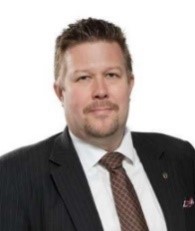
Antti Pekanheimo is Chief Operating Officer and Deputy CEO at Port of Turku Ltd, where he is responsible for the preparedness and continuity governance. He is a sea captain by education and has a long and wide experience in port management in various positions in maritime operations. Ports have a central role in global trade and the security of supply as the bulk of trade is transported by sea, thus relevant for economic resilience. Captain Pekanheimo has been employed by the Port of Turku since 2007, when he started his Port career as Deputy Harbour Master and was promoted to Chief Operating Officer and Harbour Master in 2018. He has held the position of Deputy CEO since 2022. Before becoming land-based, he sailed on several RoRo and general cargo ships for different Finnish shipping companies and worked in several projects within the maritime safety and security developments, as a maritime consultant and as a Nautical Inspector in Antigua and Barbuda.
Antti Pekanheimo is a member of the board in several nautical and other organisations and became a certified board member in 2022. He is a strong supporter and actor in the development of the Finnish maritime industry and is working hard for new opportunities and solutions to expand the maritime trade and traffic between Finland and other countries. Besides his daily duties, Captain Pekanheimo is currently finalising his Master of Maritime Management degree at Novia University of Applied Sciences in Turku.
The topic of Antti Pekanheimo’s Keynote speech is: “How resilience & emergency supply affects ports today”.