
Exploring Research Synergies in Gothenburg: A Mobility Visit boosting the LifeFactFuture Project
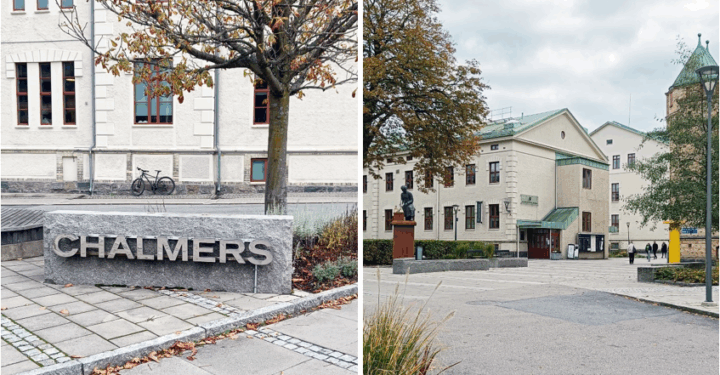
As part of the LifeFactFuture project, I spent two months in Gothenburg, Sweden. The goal of the visit was to support international collaboration and broaden the perspective of my PhD research. My work focuses on individual readiness and organizational support when digital innovations are introduced in manufacturing. During this mobility period, I got to know researchers at Chalmers University of Technology. The visit gave me new insights into innovation management and the skills manufacturing firms need in today’s digital age.
Chalmers University is known for its strong links with industry, high-quality research, and clear focus on innovation. Its environment fits well with the aims of the LifeFactFuture project. It also offered the ideal setting to explore how manufacturing firms can succeed in fast-changing digital innovations.
Working With Professor Petra Bosch‑Sijtsema
My main contact at Chalmers was Professor Petra Bosch‑Sijtsema, Head of Unit and Professor of technology, Management and Innovation at the R&D Management Division at the Department of Technology Management and Economics. Petra is an experienced international scholar with a rich academic background from Sweden, the Netherlands, Canada, the USA, and Finland. Her expertise in innovation, management, and organizational change provided an ideal foundation for meaningful discussions relevant to LifeFactFuture’s research themes.
In this blog, Petra also shares her perspectives and insights as a representative of the host university. She is offering reflections on the importance of research mobility, the role of visiting PhD researchers, and how Chalmers benefits from such exchanges.
Interview: Petra Bosch‑Sijtsema on Hosting Research Mobility
To enrich this reflection and highlight the host institution’s view, I asked Petra to share her thoughts on the value of PhD mobility programs and Chalmers’ role as a receiving university. Below are the questions discussed with her after the visit.
From your experience, what makes PhD research mobility valuable for both visiting researchers and the host institution?
– I see that there is a major value for both the PhD researcher as well as for the host institution. At Chalmers, we try to support our PhD researchers to spend some time abroad or at another university in order to see how other institutions work, build up an international network and gain inspiration and ideas for their own research. Furthermore, it also gives insight in other cultures and supports professional growth and development. For the host institution it is very rewarding to have visiting PhD researchers for our PhD students as well as faculty in order to gain insight in mobility and internationalization, how other universities work in PhD research and to build up an international network for both research but also possible future career opportunities. Furthermore, having PhD researchers visit supports knowledge exchange and development of new ideas, as well as possibilities for collaboration or future collaboration in terms of research projects, jointly written papers and visits from other researchers in the future.
What distinguishes Chalmers as a receiving institution for international doctoral scholars?
– I mainly speak for my own department at Chalmers. However, at the department of Technology, Management and Economics we have a very good functioning PhD network in which PhD students and post-docs support each other, have joint writing seminars and a social network. This makes it easier for international doctoral scholars to enter the community and gain insight in the way of working of the institute as well as the culture.
What forms of collaboration do you find most productive between visiting researchers and the host research group?
– Every collaboration is different and often different goals are set for visiting researchers. However, it is rewarding with knowledge sharing, joint output in terms of a conference or journal paper, as well as building up longer term network relations between research groups for future research collaboration and paper writing.
Which aspects of Swedish doctoral education do you think benefit visiting researchers the most?
– Swedish PhD students are employed by the university and follow a structured doctoral education with a set number of courses relevant for PhD research as well as a structure for the five-year program in terms of set evaluation events (like the research proposal, a licentiate seminar, a final seminar and the PhD defense). Visiting researchers can gain an insight in the structure, possibly follow PhD courses as well as participate in the evaluation events which are public. Furthermore, at Chalmers, a lot of PhD research is funded externally and includes close connection to industry which could be beneficial for visiting researchers as well.
Your own career includes research experience in Sweden, the Netherlands, Finland, the USA, and Canada, how have these mobility experiences shaped your thinking?
– It is interesting to see that in all these countries there are large differences in how PhD education is set up and structured and how research is organized and financed. Countries and universities have their own structures and ways of working which are rather different and it is very valuable to gain an understanding of these differences between universities and countries. It makes you reflect on the system you are working in and that it is important to value these differences in the different systems. Another major learning from my own journey has been the insight in different working cultures as well as national cultures and the development of an international global research network for future collaboration.
Experiences During the Mobility Period
Throughout the stay, I had the opportunity to immerse myself fully in the Chalmers research community. I met with researchers and professors from innovation and management unit, participated in a special writing camp designed for PhD scholars and postdocs, and engaged in paper development meeting. I also attended a full doctoral dissertation defense and participated in several licentiate defenses, a hallmark of Swedish doctoral training. Together, these experiences provided a comprehensive view of how academic excellence and industrial relevance intersect within Swedish research environments. The discussions and contacts formed in Gothenburg have already sparked ideas for upcoming conference paper and future collaboration.
 Maarit Päällysaho
Doctoral Researcher
maarit.paallysaho(a)utu.fi
University of Turku, Industrial Engineering and Management
interview with:
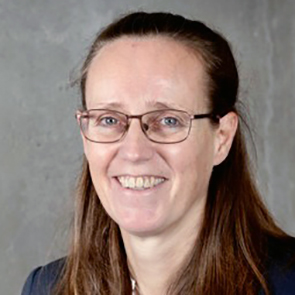 Petra Bosch-Sijtsema
Professor
petra.bosch(a)chalmers.se
Chalmers University of Technology, Department of Technology Management and Economics