
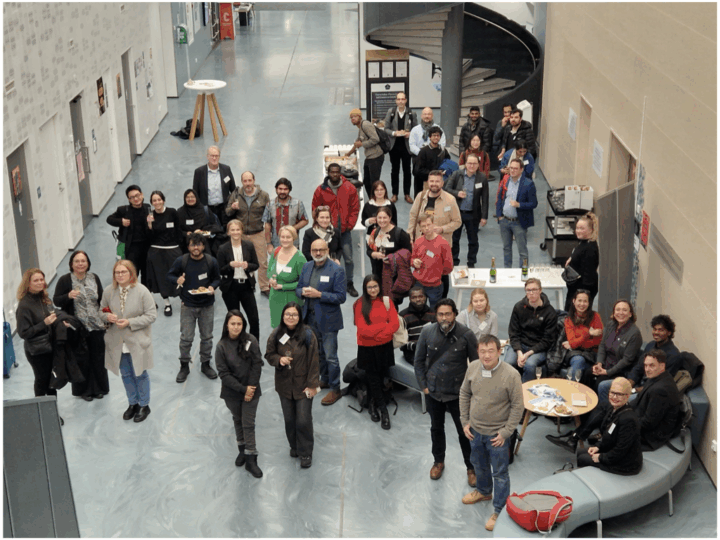
Final Event (1/2): Learning, Evidence & Inspiration for Real Change
The final event of Dining Flow was charged with a special energy. It brought together research, innovation, and practice in a way that made one thing clear: real change is possible when we combine evidence with action.
Learning from Sara Dolnicar
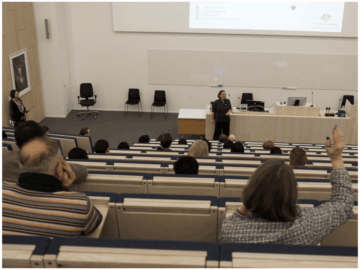
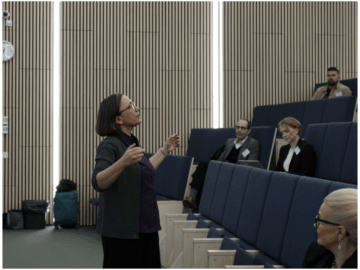
The first part of the event featured a keynote by world-leading researcher Sara Dolnicar. Her talk was eye-opening and inspiring, not only because of the depth of her research, but also because of the clarity and positivity with which she delivered it.
Her central message was simple and powerful: Human behaviour change is critical to addressing sustainability challenges — in tourism and beyond.
Focusing on self-service restaurants in hotels, she shared empirical evidence from interventions conducted across Europe and Asia. Through rigorous experimentation, she demonstrated how relatively small, well-designed changes can significantly influence behaviour and reduce food waste. One message stood out clearly for us working in SSR: Food waste must be measured. If we want to reduce it, we first need to understand it.
She also presented her Habit–Enjoyment–Effort Theory, highlighting that enjoyment plays a major role in shaping behaviour. Sustainable choices will only succeed long term if they do not reduce, and ideally even enhance, the enjoyment of the experience. This insight reframes how we think about sustainability interventions in hospitality settings.
The Contribution of the City of Turku
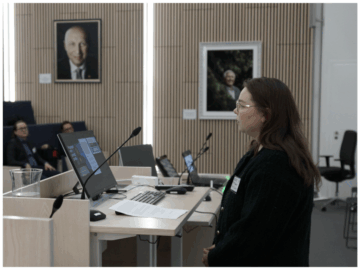
Our second speaker, Petra Svahn from the City of Turku, presented the city’s long-term vision in the area of sustainability. She shared how Turku is actively working toward ambitious climate and environmental goals, positioning itself as a frontrunner in sustainable urban development.
Research Outcomes
After the the talks of our special guest, from the UTU team, we were proud to present concrete results:
- By utilising lift data, prediction accuracy of the number of diners improved by 15–20%.
- We learned how to communicate predictive insights effectively to kitchen personnel.
- We improved our ability to truly listen to diners.
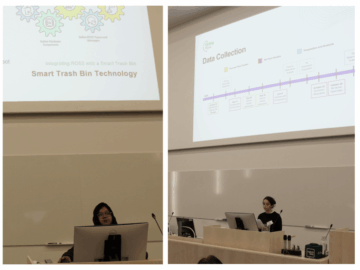
- We reflected on the data business model and explored new initiatives, including the concept of a smart trash can.
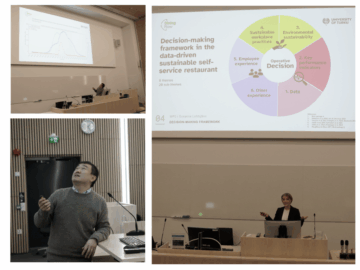
Proof of Concept 2 – Data visibility in the restaurant kitchen + Decision Making Framework, by Susanna Lehtojärvi
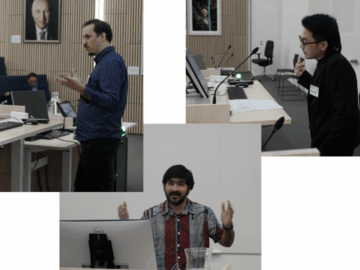
Data-Drivent Value in Networks by Jungsong He
New collaborations, by Ismail Vohra
Innovation Camp
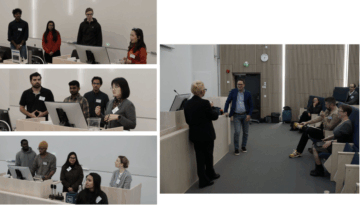
Following the presentation of the Dining Flow project outcomes, a group of students took the stage to share the results of their week-long innovation camp. The camp, facilitated by Prof. Peter Zettinig and Minna Storm, brought together participants who dedicated the week to work together, building upon their problem-solving and creative thinking skills. On this occasion, the innovation camp task was to build upon the results achieved by the Dining Flow project, envisioning how its outcomes could be further developed and taken forward.
Summarizing:
In this first part of the Dining Flow final event, one can say it was a milestone. At this moment we have collected solid evidence of our efforts, we have clearer direction, and we have renewed motivation.
Measuring food waste, understanding behaviour, and designing interventions that respect enjoyment are no longer abstract ideas — they are actionable pathways forward.
Much work has been done.
Much more is ahead.