Nepal ACCESS team reflects on their Finland visit
ACCESS team members from Kathmandu University (KU) and Purbanchal University (PU) spent the week of 8 to 12 June 2026 at the Finland Futures Research Centre (FFRC), University of Turku, as part of the ACCESS/Erasmus+ project. Below, we share highlights and reflections from the visit.
Pedagogical Lessons and the Futures Conference
Our programme opened on 8 June with a workshop session on the pedagogical lessons of futures competence building, introducing practical methods for cultivating futures thinking among students. It was a helpful point of comparison for how such approaches might feed into our own teaching and curriculum work at KU and PU.
“The visit to FFRC gave us a clearer sense of how futures thinking can be woven into our own teaching and research culture at Kathmandu University. It is exactly the kind of partnership we hope to build on in the coming years.” – Prof. Sunil Prasad Lohani, Renewable and Sustainable Energy Laboratory (RSEL), Kathmandu University”
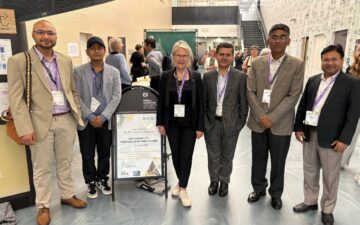
Our week also included the 26th Futures Conference, themed Sustainability, Temporalities and Futures and jointly organized by the Finland Futures Research Centre (FFRC), held at the University of Turku. The conference drew researchers, students, and practitioners from around the world to discuss questions such as the fair and just implementation of sustainability transformation, how long-term thinking can be linked to everyday decision-making, and the potential of culture and alternative economic models, such as postgrowth or feminist economics, to drive that transformation. For us, this meant exposure to a wide spread of research relevant to our own fields, as well as the chance to build connections with an international community of scholars. On 10 June, our KU team presented a working paper titled Strengthening Climate Change Education under Institutional Constraints.
MOOC Development and Closing Sessions
11 June was set aside for us to share experiences on climate and futures MOOC development, giving us a chance to reflect with FFRC colleagues on where the project stands and where it might go next. The day also included a look at futures education more broadly at FFRC, from the Finland Futures Academy network to the futures guidance approach that blends counselling with futures studies methods, along with hands-on tools like the Future Camp concept. A further session on futures literacy explored its overlap with media, cultural, and systems literacy, and how it might be built into curricula and learning outcomes. In the evening, a mindful mental time traveling session offered a more reflective, experiential way of engaging with the future, a nice contrast to the day’s more academic sessions. On 12 June, our focus shifted to artificial intelligence in teaching and learning, where the university library walked us through its approach to AI literacy, covering guides, integration into information literacy teaching, open webinars, and academic AI tools, followed by a tour of the library itself. Both days left us with practical ideas to bring back to our own teaching and research support.
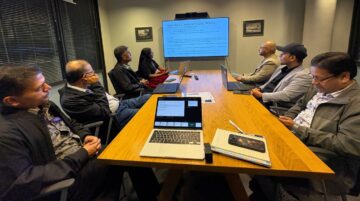
“Seeing how the library integrates AI literacy into everyday teaching and getting direct feedback on our MOOC work from the FFRC team, gave me practical ideas I can apply as soon as I am back at KU.” – Poushan Shrestha, Renewable and Sustainable Energy Laboratory (RSEL), Kathmandu University
Overall, the five-day visit was a great learning and sharing opportunity. It empowered us as general university academics, and project team members in particular.