
Multispecies interactions
Life on Earth is shaped by complex networks of interactions among plants, microbes, herbivores, pathogens, and other organisms. Our research explores how these multispecies interactions influence biodiversity, adaptation, community dynamics, and ecosystem functioning across natural and changing environments. We are particularly interested in plant-associated microbiota, including fungal, bacterial, and other microbial symbionts that inhabit plant tissues, roots, and surrounding soils. These microbial communities are fundamental components of plant holobionts, affecting nutrient acquisition, stress tolerance, resistance to herbivores and pathogens, and ultimately the ecological and evolutionary trajectories of their hosts. By integrating microbiology, ecology, evolution, and global change biology, we investigate how microbial diversity mediates species interactions and contributes to the assembly and persistence of biological communities.
Plant-associated fungi, including endophytes, remain important model systems in our research because they are ubiquitous, diverse, and often exert strong effects on plant performance and multitrophic interactions. However, we increasingly study entire microbiomes rather than individual symbionts, recognizing that plants function as integrated communities of interacting organisms. Our work examines how microbiota influence plant-plant competition, plant-herbivore and plant-pathogen interactions, biological invasions, and responses to environmental change. By revealing the mechanisms through which microbial communities shape ecological and evolutionary processes, we contribute both to fundamental theory and to applications in agriculture, forestry, conservation, and ecosystem management under a rapidly changing climate.
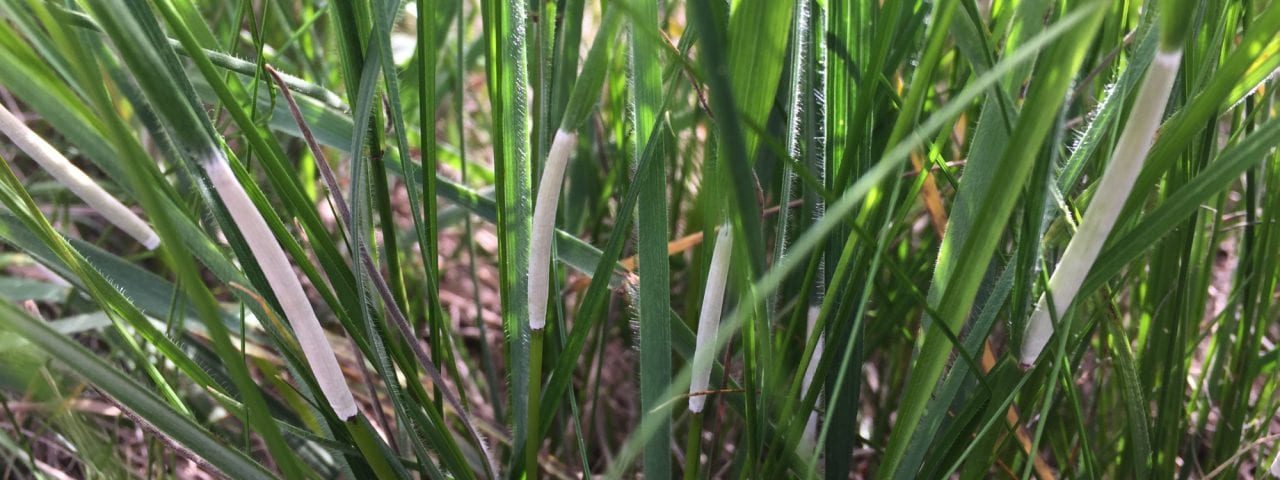
In the main picture, Epichloë stromata are depicted. ©Gensheng Bao