Planning green neighborhoods with local community and artificial intelligence
Luma Fonseca, Department of Geography and Geology, University of Turku.
The way we shape the future of cities is changing. Instead of relying only on solitary, poetic visions of what urban life could be, the emphasis is now on how digital technologies can allow people to imagine and visualize alternative futures together, to share knowledge openly, and to build on one another’s insights. In this sense, the city of tomorrow is less about individual imagination and more about collective intelligence, with people working side by side with digital mediation to co-create the places they want to live in. Moreover, the increasing concern about cities´ environmental impacts highlights the need to develop resilient, nature-integrated urban spaces that can bring ecological and social benefits.
Motivated by these reflections, we have asked ourselves, how can digital technologies – especially image generative artificial intelligence (AI) – help communities take an active role in shaping the green future of their neighborhoods? Not just commenting on pre-existent projects or brainstorming ideas and plans abstractly, but rather, seeing out-spoken ideas and visions instantly coming to life in new designs and learning about the benefits that urban nature can bring.
To explore this, we organized a series of workshops with citizens and urban practitioners, where they co-created alternative visions of greener, healthier neighborhood spaces using the AI as a creative partner. The results? Surprising insights and a glimpse into how digital tools can amplify community voices as well as challenges of utilizing these types of technology during the co-development of sustainable urban spaces.
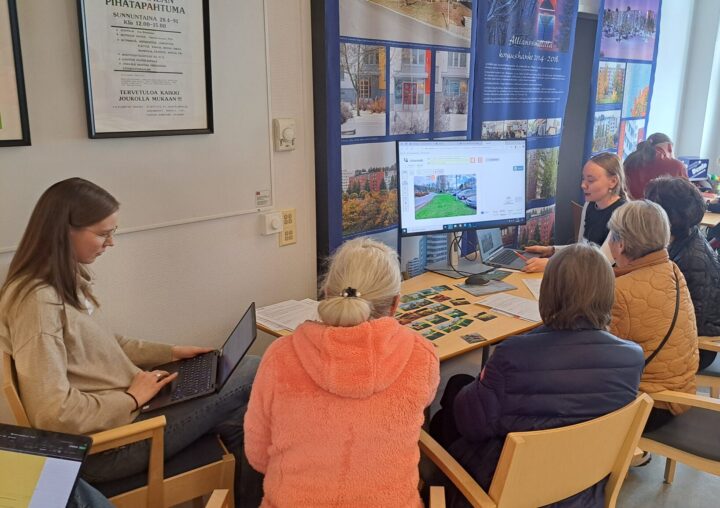
Figure 1. Local residents of the neighborhood of Jyrkkälä, Turku, Finland, came together to envision urban landscapes integrated with different green infrastructure, using an image generative AI tool.
During the first half of 2025, we prepared intensively to the workshops that took place between March and June, with the residents of Halinen and Jyrkkälä neighborhoods, as well as Turku urban practitioners involved in urban planning, urban ecology, social studies, construction control, greenspace maintenance, environmental protection and sustainable mobility.
Gathering participants was quite a challenge, especially when it came to residents. After all, let’s be honest, convincing someone to give up two and a half hours of their evening for something new and unfamiliar isn’t the easiest task. But we didn’t let that stop us.
When the workshop days came, the scene was settled: four computer screens, some chairs and tables and trained facilitators and observers ready to work. The co-design process begun and people started to explore ideas with each other and with the AI tool. Observing how these interactions happened and the different reactions to the AI outputs was interesting.
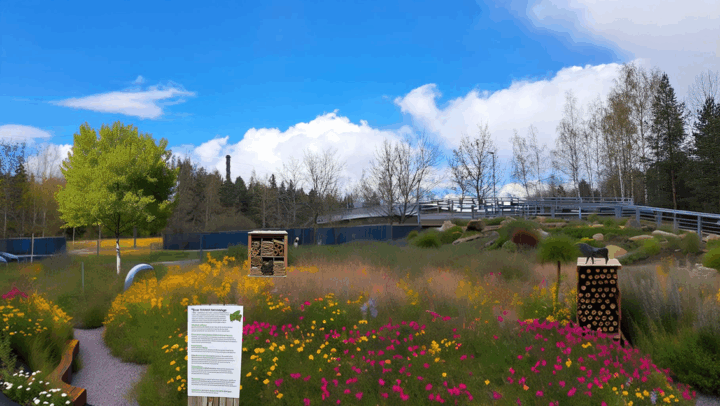
Figure 2. One of the visions on top of a photo taken from the neighborhood created by the residents using the AI tool.
Emotions on the room were like a rollercoaster. Colorful, complex, multi-element and realistic generated scenes sparked surprise and enthusiasm – “now that looks good!” – while visually unsatisfying scenes, such as those with unrealistic shapes, scale and perspectives, were received with disappointment, frustration or even laughter. At times, participants responded to these “awful” and “odd” outputs with understanding, recognizing the tool’s limitations and, in effect, excusing its inconsistencies and incongruencies with comments such as: “That’s what AI is like”.
Amidst varied reactions, mostly participants were actively engaged and focused throughout the process of creating visions with the AI. They looked at images carefully and with interest and would eagerly wait for the new set of generated images, although the waiting time would provoke occasional dispersion and signs of tiredness. The experience of composing the landscape with different elements and selecting their favorite between the generated images caused amusement between participants, with some even comparing the experience to “playing a video game”.
As the last task to bring the community’s AI-generated visions closer to reality, we gathered Turku’s urban practitioners together to explore a key question: how could these imaginative scenes be translated into real-world urban practice? The discussion opened up not only the practical potential of the community’s ideas, but also the role of generative AI as a support tool for co-designing greener, more livable urban landscapes. It is by changing people´s roles from commentator to co-designers that we gained more informed and inclusive knowledge for sustainable urban planning, bridging the collective intelligence with practical urban solutions.
Please, see the full report of the workshops here.