

Be Part of the Next Generation of Electronics
OCEANAut Visiting Scientist Programme – Call for Applications
Memristor Modelling and Device-to-Circuit Integration
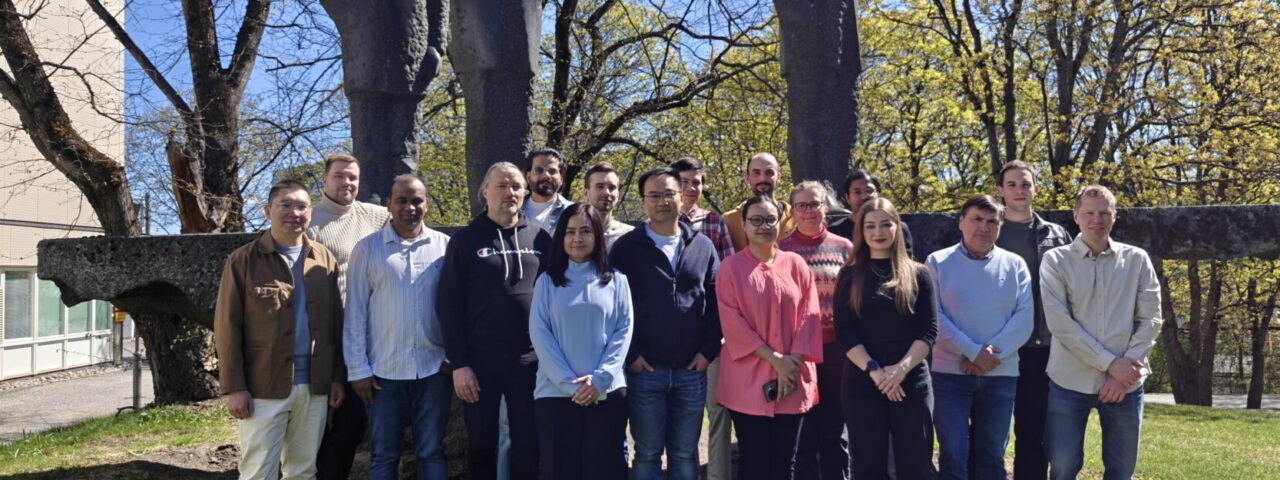
The Memristors & Neuromorphic Computing Group at the University of Turku, Finland, invites applications from experienced researchers and senior industry specialists for the OCEANAut Visiting Scientist Programme.
We seek a Visiting Scientist who can bridge materials and device physics with circuit electronics, helping translate experimental GCMO memristor behaviour into validated models, practical characterization methods and circuit-level design guidance.
Application deadline: 15 November 2026 at 23:59 Helsinki time (UTC+2).
Apply through the Webropol application form
Scientific Focus
OCEANAut develops memristive devices and neuromorphic hardware for energy-efficient sensing and autonomous systems. The Visiting Scientist will work closely with our device and engineering teams to strengthen the connection between electrical measurements, device development and electronic applications.
The longer-term scientific opportunity includes exploiting the physical dynamics of GCMO devices through reservoir computing and other dynamical neuromorphic approaches.
Expertise Sought
Applicants should demonstrate substantial relevant experience in areas such as:
- Compact or behavioural modelling of resistive-switching and memristive devices.
- SPICE, Verilog-A or comparable circuit-compatible modelling and parameter extraction.
- Electrical characterization of switching dynamics, variability, endurance, degradation, noise, parasitics or temperature effects.
- Memristor read and write circuitry, signal conditioning, and analog or mixed-signal neuromorphic circuits.
- Device-to-circuit integration and device-to-system co-design.
- Physical reservoir computing or other dynamical neuromorphic systems.
Direct experience with GCMO is advantageous, but applicants with transferable expertise in other memristive device technologies are welcome.
Suitable candidates include experienced postdoctoral researchers, senior research fellows, university faculty members and senior industry R&D specialists. Selection will emphasize demonstrated expertise, scientific independence and the ability to transfer methods and tools to the team.
Proposed Contribution
The selected visitor will agree on a focused, feasible work plan with the OCEANAut team before the visit. Activities may include:
- Reviewing available device measurements and defining additional characterization needs.
- Developing or adapting compact models suitable for circuit simulation.
- Validating models against experimental data and documenting their operating limits.
- Demonstrating a model or characterization workflow in a representative circuit or neuromorphic integration case.
- Providing actionable feedback to guide device development.
- Training researchers to use, maintain and extend the resulting methods and tools.
Expected outcomes include reusable models, characterization or simulation workflows, technical documentation and direct competence transfer. Publications and longer-term collaboration are welcome additional outcomes.
Visit Format and Practical Arrangements
Research visits should last one to six months and be primarily based in Turku, with starting dates agreed individually from late 2026 through the first half of 2027.
The programme is a visiting-researcher arrangement and does not create an employment relationship with the University of Turku.
Applicants should indicate their funding arrangements and any support requested. Any OCEANAut contribution toward travel, accommodation or living costs will be agreed individually, subject to University rules and available project resources. Financial support should not be assumed until confirmed in writing.
How to Apply
Submit your application through the Webropol application form by 15 November 2026 at 23:59 Helsinki time (UTC+2).
Please prepare:
- A curriculum vitae of no more than three pages, in PDF format.
- A collaboration plan of no more than two pages, in PDF format, covering the proposed problem, methods, tasks, required resources, timing and measurable outputs.
- Up to five relevant publications, models, datasets, patents, tools or other technical outputs.
- Preferred visit dates, an alternative starting window, and information about funding and practical requirements.
Applications will undergo an initial eligibility and quality review by the OCEANAut Research Manager. The strongest applications will be referred to Prof. Petriina Paturi for scientific assessment and possible interview.
Assessment will consider relevance to OCEANAut’s needs, technical expertise, feasibility of the proposed work and the ability to leave reusable capabilities within the team.
Contact
For questions about the call, please contact Quentin Huchet, Research Manager, at quentin.huchet@utu.fi.
About the Group
The Memristors & Neuromorphic Computing Group at the University of Turku combines materials science, device physics and circuit engineering to develop memristive devices and neuromorphic hardware for energy-efficient computing. OCEANAut is funded by Business Finland.