
8.6. Symposium: Opening Up Narrative Medicine
Opening Up Narrative Medicine: A Multi-perspectival Symposium
8 June 2026
10.00-16.30
Aava, Arcanum
This symposium explores narrative practices, health, and illness in relation to the different ways in which narrative medicine might be opened up in new directions. We are particularly interested in the connection between the narrative dimensions of the clinical space and the narrative dimensions of healthcare writ large—how are these narratives circumscribed etc.—and how to figure them and move between them. This has been less explored in narrative medicine and critical health humanities writing, which tend to concentrate on one or the other. We also welcome discussion on various other ways in which narrative medicine should or could be opened up, expanded, or further developed in the present moment.
Programme
10.00 Opening of the symposium
10.05-11.00: Arthur Frank: “Narrative Multiplicity in Sickness, Health, and Medicine”
11.05-12 Danielle Spencer: “Narrative Medicine and Scientific Forestry”
12-13 Lunch
13.00-13.55 Hanna Meretoja: “Towards Existentially and Metanarratively Informed Narrative Medicine”
14.00-14.30 Astrid Joutseno: “Telling Stories of the Grief of the Dying”
14.30-15.00 Päivi Kosonen, Eevastiina Kinnunen (and Hanna Meretoja): “Bibliotherapeutic narrative agency reading groups for cancer care professionals”
15-15.30 coffee
15.30-16.30 Roundtable, Anna Ovaska, Avril Tynan and Jussi Valtonen: “Narrative Medicine in Theory and Practice”
18.00 Dinner (for speakers)
**
Arthur Frank: “Narrative Multiplicity in Sickness, Health, and Medicine”
For narrative medicine to be effective as a clinical practice, it needs to teach both clinicians and persons acting as patients how to cultivate a dialogical awareness of their situation. The dialogue is simultaneously internal and external. Internally, both clinicians and patients are telling themselves stories about what is happening. Externally, each is proposing preferred story lines to the other, and a co-constructed story is emerging, or, too often, not emerging. Exploring what enables and blocks dialogical awareness involves issues of experience, language, and the nature of healing.
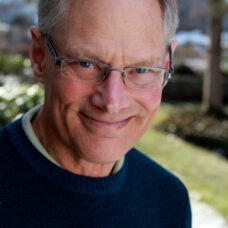
Arthur Frank is professor emeritus at the University of Calgary, Canada. Since retirement in 2013, he has been Professor II at VID Specialized University in Oslo, visiting professor in the Program in Narrative Medicine at Columbia University, and Francqui Fellow at the University of Ghent. His books on illness experience, ethics, clinical care, and narrative include: At the Will of the Body (1991/2003), The Wounded Storyteller (1995/2013), The Renewal of Generosity (2004), Letting Stories Breathe (2010), and most recently, King Lear: Shakespeare’s Dark Consolations (2022; paperback Summer 2026), in Oxford’s “My Reading” series. He is an elected Fellow of the Royal Society of Canada and winner of the Society’s medal in bioethics. His other recognitions include the lifetime achievement award from the Canadian Bioethics Society. His next book, A Quieter Illness, is scheduled for publication in Fall 2027 from University of Chicago Press. www.arthurwfrank.wordpress.com
Danielle Spencer: “Narrative Medicine and Scientific Forestry”
The roles of “patient” and clinician occupy what can at times appear to be disparate narrative worlds—one embodied and particular, the other logico-scientific. Invoking an analogy to James Scott’s discussion of scientific forestry as an example of the effect of utilitarian discourse upon lifeworlds, I explore a range of narrative reform efforts in healthcare. I suggest that some instrumental tactics of “remedial humanization” are akin to “forest hygiene”—boxes of cultivated ant colonies placed judiciously within the monocrop biomedical forest, just enough to offer the illusion of diverse forms of life while the system continues to plant and harvest us in uniform rows. Similarly, physician writing, while seemingly offering greater transparency, can threaten a metaleptic breach and instead retrench clinical authority. In contrast, I argue that narrative hermeneutics points us towards a range of emancipatory strategies encouraging the growth of true dialogue. For example, the textual metaphor of narrative medicine invites metanarrative inquiry; here the shared disaffection of those seeking care and those attempting to offer it (themselves increasingly disempowered and disenchanted) may join in a collaborative effort to question the structural frames of biomedicine. The practice of honing cooperative interpretive skills—particularly now, in the face of generative AI—illuminates our hermeneutical capacities as central to our very humanity, in healthcare and beyond.
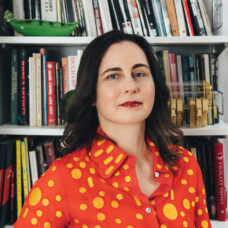
Danielle Spencer, Ph.D., is the author of Metagnosis: Revelatory Narratives of Health and Identity (Oxford University Press, 2021) and co-author of Perkins-Prize-winning The Principles and Practice of Narrative Medicine (OUP, 2017). Senior Lecturer in the Discipline of Narrative Medicine at Columbia University in New York, her scholarly and creative work appears in diverse outlets, from The Lancet to Ploughshares. Her research interests include narrative medicine; illness narratives, and narrative ethics. www.daniellespencer.com
Hanna Meretoja: “Towards Existentially and Metanarratively Informed Narrative Medicine”
In this talk, I argue that perspectives provided by narrative hermeneutics allow narrative medicine to open up towards directions that deepen the awareness of both clinicians and patients of the existential complexities of illness experiences and of the cultural and social dimensions of the narratives through which such experiences are recounted, exchanged, and represented. Attentiveness to the interpretative and existential dimension of illness narratives is crucial in understanding how narratives shape the possibilities that are open for patients in navigating their illness experiences. Understanding how these possibilities are culturally and socially shaped is important in enabling a metanarrative ability to engage in critical reflection on the culturally available narratives and in finding one’s own creative ways of engaging with them. Moreover, awareness of the interpretative dimension of narrating illness has ethical potential in creating conditions for deeper dialogicality, the ability to be attentive to the stories of others and to the meanings they attach to them. Metanarrative illness fiction has potential to foster such awareness and dialogicality, particularly when read and discussed collectively in reading groups or other forms of social reading. I will provide examples of how such potential can be seen in metanarrative cancer fiction and its use in reading groups.
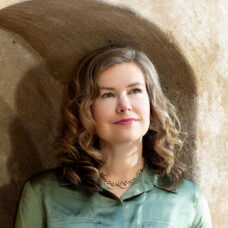
Hanna Meretoja is Professor of Comparative Literature and Director of SELMA: Centre for the Study of Storytelling, Experientiality and Memory at the University of Turku (Finland). She runs the Research Council of Finland projects “Counter-Narratives of Cancer: Shaping Narrative Agency” (2023-2027) and “Narrative Agency Reading Group Model: Applications for Libraries, Schools and Hospitals” (2025-2026). She has been a Visiting Fellow at the University of Oxford (2019-2020, 2023), and she is member of Academia Europaea and the Norwegian Academy of Science and Letters. Her research is mainly in the fields of narrative studies and health humanities. She has been involved in developing the Narrative Agency Reading Group (NARG) method and has co-facilitated such groups for cancer patients and medical professionals. Her monographs include The Ethics of Storytelling: Narrative Hermeneutics, History, and the Possible (2018, Oxford UP) and The Narrative Turn in Fiction and Theory (2014, Palgrave Macmillan), and she has co-edited The Use and Abuse of Stories: New Directions in Narrative Hermeneutics (2023, Oxford UP), The Routledge Companion to Literature and Trauma (2020), Storytelling and Ethics: Literature, Visual Arts and the Power of Narrative (2018, Routledge), and a special issue of Poetics Today (“Critical Approaches to the Storytelling Boom”, 2022).
Astrid Joutseno: “Telling Stories of the Grief of the Dying”
Grief is widely understood as bereavement, which follows from the death-loss of a loved one. The grief of the dying is missing from the vocabulary of grief studies and remains outside the awareness of those working closely with the incurably ill. Without markers this grief afflicts those living with a diagnosis of incurable illness or the knowledge of the terminal phase of their illness. They often suffer from and live with their grief without adequate support, because it is difficult to be seen and met if there is no language for what one is experiencing and the narrative structures do little to foster the expression of such lived grief about the existential limit situation. Despite our cultural silence around the grief of the dying, it has been articulated in the self-life-writing and artistic practices of writers and artists through centuries. It is this expressive repository of life-writing that I investigate to illustrate the possibilities that open with the recognition of the grief of the dying.
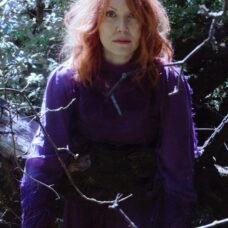
Dr. Astrid Joutseno is a researcher in the Research Council Finland project Counter Narratives of Cancer (2023-2027 University of Turku) and in the Kone Foundation research project Silent Knowledges (2026-2030). Dr. Joutseno was the first Johns Hopkins Visiting Scholar at the Oxford Centre for Life-Writing, Oxford University (2024-2025). Before then she was a Fellow in the Arts at the Helsinki Collegium of Advanced Studies (2023-2024). As Astrid Swan she is an award-winning songwriter and a performer with seven internationally published albums. In 2019 she published a memoir Viimeinen kirjani: kirjoituksia elämästä and Noitarakastaja, her debut novel was published in August 2024 (S&S).
Päivi Kosonen and Eevastiina Kinnunen (and Hanna Meretoja): “Bibliotherapeutic narrative agency reading groups for cancer care professionals”
We propose to present experiences from a bibliotherapeutic narrative agency reading group (NARG) we piloted in 2025 with cancer care professionals at the University Hospital of Turku (Finland). We co-facilitated four NARG workshops that aimed to strengthen the narrative agency of the medical professionals: to raise their awareness of the diversity of cancer narratives, to enhance their ability to imagine alternative stories, and to strengthen their resources for encountering different narrators and narratives. The aim of the facilitators was to create a safe environment, where the medical professionals would feel free to reflect on cancer narratives and embark on a poetic process of counter-narration. The themes raised in the group conversation (death and dying patients, professional identity and ethics) were deepened with creative writing exercises. According to feedback surveys, the medical professionals found NARG meaningful and relevant. The most significant benefits of the group were peer support and counselling.
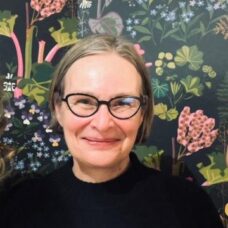
Päivi Kosonen, PhD, is a trained biblio/poetry therapist and biblio/poetry therapeutic educator (Finnish Association of Biblio/Poetry Therapy), adjunct professor of comparative literature (University of Helsinki), and research member of SELMA: Centre for the Study of Storytelling, Experientiality and Memory (University of Turku). She has worked as a biblio/poetry therapist in different settings, including developmental groups and reading groups in communal spaces, libraries and clinical settings. Currently she works as a senior researcher in the research project Counter-Narratives of Cancer: Shaping Narrative Agency (The Research Council of Finland, 2023–2027), facilitating bibliotherapeutic groups for patients and medical staff in the University Hospitals of Turku and Helsinki. She has written on autobiographical literature and bibliotherapeutic writing and reading methods and the therapeutic potential of reading groups. She has co-edited with Juhani Ihanus a peer-reviewed book on therapeutic reading (Hoitava lukeminen, 2022), and most recently co-authored several articles on the Narrative Agency Reading Group method with her researcher colleagues Hanna Meretoja and Eevastiina Kinnunen (Poetics Today, Narrative Inquiry, European Journal for Biblio/Poetry Therapy).
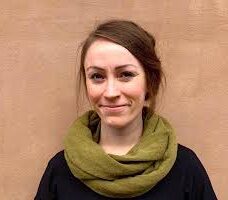
Eevastiina Kinnunen, MA, is a doctoral researcher in comparative literature at the University of Turku and a bibliotherapy facilitator. She is writing her PhD on reading groups, narrative agency and narrative wellbeing (funded by The Emil Aaltonen Foundation). Kinnunen is specialised in bibliotherapy and reading group research. She has published on reading and wellbeing, reading group experiences, and narrative agency reading groups (NARG). She has also co-edited a volume on empirical study of literature and reading. Kinnunen currently works in the projects “Narrative Agency Reading Group Model: Applications for Libraries, Schools and Hospitals” and “Counter-Narratives of Cancer: Shaping Narrative Agency”, both funded by the Research Council of Finland.
**
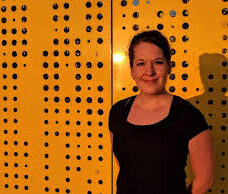
Anna Ovaska is a senior researcher at Narrare: Centre for Interdisciplinary Narrative Studies at Tampere University, a docent of Finnish literature at the University of Helsinki, and a co-PI of the project Words for Care: Literature, Healthcare and Democracy (Kone Foundation, 2024-2026) at the University of Turku. Her research lies at the intersection of narrative theory, feminist, queer, and crip theory, embodied cognitive science, and critical medical humanities. Her recent publications include the special issue Applied Narratology (2024, co-edited with S-J. Moenandar and Laura Karttunen) and the article “Toward Engaged Narratology: Critical and Embodied Close Reading and Social Justice in a Narrative Medicine Classroom” (2024).
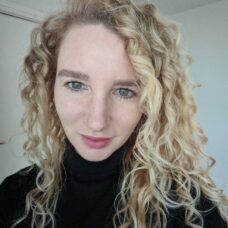
Avril Tynan is an Academy Research Fellow in the Department of Comparative Literature at the University of Turku and author of Critical Narratives of Recovery: Rejecting Repair, Restoration and Resolution (Edinburgh University Press, 2026). She is PI of the Research Council of Finland project “Reading Recovery: Narratives of Recovery in Culture, Medicine, and Society” and project partner on the EU-funded #ENDOs project. Her recent publications include Endometriosis: An Emotional Dictionary (2026), a narrative medicine tool combining art, personal testimonies and clinical resources aimed at patients and healthcare practitioners. Additionally, she has published widely on the ethics and aesthetics of illness and disability, dementia, trauma, and old age in francophone, anglophone, and other literatures. She co-edited Trauma, Ethics, Hermeneutics: Essays in Honour of Colin Davis (with Professor Helena Duffy, Legenda, 2024) and is co-editor of Storyworlds: A Journal of Narrative Studies (University of Nebraska Press).
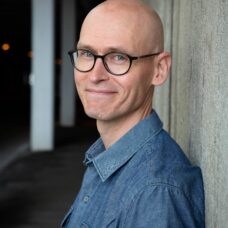
Jussi Valtonen is a novelist and Professor of Writing at the Theatre Academy of the University of the Arts Helsinki, where he also leads a project educating clinicians in the literary arts. He holds a PhD in cognitive neuroscience from the University of Helsinki and an MA in film screenwriting from the University of Salford (UK). He has been a visiting Fulbright graduate student at Johns Hopkins University and a visiting postdoctoral scholar at New York University. His research interests include intuitive theories of the mind and brain, the social cognition of mental illness, and the health humanities. His novel, They Know Not What They Do, won the Finlandia Prize and has been translated into ten languages.
(Photo of Valtonen: Laura Malmivaara/Uniarts Helsinki)