

Greenhouses
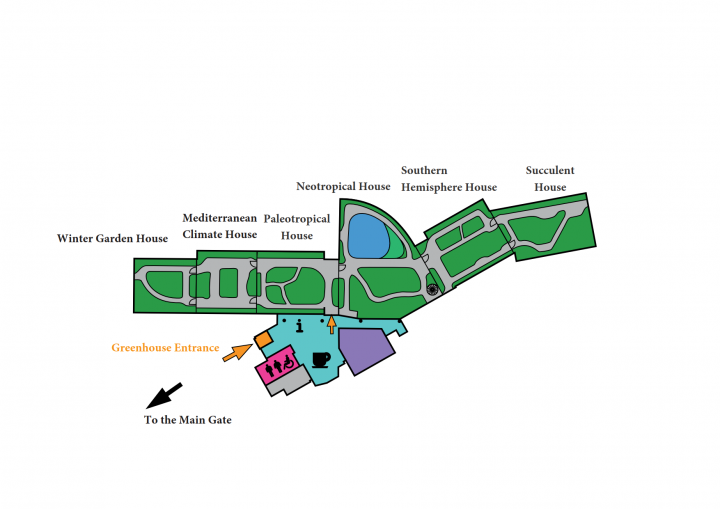 The six greenhouses at the Botanical Garden contain approximately 2 500 plant species or other taxa. You’ll see both exotic rareties and familiar crops and house plants.
In the Mediterranean Climate House you’ll find citrus fruits, with the grapefruit in particular producing large amounts of fruit. The Neotropical House has giant water lily that flower overnight, with leaves over a meter in diameter. Colorful cockatiels and budgerigars fly in the house, and large koi carps and smaller fish such as neotropical cichlids inhabit the water. In the Southern Hemisphere House, you’ll encounter living fossils that already thrived in the age of dinosaurs, such as cycads and tree ferns.
Southern Hemisphere House
The house mainly has southern hemisphere subtropical plants. These include living fossils, such as tree ferns and cycads, which were dominant around 200 million years ago during the age of the dinosaurs.
Eucalyptuses, Casuarina trees and leaf cacti also inhabit the house. Several savanna Acacias display their impressive thorns. The spanish moss (Tillandsia usneoides) is perhaps among the most unusual in appearance within the air plant genus.
The house exhibits also plenty of different cool-loving highland orchids, especially from Andean cloud forests.
Succulent House
The Succulent House has American cacti, and African and Asian desert plants such as different Euphorbia and Aloë species. A long table stretching along the glass wall displays small cacti and other succulents such as carrion flowers (Stapelia) and living stones (Lithops). The plant in the central bed, in the genus Commiphora, is the species from which myrrh is extracted.
In the centre of the house there are several endemic cactus-looking succulents from Madagascar. Many are endangered and belong to the uncommon Didiereaceae family.
The diversity of forms displayed by cacti is visible at rear of the house, with spherical cacti, the “mother-in-law’s cushion” (Echinocactus grusonii), tree-like cacti and forms that creep along the ground. In the unusual Pereskia cacti, not all leaves have become spines.
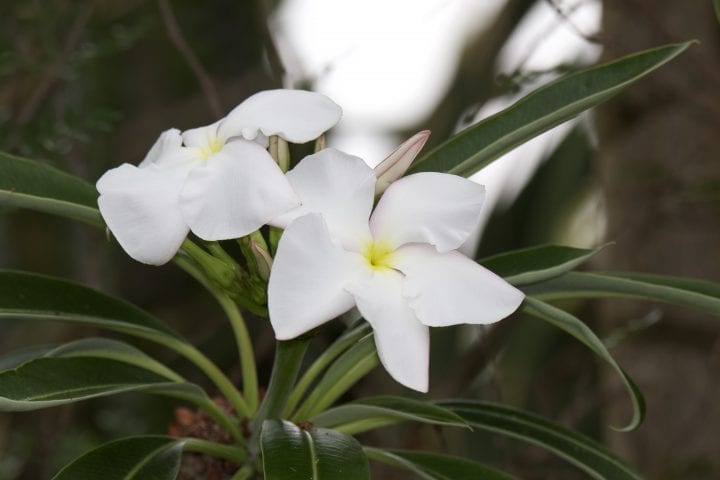
Photo: Despite its name, the Madagascar palm (Pachypodium lamerei) is not a palm at all.
Winter Garden House
In the Winter Garden House the winter temperatures are only 8–10°C, to prevent cold-adapted species from dropping their flower buds. Such plants include camellias (Camellia) and yellow-flowered winter jasmines (Jasminum nudiflorum).
The house is the most colourful part of the Botanical Garden in spring, when the rockroses (Cistus) open their frail flowers. Cyclamens, velvetleaves of varying colours (Abutilon), angel’s trumpets (Brugmansia) and jessamines (Cestrum) also flower in spring. In March the flamevine (Pyrostegia venusta), growing near the highest point of the roof, produces its beatiful flowers.
Conifers include the coast redwood (Sequoia sempervirens) which can grow up to almost 120 metres tall – tallest in the plant kingdom. There are several bog-dwelling carnivorous plants including sundews (Drosera), Venus flytraps (Dionaea muscipula) and trumpet pitchers (Sarracenia).
Neotropical House
The largest of the houses contains American rainforest plants. The pond with its giant water lily (Victoria cruziana) immediately catches the eye. Many other plants also inhabit the pond, including the common water hyacinth (Eichhornia crassipes) and water cabbage (Pistia stratiotes).
Insect eating Asian pitcher plants (Nepenthes) dangle from the branches by the pond. Their tendrils have formed into a trap for insects: insects fall into the pitcher and are dissolved by the enzyme-rich liquid in a matter of days. There are also many plants used by humans such as sugar cane (Saccharum officinarum), tamarillo (Solanum betaceum) and banana (Musa acuminata). Cacao tree (Theobroma cacao) bears fruit on the other side of the greenhouse.
Epiphytes such as ferns and bromeliads are common in the house. Hundreds of warm-loving tropical orchids thrive in the Orchid gallery. There’s always some in bloom.
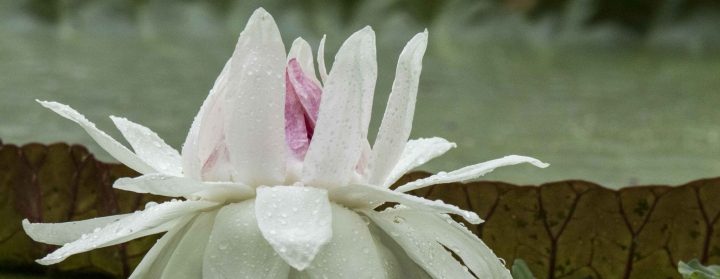
Kuva: Giant water lily (Victoria “Longwood”)
Paleotropical House
Most of the plants in the Paleotropical House are from tropical Asia and Africa. Many of them are useful to humans, including coffee (Coffea), black pepper (Piper nigrum), cinnamon (Cinnamomum verum), camphor (Cinnamomum camphora) and mango (Mangifera indica). Abacá or Manila hemp (Musa textilis) belongs to the same genus as bananas and gives a very strong natural fibre.
Some of the lushest vegetation in the house consists of several different fig species. Some of the species produce adventitious roots, which can entwine and slowly strangle neighbouring trees to death.
The Paleotropical House also contains one of the most primitive vascular plants, the whisk fern (Psilotum nudum). Staghorn ferns (Platycerium) live as epiphytes in the canopy.
Mediterranean Climate House
Oleanders, pomegranates, Peruvian pepper trees (Schinus molle), geraniums, calla lilies and many other plants flower in the Mediterranean climate. Carob tree (Ceratonia siliqua) and sausage tree (Kigelia africana) also grows in the house.
The Brazilian Bougainvillea, with their multicoloured bracts, are almost bursting through the greenhouse roof. Some of the taller potted plants in the house spend their summers outdoors.