
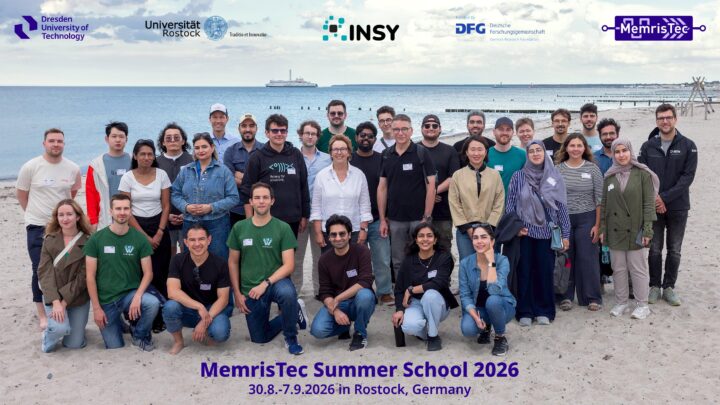
Postcard from MemrisTec Summer School 2026
Doctoral researchers Frans, Tuomo, and Henrique from our group participated in the MemrisTec summer school, organised by Dresden University of Technology from 30 August to 7 September 2026. The event was held in Warnemünde, a seaside resort district of Rostock, Germany, where the participants stayed in a youth hostel close to the beach. The setting offered beautiful coastal scenery, long beaches, and very unpredictable weather.

The summer school gathered early-stage researchers, lecturers, and visitors from several countries and scientific backgrounds, including chemistry, physics, electrical engineering, materials engineering, and computer science. The programme provided a broad overview of current directions in memristive devices, neuromorphic computing, and emerging hardware technologies, ranging from fundamental device physics to circuit-level integration and machine learning applications.
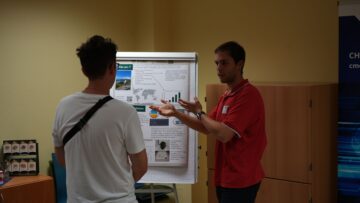 In addition to lectures, the programme included poster sessions, tutorials, hands-on challenges, and ask-me-anything sessions with the speakers. These formats created many opportunities for both scientific and informal discussions, especially for doctoral researchers entering the field.
For our group, the summer school offered useful perspectives on how memristors may address limitations in present-day computing architectures. Several lectures clearly explained where current computer architectures become inefficient and how memristive technologies could help overcome some of these bottlenecks. The event also provided an opportunity to connect with people working on different memristor technologies and applications, while introducing topics such as dynamics modelling of memristors, Kolmogorov-Arnold Networks, and reservoir computing. The atmosphere was open, friendly, and relaxed, while still strongly focused on cutting-edge research and new ideas for experiments and applications.
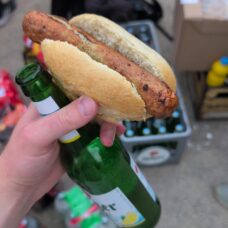
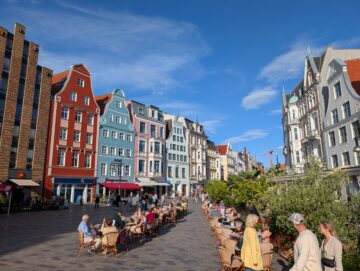
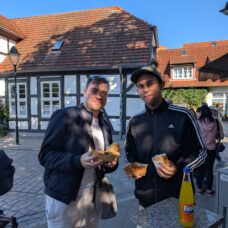 Outside the scientific programme, the participants explored Rostock old town, the university, Warnemünde centre, and a local art gallery. The week also included bicycle rides, a paddlewheel steamboat tour, tapas and cocktails, several BBQ evenings, and plenty of opportunities to enjoy the seaside. The local food experience was well represented by bread with bratwurst and Radler, a fitting summary of the week’s diet.
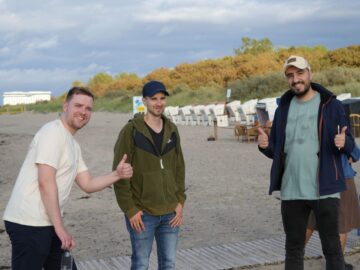
Overall, MemrisTec summer school was a valuable opportunity for the doctoral researchers to learn about the rapidly developing field of memristive technologies and to connect with the wider European research community. The participants returned with new knowledge, new contacts, and good memories from Warnemünde.