
High-temperature superconductivity
Superconductivity research at the Wihuri Physical Laboratory combines studies of superconducting materials with the development of technologies operating at cryogenic temperatures. Superconductors can conduct electrical current without resistance below a critical temperature and expel magnetic fields from their interior. These unique properties make them highly attractive for applications requiring strong magnetic fields or energy-efficient operation, although the required low temperatures still pose technological challenges. Superconducting materials are widely used, for example in magnetic resonance imaging (MRI), particle accelerators, fusion magnets, and quantum technologies.
Our research includes both fundamental and applied aspects of superconductivity. A long-standing focus has been on high-temperature superconductors such as YBa2Cu3O6+x (YBCO), where we investigate vortex physics and develop methods to improve the critical current density through nanoscale defect engineering. We study superconducting thin films, flux pinning mechanisms, and superconducting properties in high magnetic fields using a combination of experimental methods and numerical simulations.
A major current research direction is the study of superconducting magnet technologies and quench phenomena. A quench occurs when part of a superconducting material locally loses its superconducting state, leading to rapid heat generation and potentially damaging the system if not properly controlled. Understanding quench dynamics is essential for the safe operation of next-generation superconducting magnets used in applications such as fusion energy, particle accelerators, and advanced medical imaging. Our work combines experiments, simulations, and instrumentation development to improve the reliability and stability of superconducting systems.
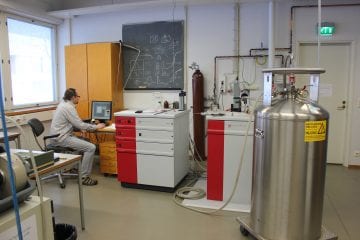 Most of our thin film samples are fabricated in-house using pulsed laser deposition (PLD) or e-beam evaporation. The samples are characterized structurally, magnetically, and electrically using the laboratory’s extensive experimental infrastructure. Structural characterization is performed using x-ray diffraction (XRD), scanning electron microscopy (SEM), and atomic force microscopy (AFM). Magnetic properties are studied using SQUID and AC magnetometry, while transport measurements are mainly carried out in a Physical Property Measurement System (PPMS) equipped with a 9 T magnet.
The research benefits from the laboratory’s extensive cryogenic infrastructure and long tradition in low-temperature physics. The group leader is Petriina Paturi. Publications can be found through the links on her page, while details of the available research infrastructures are available at mari.utu.fi.