Murtoos and Past Glacial Environments Research Group
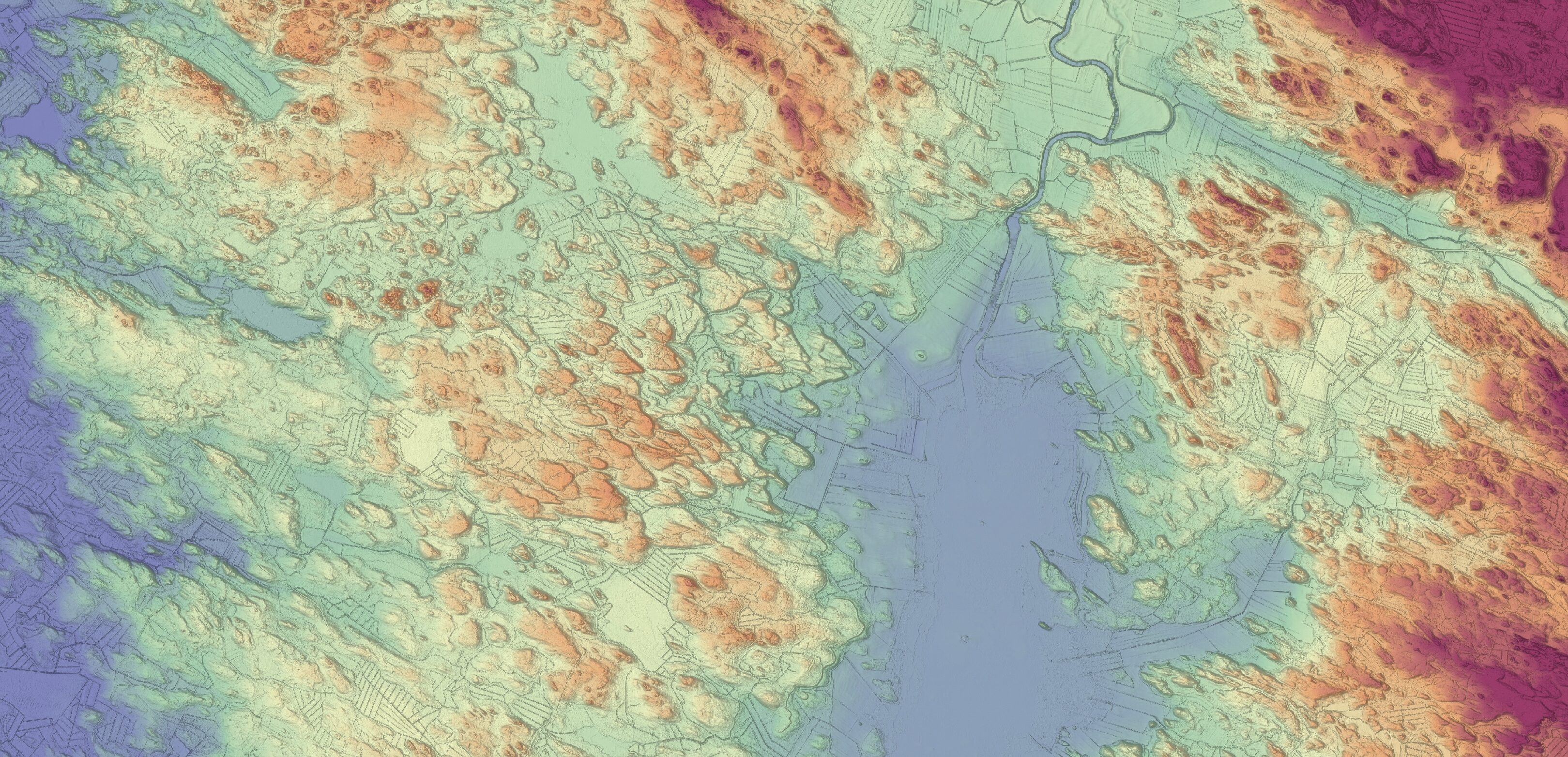
MUST (Murtoo Scientists) and collaborating researchers from Sweden have identified a subglacial landform previously unknown to science. This landform, the murtoo, has a unique triangular shape and dimensions only detectable through LiDAR-based digital elevation models. Murtoos are not predicted by existing theories of subglacial landforms and, therefore, understanding their formation is essential to better constrain their role in glacial hydrology and ice-sheet dynamics.
The Murtoos and Past Glacial Environments Research Group aims to bridge the gap between channelized and distributed drainage systems in the current theory of subglacial hydrology and related modelling approaches. Our research encompasses the broader meltwater drainage system of the past Fennoscandian Ice Sheet (FIS), with an emphasis on the role of subglacial meltwater corridors, subglacial lakes and supraglacial meltwater outburst imprints (water blisters). Other research themes include studies of glacial geomorphology, such as the De Geer moraines, eskers and ice-marginal complexes, for better understanding of sediment deposition and ice-margin behavior under FIS glaciation-deglaciation cycles. Ice-marginal depositional environments and related processes, as well as their influence on the hydrogeology of the groundwater reservoirs, are studied in collaboration with the Geological Survey of Finland and the Digital Waters (DIWA) flagship of the University of Turku. Our research utilizes LiDAR-based datasets and sedimentological fieldwork supplemented with geophysical investigations via Ground Penetrating Radar and high-resolution reflection seismic surveys. Together with our well-established national and international collaborators, we conduct high-quality research on past glacial environments and how they respond to climatic change.