GYROSCOPE presented its final results at the KOMAREC 2025 conference
GYROSCOPE was prominently displayed at the Kotka Maritime Research Conference KOMAREC 2025 on 29–30 October 2025 in Kotka, Finland. This is no wonder, since our work over the past three years has resonated closely with the conference theme, Collaborative Science for Sustainable Maritime Practices in a Changing World.
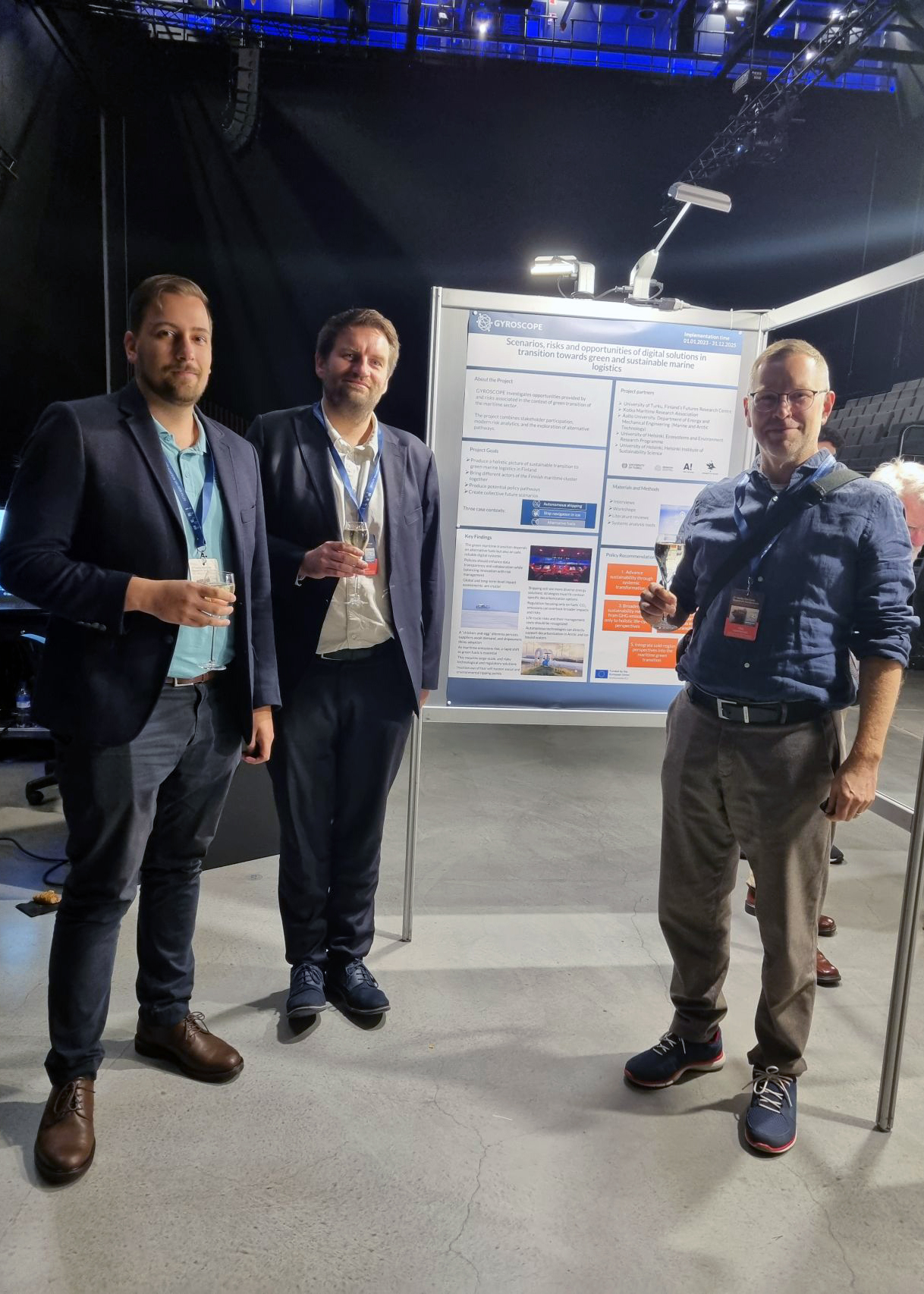
As GYROSCOPE comes to an end in December 2025, KOMAREC 2025 was an opportunity to summarize the results of our work. Below is a list of our key findings. Some of them are observations of barriers to green and digital transition in marine logistics, others are recommendations on policies with which to bring down the barriers. The attached abstracts, slide presentations, and posters provide more detailed background for the findings.
(1) Sustainability in marine logistics is a complex phenomenon characterized by many system-level tensions. For example, there are tensions between the need for long-term policies and the necessity to react quickly to global markets; the need to develop green fuels and the reality of a lock-in in existing technologies; the need to economize on fuel costs and the reality of very costly green fuels; and the need for global regulations and the difficulty of coordinating among numerous local and regional regulatory bodies. In this complex environment, it is important to identify leverage points that hold potential for triggering sustainability transitions.
(2) As a complex system, maritime logistics contains numerous risks and uncertainties, such as technical and infrastructure limitations, economic viability and market readiness, and regulatory ambiguity and safety risks. Any effort to initiate green and digital transitions will inevitably encounter these. To build long-term social and ecological resilience in the sector, a clear and detailed mapping of the various risks and uncertainties is needed.
(3) All solutions aiming at green and digital transitions in maritime logistics should be based on comprehensive life cycle assessments. For example, consideration of new fuels should not be based on single indicators but rather cover their production, distribution, and use. It is also important to address not only climate impacts but also risks to water, soil, biodiversity, food systems, and habitats. Assessments should cover not just local short-term issues but also global long-term ones.
(4) Green transition in maritime logistics cannot rely on alternative fuels alone, but also on digitalized and automated systems that operate safely, reliably, and sustainably. This is particularly important in Arctic and ice-bound waters. To unlock the benefits of digitalized and automated maritime systems, policies are needed that strengthen data availability, transparency, and stakeholder collaboration. The key balancing act is between innovation and robust risk management.
(5) Regulation and economic incentives are needed to promote green transition in maritime logistics. Alternative fuels are an example. The contribution of maritime logistics to global climate emissions grows at a worrying pace, which demands rapid transition to green fuels, such as synthetic methanol or ammonia. A rapid transition in the sector necessitates large-scale solutions, such as global technology standards or a global carbon tax. Although large-scale solutions are risky, an even larger risk would be failing to act, because inaction is likely to trigger climate-induced social and environmental tipping points. Regulatory reforms should cover ecosystem health broadly and not just carbon emissions. The reforms should be constantly monitored and adjusted. Finally, since the sector is dominated by a few large operators, they play a key role in the technological and regulatory transition.
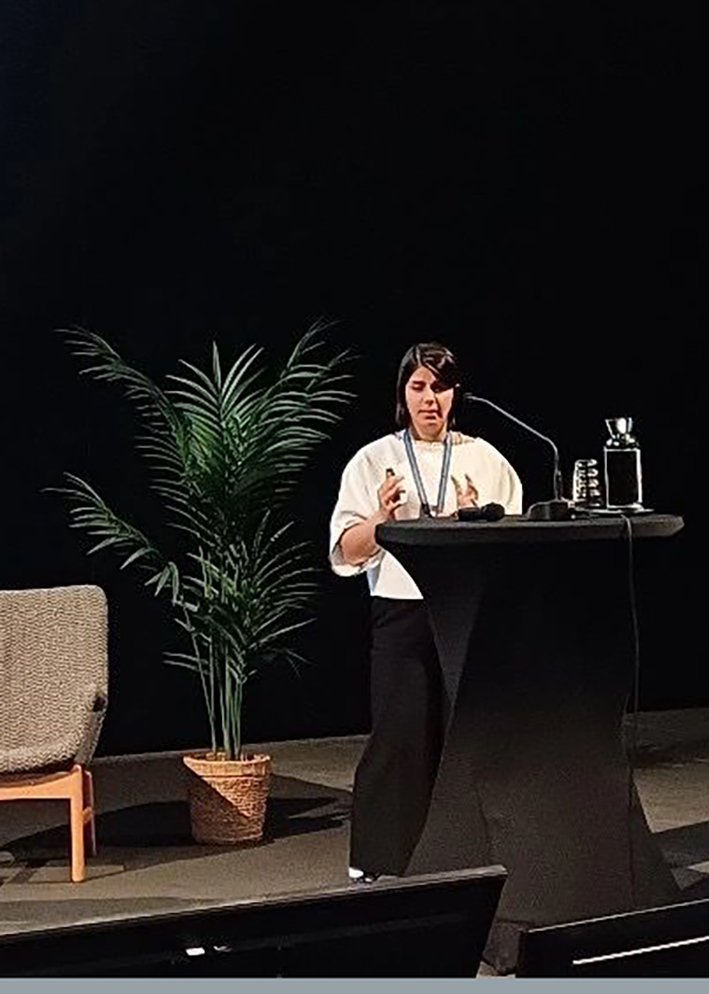
GYROSCOPE presentations in KOMAREC 2025:
Oral presentations:
The struggle to make green ammonia the maritime fuel of choice
Abstract – Presentation slides
Hukkinen, J., Janasik, N., Nikkanen, M., Monroe, C. & Linnekoski, E.
Unsafe control actions in autonomous navigation systems: a SysML based analysis for enhanced safety
Abstract – Presentation slides
Farokhi, R., Basnet, S. & Valdez Banda, O.
Navigating decarbonization: contrasting academic and industry perspectives
Abstract – Presentation slides
Lauttamäki, V., Ahlqvist, T. & Knudsen, M.
Anticipatory organisations and future-oriented regulation: stylised positions in long term-oriented industries like marine logistics
Abstract – Presentation slides
Ahlqvist, T., Knudsen, M., Lauttamäki, V. & Villman, T.
Strategic foresight for maritime transitions: A digital foresight platform as a framework for exploring systemic changes and policy
Abstract – Presentation slides
Ahlqvist, T., Basnet, S., Farokhi, R., Hukkinen, J., Janasik, N., Kauppi, P., Kuikka, S., Knudsen, M., Lauttamäki, V., Lehikoinen, A., Luoma, E., Nikkanen, M. & Valdez Banda, O.
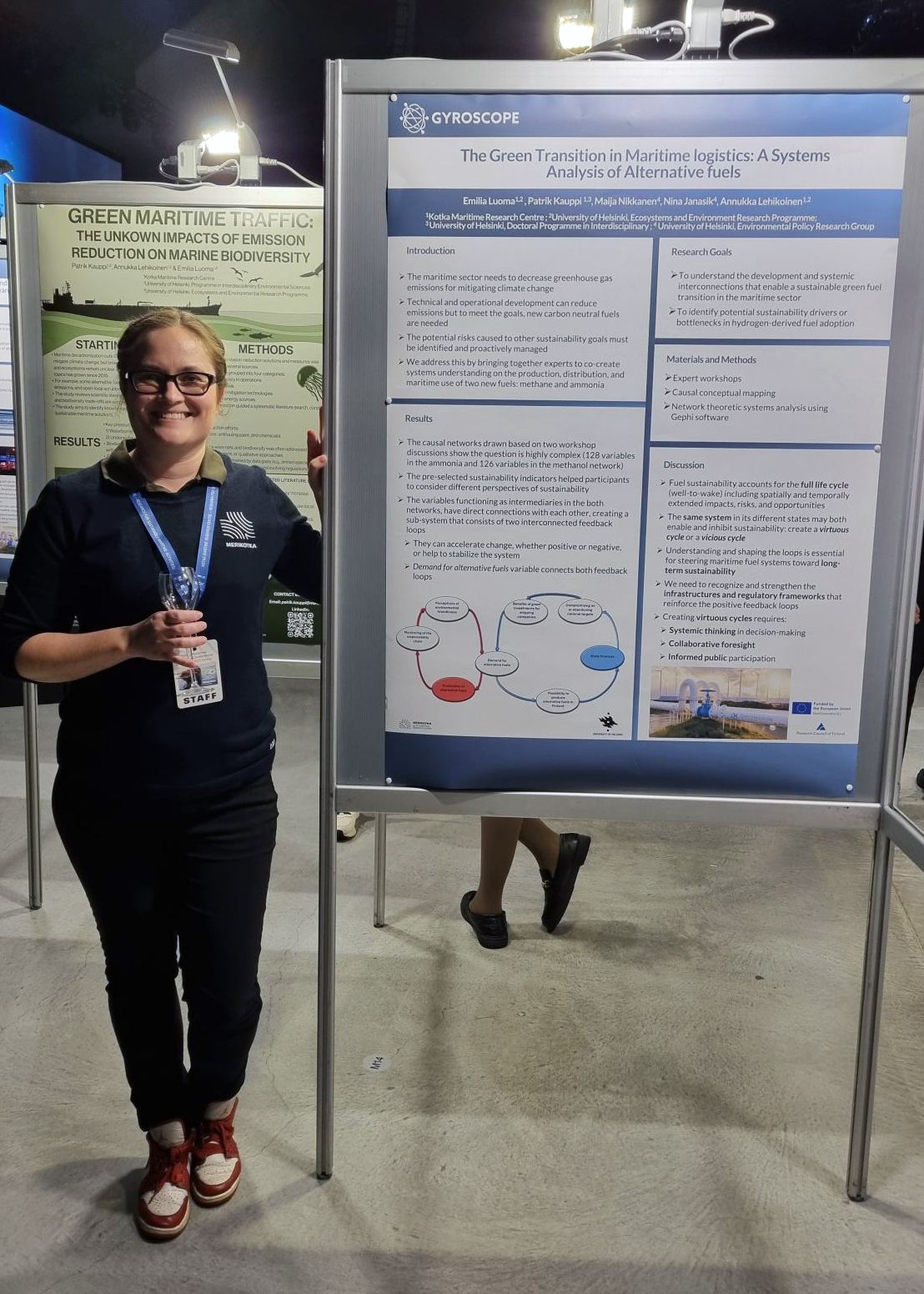
Poster presentations:
The green transition in maritime logistics: a systems analysis on alternative fuels
Luoma, E., Kauppi, P., Nikkanen, M., Janasik, N. & Lehikoinen, A.
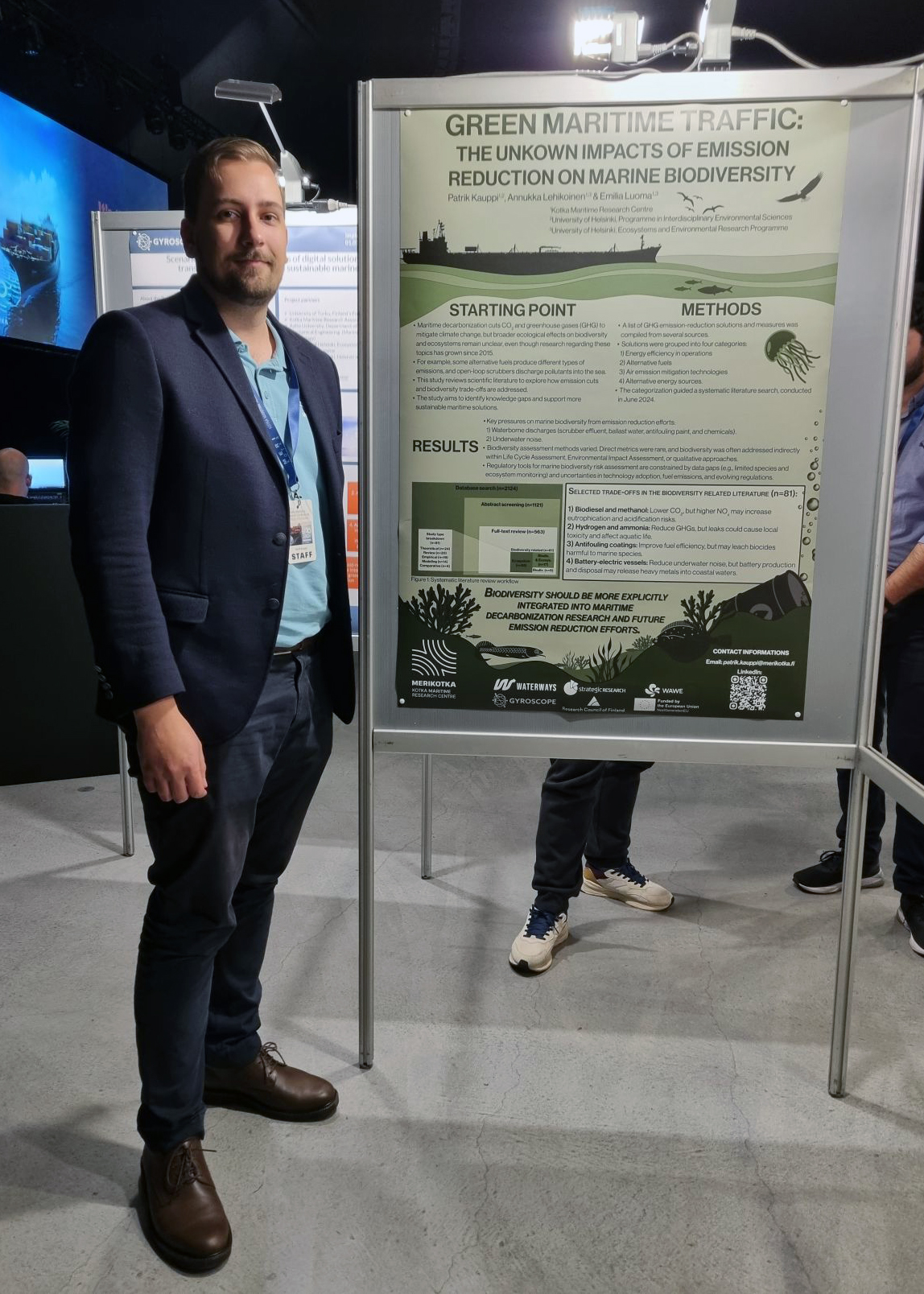
Green maritime traffic: the unknown impacts of emission reduction on marine biodiversity
Kauppi, P., Lehikoinen, A. & Luoma, E.
Integrating Bayesian Network Models for Oil Spill Risk Assessment: Linking Economic Decision-Making with Biological Impact Modeling in the Gulf of Finland
Haavisto, J., Vikkula, S. & Kuikka, S.
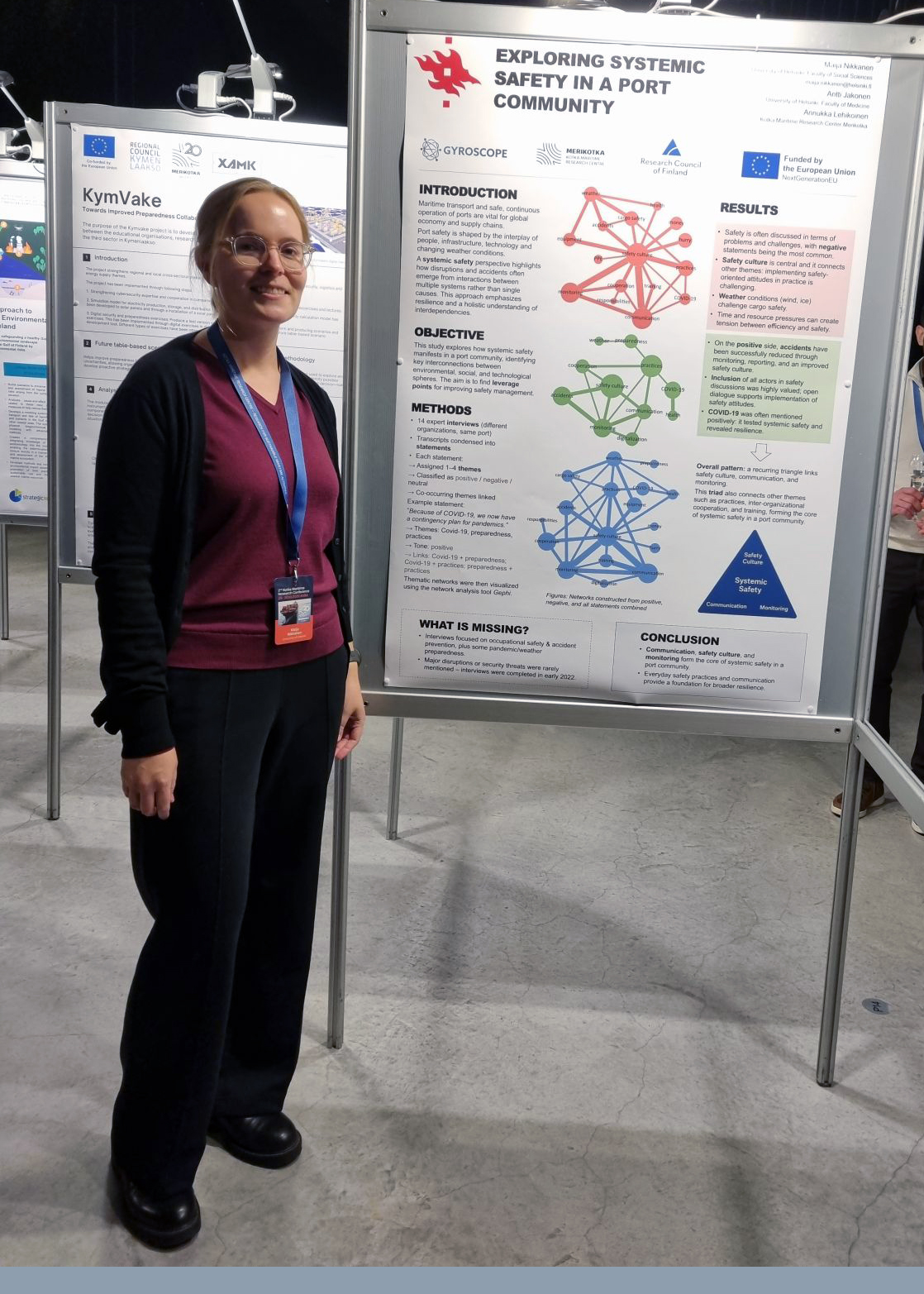
Exploring systemic safety in a port community
Nikkanen, M., Jakonen, A. & Lehikoinen, A.