
Research themes and projects
The Baltic herring research project aims to gain insight into the reproductive biology of the Baltic herring within the northern Baltic Sea. The roots of the research project are in a study examining the effects of increased ship traffic in the Archipelago Sea (SW Finland) to local herring stocks. Since this first study, the project has continued and expanded to map out herring spawning areas in the inner archipelago and to investigate ecological and evolutionary factors influencing herring spawning events and reproductive success. During the project’s four-decade long history, environmental conditions at the spawning area have changed considerably, e.g. due to eutrophication, rising sea water temperature and decreasing salinity, which gives us means to study how the herring adapt to changing environmental conditions and various anthropogenic pressures.
Ongoing projects (newest to oldest)
Improving Baltic herring recruitment in the Archipelago Sea – Egg survival and the use of artificial spawning beds to support larval production
The project investigates the survival of Baltic herring eggs and develops new methods to support herring reproduction, particularly in eutrophic coastal areas where traditional restoration of spawning grounds is difficult. A pilot study is being carried out in the Airisto and Mynälahti areas of the Archipelago Sea, where spawning habitats have been degraded by eutrophication, high levels of suspended sediment and waves caused by shipping. By improving spawning conditions, the project supports sustainable fisheries and strengthens the vitality of the fishing sector.
The two-year pilot project began in spring 2026 and will continue until the end of 2027. It is funded by Saaristomeren Kalaleader, a local fisheries action group operating under Finland’s European Maritime, Fisheries and Aquaculture Fund (EMFAF) programme for 2021–2027, and is co-funded by the European Union.
Contact person: Katja Mäkinen

Mapping Baltic herring spawning areas, migration routes and stock structure using otolith elemental composition and genetic analyses
The research project aims to generate new insights into the migration routes, natal origins and population structure of Baltic herring stocks in the northern Baltic Sea. Baltic herring is a key species in the Baltic Sea ecosystem and plays a significant role in Finland’s commercial fishing and fish processing industries. By improving our understanding of how herring stocks are structured and how they migrate, the project provides much-needed scientific knowledge to support stock management planning and potential conservation measures.
The study combines chemical analysis using laser ablation inductively coupled plasma mass spectrometry (LA-ICP-MS) with genetic methods. Together, these allow structural and habitat-related changes in herring populations to be examined more precisely than was previously possible.
Contact person: Katja Mäkinen (Project PI), Max Tallberg (PhD researcher)
The first and second year (2025-2027) of the 3-year research project have been supported by the Weisell Foundation.
A related master’s thesis has been supported by the Finnish Nature Conservation Foundation’s Rafael Kuusankosken Memorial Fund (personal grant to BSc Mikko Kaasinen)
Herring in the food web of the Bothnian Sea. Background to the variation in the condition and weight loss of herring in 2020–2022
The objective of this project is to assess the food sources of Baltic herring within the Bothnian Sea. This investigation aims to provide insights into why the proportion of malnourished individuals in the area exhibited an increase during the period spanning 2020 to 2022.
The project is a collaborative effort with coordination led by the National Resources Finland (LUKE). Additionally, the herring project at UTU actively participates in this two-year initiative.
The project was funded by the Ministry of Agriculture and Forestry. It ran from February 2023 to the end of 2024, and a research paper on its results is currently being prepared.
Researcher and contact person at UTU: Katja Mäkinen
Contact person at LUKE: Jari Raitaniemi
Factors contributing to the decline of Baltic herring spawning
Monitoring reports on the environmental and fisheries impacts of dredged material disposal by the Port of Turku, together with our own research, indicate that herring offspring production in Airisto has declined significantly over the past 30 years. For about 25 years, monitoring reports have also estimated that roughly 97–99% of herring eggs are washed off their spawning substrates before they can hatch (e.g., Vahteri & Savoila, 2018). This has been linked to eutrophication. However, beyond the observations reported in mandatory monitoring, the extent and causes of egg detachment have not been studied in depth.
The ecological status of surface waters in the sea area off Turku is classified as moderate. On herring spawning grounds, water quality and environmental conditions are affected by nutrient loading, shipping traffic and the disposal of dredged material at sea. Elevated phosphorus and nitrogen levels increase turbidity, cause algal blooms and lead to oxygen depletion near the seabed. Surface waters have also warmed considerably since the 1990s. Turbidity caused by eutrophication, together with warming, has changed the vegetation on spawning grounds, so herring now spawn closer to the surface, at depths of 0–3 m. This makes the eggs more likely to be washed away by waves and currents.
The pilot study, which began in 2024, investigated which environmental factors are reducing herring spawning success in the inner archipelago. The issue was examined through fieldwork and experimental aquarium pilot-studies, and a summary of relevant reports and scientific literature was compiled. The pilot study resulted in a master’s thesis (below). We are continuing to work on the topic as resources allow.
Contact person: Katja Mäkinen
A related master’s thesis has been supported by the Finnish Nature Conservation Foundation’s Baltic Sea Fund (personal grant to BSc Saara Miinala, 2024).
- Miinala, Saara. 2026. Silakan mädin kuolleisuus ja huuhtoutuminen pohjoisella Airistolla. Department of Biology, University of Turku. Master’s thesis.
The variation and significance of iodine in the Baltic Sea ecosystem
Iodine is an essential trace element crucial for maintaining health. It plays a pivotal role in the production of thyroid hormones, specifically thyroxine (T4) and triiodothyronine (T3). These hormones are indispensable throughout an individual’s life, as they are vital for normal growth, development, and metabolism.
The primary aim of this research project is to:
Study temporal and spatial variation of iodine: Investigate the temporal variations, both long-term and seasonal, as well as the spatial distribution of iodine within the brackish ecosystem of the Baltic Sea.
Assess the impact on key species: Examine how variations in iodine availability, including instances of iodine deficiency, influence key species residing in the Baltic Sea ecosystem. This includes species such as the Baltic herring and bladderwrack (Fucus vesiculosus).
The project is conducted in close collaboration with Ruuskanen Group (Dep. of Biological and Environmental Science, JYU) and Anttila Lab (Dep. of Biology, UTU). Nationally our collaborators also include the Geology division (UTU), Laboratory of Industrial Physics (Department of Physics and Astronomy,UTU), Pyhäjärvi-Institute, and the Finnish Food Authority. Internationally we also collaborate with Dr. Patrick Polte and his colleagues at the Johann Heinrich von Thünen-Institute (Rostock, Germany) and with Prof. Karin Limburg from the department of Environmental and Forest Biology at SUNY-ESF (New York, USA).
The project started in summer 2020. The work has been supported by Sakari Alhopuro Foundation (PI Katja Mäkinen, 2020-2023) and Turku University Foundation (to K. Mäkinen).
Contact person: Katja Mäkinen
Related publications:
- Mäkinen, K., Rajasilta, M., Ruuskanen, S., Karpela, T., Lauerma, A., Sahlsten, J. 2023. Effects of incubation temperature and maternal phenotype on Baltic herring (Clupea harengus membras) eggs and larvae: An experimental study. Canadian Journal of Fisheries and Aquatic Sciences. Accepted. Doi: 10.1139/cjfas-2023-0032
- Mäkinen, K., Rajasilta, M., Mäkilä, E., Jokinen, S., Hänninen, J. (2022) Varying frequency of vateritic otoliths in the Baltic herring Clupea harengus membras. Journal of Fish Biology (Accepted). Doi: 10.1111/jfb.15127.
- Rajasilta, M., Mäkinen, K., Ruuskanen, S. Hänninen, J., Laine, P. (2021) Long-term data reveal the associations of the egg quality with abiotic factors and female traits in the Baltic herring under variable environmental conditions. Frontiers in Marine Science; Marine Fisheries, Aquaculture and Living Resources. Doi: https://doi.org/10.3389/fmars.2021.698480.
Research themes and interests
Monitoring of the spawning population
Long-term monitoring of reproductive characteristics
Since the 1980s, this project has been monitoring the reproductive characteristics of the spawning herring population within the Archipelago Sea.
Over the years, the project has accumulated extensive and valuable long-term datasets pertaining to the herring population. These datasets are not only vital for advancing our scientific understanding but also serve as essential references for stakeholders, offering critical insights into the health and sustainability of Baltic herring stocks, which are pivotal for both local communities and the broader marine ecosystem.
The project employs two primary methods for data collection:
- Herring sampling Regular sampling of herring occurs at their spawning grounds. This process involves the collection of approximately 1000 adult herring per year between April and July. The collected data includes standard length, weight, sex, maturity stage, gonad weight, and age.
- Spawning bed monitoring Complementary to herring sampling, the project has also conducted monitoring of the spawning beds using scuba diving and more recently an ROV-camera.
In addition to standard measurements, the project maintains records of atypical observations. These include the identification and tracking of Corynosoma-parasite occurrences, gonad abnormalities, and otolith abnormalities.
In addition to traditional biological traits such as fish size, condition, and age, the research places emphasis on understanding biochemical and hormonal changes. These include alterations in lipids, fatty acids, and thyroid hormones. The objective is to discern how these changes relate to reproductive success and the population’s overall resilience.
Sample archives for retrospective study
The project systematically collects, stores, and maintains herring tissue and otolith samples. These archives encompass samples dating back to the 1980s. This extensive repository of samples is an invaluable resource, facilitating retrospective studies that provide deeper insights into the evolutionary adaptations, environmental changes, and long-term trends that have shaped the Baltic herring population and its surrounding ecosystem.
Contact person: Katja Mäkinen
Related publications:
- Mäkinen, K., Rajasilta, M., Mäkilä, E., Jokinen, S., Hänninen, J. (2022) Varying frequency of vateritic otoliths in the Baltic herring Clupea harengus membras. Journal of Fish Biology (Accepted). Doi: 10.1111/jfb.15127.
- Rajasilta, M., Elfving, M., Hänninen, J., Laine, P., Vuorinen, I., & Paranko, J. (2016). Morphological abnormalities in gonads of the Baltic herring (Clupea harengus membras): Description of types and prevalence in the northern Baltic Sea. Ambio, 45(2), 205-214.
- Rajasilta, M. Eklund, J., Laine, P., Jönsson, N. & Lorenz, T. 1999. Intensive monitoring of spawning populations of the Baltic herring (Clupea harengus membras L.). Final report of the study EU 96-068.74 p + annexes.
- Rajasilta, M., Eklund, J. Hänninen, J., Kurkilahti, M., Kääriä, J. Rannikko, P. & Soikkeli, M. 1993. Spawning of herring (Clupea harengus membras L.) in the Archipelago Sea. – ICES J. mar. Sci. 50: 233-246.
Climate change and the Baltic herring
Over nearly four decades, the project has witnessed significant transformations in environmental conditions within the northern Baltic Sea. These shifts are primarily attributed to climate change and various human-induced activities.
Research objectives and interests:
Assessing impact of environmental changes
Examine the key changes that have transpired within the herring spawning population in response to these evolving environmental conditions. Identify the primary environmental factors influencing these changes and explore the mechanisms of adaptation employed by the population.
Reproductive resilience assessment
Investigate the reproductive resilience of the herring population, specifically its capacity to maintain the necessary reproductive success for long-term stability.
Environmental and zooplankton monitoring
Utilizing long-term environmental and zooplankton monitoring conducted at the Archipelago Research Institute (UTU), the project aims to investigate shifts in zooplankton composition within the nursery and feeding grounds of the Baltic herring over recent decades. In addition, we’re interested in the relationship between prey availability, quality, and factors such as larval survival and growth.
Contact person: Katja Mäkinen
Related publications::
- Rajasilta, M., Mäkinen, K., Ruuskanen, S. Hänninen, J., Laine, P. (2021) Long-term data reveal the associations of the egg quality with abiotic factors and female traits in the Baltic herring under variable environmental conditions. Frontiers in Marine Science; Marine Fisheries, Aquaculture and Living Resources. Doi: https://doi.org/10.3389/fmars.2021.698480.
- Rajasilta, M., Hänninen, J., Laaksonen, L., Laine, P., Suomela, J. P., Vuorinen, I., & Mäkinen, K. (2018). Influence of environmental conditions, population density, and prey type on the lipid content in Baltic herring (Clupea harengus membras) from the northern Baltic Sea. Canadian Journal of Fisheries and Aquatic Sciences, (999), 1-10.
- Rajasilta, M., Eklund, J., Hänninen, J., Vuorinen, I., & Laine, P. (2015). Female Baltic herring Clupea harengus allocate resources from growth to reproduction in poor feeding conditions. Journal of Fish Biology, 86(2), 575-591.
- Mäkinen K, Vuorinen I, Hänninen J (2017) Climate-induced hydrography change favors small-bodied zooplankton in a coastal ecosystem. Hydrobiologia. Doi: 10.1007/s10750-016-3046-6
- Rajasilta, M., Hänninen, J., & Vuorinen, I. (2014). Decreasing salinity improves the feeding conditions of the Baltic herring (Clupea harengus membras) during spring in the Bothnian Sea, northern Baltic. ICES Journal of Marine Science, 71(5), 1148-1152.
Understanding ecological dynamics and reproductive fitness of Baltic herring in variable environmental conditions
The research theme aims to investigate the relationships between abiotic environmental factors, female traits, and egg quality in Baltic herring under variable environmental conditions in the Baltic Sea.
By analyzing long-term data, we seek to identify associations between population density, prey availability, lipid content, growth, and reproductive performance, providing valuable insights into the ecological dynamics and reproductive fitness of this vital species. Through comprehensive studies on fatty acid composition, lipid content, somatic condition, and ovarian weight, we aim to contribute to a deeper understanding of the species’ biology and its responses to changing environmental scenarios.
Research objectives include:
Environmental influences on reproductive success
Investigate the impact of abiotic factors and female traits on the egg quality of Baltic herring, focusing on how varying environmental conditions affect egg development and subsequent reproductive success.
Nutritional dynamics and their environmental drivers
Analyze the lipid content and fatty acid composition in Baltic herring under different environmental conditions to understand how variations in prey availability and other abiotic factors influence nutritional composition, crucial for growth and reproduction.
This research has been conducted in collaboration with the Department of Life Technologies, particularly in the fields of Food Chemistry and Food Development, in collaboration with Adj. Prof. Jukka-Pekka Suomela.
Contact persons: Katja Mäkinen
Related publications:
- Rajasilta, M., Mäkinen, K., Ruuskanen, S. Hänninen, J., Laine, P. (2021) Long-term data reveal the associations of the egg quality with abiotic factors and female traits in the Baltic herring under variable environmental conditions. Frontiers in Marine Science; Marine Fisheries, Aquaculture and Living Resources. Doi: https://doi.org/10.3389/fmars.2021.698480.
- Rajasilta, M., Hänninen, J., Laaksonen, L., Laine, P., Suomela, J. P., Vuorinen, I., & Mäkinen, K. (2018). Influence of environmental conditions, population density, and prey type on the lipid content in Baltic herring (Clupea harengus membras) from the northern Baltic Sea. Canadian Journal of Fisheries and Aquatic Sciences, (999), 1-10.
- Mäkinen, K., Elfving, M., Hänninen, J., Laaksonen, L., Rajasilta, M., Vuorinen, I., & Suomela, J. P. (2017). Fatty acid composition and lipid content in the copepod Limnocalanus macrurus during summer in the southern Bothnian Sea. Helgoland Marine Research, 71(1), 11.
- Rajasilta, M., Laine, P., & Paranko, J. 2010. Current growth, fat reserves and somatic condition of juvenile Baltic herring (Clupea harengus membras) reared in different salinities. Helgoland marine research, 65(1), 59.
- Rajasilta, M. , P. Laine & J. Hänninen. 2001. Ovarian weight of the Baltic herring (Clupea harengus membras) in relation to spawning time in the Archipelago Sea, Northern Baltic. – ICES J.Mar.Sci. 58: 106-113.
Otolith microchemistry
Otoliths, also known as earbones, serve dual roles within fish physiology by facilitating both hearing and balance. Traditionally, researchers have employed otoliths to estimate fish age, achieved by counting the number of opaque and translucent rings. These age data not only assist in determining growth rates but also provide insights into the age at which maturity is reached.
In addition to growth rings, otoliths hold valuable chemical data in trace amounts. The elemental composition of discrete layers harbors insights into various aspects of fish biology. For example, it can be harnessed to study migration patterns or identify the natal origin of fish, as chemical uptake often mirrors that of the surrounding water.
The research conducted since 2021 centers on the elemental composition of otoliths, employing LA-ICP-MS (Laser Ablation-Inductively Coupled Plasma Mass Spectrometry) analysis. The research is done in collaboration with Prof. Limburg’s lab at SUNY-ESF (Syracuse, New York, U.S.).

Contact person: Katja Mäkinen
Understanding environmental drivers of Baltic herring growth
Our research aims to comprehend the environmental factors influencing the growth of Baltic herring. Specifically, we investigate the impact of salinity, temperature, prey abundance, and spawning time on the growth patterns of Baltic herring juveniles in the recent decades.
We aim to analyze how salinity and temperature affect growth, providing insights into optimal conditions for juvenile herring growth. Additionally, we explore potential shifts in spawning time linked to changing salinity conditions.
By studying the spawning time, we aim to understand how it influences growth rates, potentially providing growth advantages to herring juveniles. This knowledge is needed to enhance our understanding of the early life history of Baltic herring.
Contact persons: Katja Mäkinen
Sampling methodology: trap net project
The herring dataset integral to our research has been primarily sourced through close collaboration with local fishermen. These dedicated fishermen have played a pivotal role by consistently providing annual samples of spawning herring.
In recent years, there has been a significant shift in traditional spawning herring fishing practices in the Airisto area. This shift has resulted in a substantial decline in herring catch using trap nets.
Since 2019, our research studies have transitioned to using two specialized trap nets designed exclusively for research purposes. These nets have proven invaluable in maintaining the continuity of our herring sample collection.
The acquisition of these trap nets was made possible through a collaborative effort funded by the Southwestern Finland ELY-centre and the European Maritime and Fisheries Fund (EMFF), specifically through the Archipelago Sea Fisheries Action Group (Saaristomeren kalatalouden toimintaryhmä).
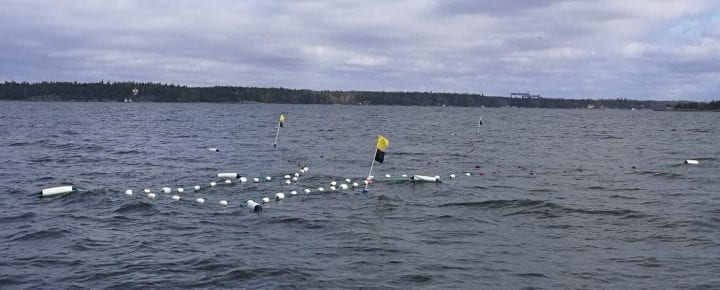
The overarching aim of this project was to facilitate the transfer of knowledge and skills from experienced professional fishermen to students. The successful execution of the trap net project (2019-2020) was achieved in partnership with local fishermen and Livia College.
Contact person: Jari Hänninen
Project report:
- Jari Hänninen et al. (2021): Rysäkalastuksen tekniikka ja ammatillinen tietotaito silakan tutkimuksen käyttöön – pilottitutkimus 2019-2021. Loppuraportti: hankenumero 93977. [Trap net fishing technology and vocational know-how for the use of herring research – pilot study 2019-2020. Final research report no 93977]. SEILI Archipelago Research Institute Publications 8.