Left Atrium (LA)
LA Measurement
The size of the left atrium depends on the patient’s body size. However, beginners can remember that the approximate upper reference limit for the left atrial diameter is 4 cm. Left atrial measurement is performed at end-systole. In practice, there is no need to stress about timing, as the operator can simply choose the frame in which the left atrium appears largest. The measurement is performed from the parasternal long-axis view (PSLAX).
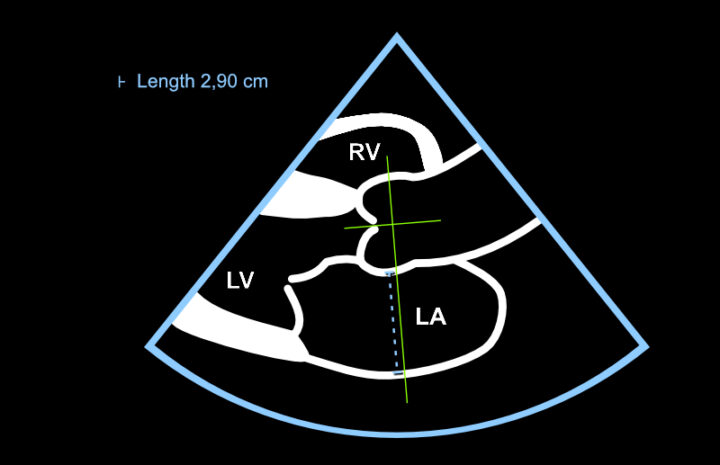
Figure: The left atrium is measured with a line extending from the Valsalva sinus to the posterior wall of the left atrium at end-systole. The measurement line should be perpendicular to the imaginary long axis of the aortic root.
Video: Measurement of the aortic root and left atrium from the parasternal long-axis view.
The Left Atrium Is the Heart’s “Long-Term Glucose”
The left atrium enlarges in many conditions that chronically increase cardiac workload. Examples include left ventricular hypertrophy (and the resulting diastolic dysfunction), mitral regurgitation, and mitral stenosis. An experienced echocardiographer can often obtain a quick impression of the status of the left side of the heart simply by looking at the left atrium. In this sense, the left atrium serves as a biomarker for the heart somewhat analogous to long-term glucose (HbA1c) in diabetes.